Page Branding Mask

Trait Examination or Character Assassination?

January 31, 2012 by  
Filed under Sandra Says (Column)

Comments Off

Part of the problem we face in trying to get to the nitty-gritty of pathological love relationships is that ‘how we do it’ or ‘what we call it’ is judged so severely, that it impairs sharing the valuable outcomes that are learned.  There are groups of professions, women’s organizations, and service agencies that tiptoe around what we ‘call’ patterns of selection in relationships.  There are unspoken rules and heavily weighted opinions about ‘what’ we can discuss and ‘how’ we discuss the outcomes.

What am I talking about?  Since the 1970′s and the women’s movement, discussing the specifics about women’s choices in relationships, patterns of selection, personality traits, mental health, and sexual addiction/deviancy has been largely discouraged as ‘labeling the victim’ or ‘victim blaming’.  It has put the victim off limits for any in-depth understanding other than a victimology theory that was developed in the 1970′s.

It is hard to get around the billboard image of ‘victim’ to talk about any kind of relationship dynamics or other psychological aspects (including biology or temperament engrained traits) that is happening in the pathological love relationship.  We may study him, but we already have a ‘theory’ for her that is not to be disturbed.  Compare this to any other field of mental health and it’s absurd that we would say, for example, ‘Being as we already understand depression, no more theories, no more studying!  Don’t call it depression or you are blaming the patient for their own depression.’

To study her is to blame her.  To measure her traits to see if there are vulnerabilities or pattern typing is to suggest she is flawed.

•    The victim assuredly has been through trauma.

•    Studying the victim in no way says they have not been through trauma.

•    The victim is not to blame for what happened to them.

•    Studying the victim in no way says they are responsible for what happened to them.

•    The victim did not ‘choose’ the victimization, but in relational dysfunction, she did choose the victimizer.

Can we learn something about that?

How will cancer be eradicated, or a cure for AIDS be found if we don’t study the problem from all angles?  If we conclude that studying the victim blames them, then we have cut off an entire segment of research that can help us in prevention, intervention, and treatment – whether it’s a medical disorder or a pathological relationship.

Studying victimology, including various aspects, is not victim character assassination.  It might be trait examination or pattern of selection analysis.  It might be a lot of things that have nothing to do with blame and shame, and everything to do with understanding or creating new paradigms in which to see these relationships.  It might piggyback off of theories developed in the 1970′s… surely we have learned SOMETHING new about relationship dynamics, pathology in relationships, personality disorders as intimate partners, violence and addiction and their part in these relationships…surely we can UPDATE a theory without our own assassination or that of the victim?

In some ways, I envy the scientific and research communities that look at the data, and pass all the political correctness and emotional politics of ‘labeling’ something certain groups find offensive.  They test and crunch the numbers and put it in a journal without all the rig-a-ma-roar.  But in our case, what we study and how we describe what we found, is subject to so much scrutiny that many clinicians and writers hesitate to publish what was found.

So it has been with what The Institute has studied, found, reported, and written.  In many organizations the first book, ‘How to Spot a Dangerous Man’ was rejected for looking at family role modeling, patterns of selection, and other aspects that women themselves said contributed to their pathological relationship.  On the other hand, it has been hailed by many domestic violence agencies and used widely in shelters, treatment centers and women’s prisons.

We stepped it up a big notch in ‘Women Who Love Psychopaths’ where we used testing instruments to test women’s traits to see if there were temperament patterns in women who ended up in the most dangerous and disordered of relationships.  This caught huge attention from some groups as the groundbreaking trait identification that was, and still is.  However, victim groups saw it as labeling.  How can we help women if we don’t understand their biological make up?

Ironically, what we found was significant – super-traits so perfectly and symmetrically seen in 80 cases.  Did we hurt a victim by studying that? Or have we helped thousands of women who have read the books, been counseled by our trained therapists, and come to our treatment programs?  How would we have got here today without daring to look deeper…to even risk looking at her?  Not to blame her, but to understand her!

Some of the biggest breakthroughs that have been happening are in understanding the biology of our brains and the consequences of biology on our behaviors, choices, and what ramifications these have on our future.  We know that MRI’s are being done on psychopathic brains, revealing areas of the brain that work differently.  Someday, I think that may cross over and other personality disorders and chronic mental illnesses will be able to be detected by MRI’s as well.  This will assist immensely in understanding how those disorders effect biology and brain function.

How can we understand the victim of the pathological?

•    If we used the word ‘damaged’ and looked at how different brain regions of victims function – over or under functioning, influences of stress, PTSD, adrenaline, cortisol, and early childhood abuse – could we come to understand how their brain might function in their patterns of selection in dangerous relationships?

•    Could we come to understand that even temperament traits might give proclivity to how the brain ‘chooses’ or how the brain categorizes, ignores red flags of danger, or is highly reactive to traumatized attraction?

•    Could we understand brains that have higher tolerance levels because of certain brain areas that operate differently than other people?

•    Could we understand traumatic memory storage and why good memories of him (as awful as he might be) are so much stronger than the memories of abuse?

•    If we know what part of the brain distorts memory storage, can we work with that?

•    Could we come to understand trait temperaments as risk factors or certain brain functions as possible victim vulnerabilities?

•    Would we know who is at risk and understand better how to more effectively TREAT the victim in counseling, and develop prevention and intervention programs?

•    Or, how intensity of attachment could be either a temperament trait or a brain function instead of merely calling it ‘victim labeling.’

I am not only interested in the psychobiology of the victim, but how the psychobiology affects patterns of selection and reactions in the most pathological of relationships.  When we really start dealing with an open dialogue about these survivors, looking past ridiculous theories that imply asking questions is victim blaming, then maybe we can really offer some new theories into victimology that by-passes band aid approaches to complex psycho/bio/social understandings.  This is what The Institute intends to do.

Pacing and Planning Your Own Recovery

January 24, 2012 by  
Filed under Sandra Says (Column)

Comments Off

Becoming Part of The Institute’s Path to Recovery

Since the beginning of the year, we have been focused on discussing your recovery in great detail.  That’s because the power of pathology saws people off at the knees.  In order to heal, you have to have a plan for your own recovery.  We consider this so important, that a portion of all of my counseling including phone, in person, or during retreats, is focused on how to pace and plan your own recovery.

Women fantasize that ‘somehow’ getting over this pathological relationship will just ‘happen’ and don’t realize they should be planning their recovery, or even how to go about planning it.  In fact, most women have done zero to plan or facilitate their own healing process.  Those of you who have found the website are at least that much further ahead than the women who haven’t even begun reading about the topic of her relationships yet!  So finding the information is a great first step.  But, it’s only a first step, and too many women stop there only to relapse and get into yet another pathological relationship.

Last year’s newsletters spent a lot of time examining the depth of damage done at the hands of your pathological.  We have looked at PTSD, The Cracked Vessel, the need for Living the Gentle Life, about intrusive thoughts and obsessions, healing spiritually, healing sexually, and about fantasy and hatred.  We have spent almost 52 weeks looking very deeply at the issues of how this relationship has hurt you emotionally, physically, medically, spiritually, sexually, and financially.

There will always be those women who won’t do anything about their lives except continue to be a victim of it.  How do I know this?  I get the same emails from the same people week after week asking me the same ‘loophole-based’ questions about ‘do I think she should leave him because after all, he SAID he would change.’   Week after week the same people with the same questions who haven’t read the book, who haven’t spent time in the workbook, who haven’t listened to one mp3 or CD, who haven’t spent one hour in counseling…. keep asking the same questions, expecting things to get better, and getting the same results.

Any 12-Stepper knows that the only way they can stay away from something so life-gripping like drugs, alcohol, gambling, or sex is with a concerted daily focused recovery on themselves, and the behaviors, habits, and beliefs that led to the life-damaging events that have altered them.  Women who will recover from pathological relationships are those who take the same serious and focused approach to the life-gripping and life-damaging relationship that has altered their life.

We spend forty-plus hours a week at The Institute developing ways to strengthen YOUR recovery – after all, this isn’t about US!  We do this by writing books, e-books, making mp3s and CDs, and other products.  By giving workshops and conferences, training therapists so they can do phone counseling with you, opening a retreat center so you can get specific and unique treatment for your issues, and intense research so we understand WHAT you need to heal from this.

We hope that 2012 is the year you really knuckle-down and focus on your recovery – taking the steps you need to heal from the life damaging experience at the hands of the pathological.  Why?  First of all we don’t want pathology to win by destroying the lives of strong and wonderful women.  We exist to kick butt on this issue!  Secondly, WE NEED YOU!

~ If you don’t teach the woman you sit next to, how will she learn to spot
and avoid pathology?

~  If you don’t heal and recover, who will be a teacher to others?

~  Who will run support groups?

~  Who will give community lectures?

~  Who will operate an outreach?

It’s not us.  Our focus is to educate YOU.  Your job is to reach others! The year 2012 can be the year that you heal and reach others.  Let us help you reach your recovery goals, and then, the world!

Are You Really as Far Along as You Think You Are?

January 17, 2012 by  
Filed under Sandra Says (Column)

Comments Off

For the New Year, in the month of January, we have been discussing recovery and finding your path to emotional wellness from pathological love relationships in 2012.

When women get mild relief from the unrelenting symptoms of the aftermath with a pathological, it can be palatable to them.  The relief from the intrusive thoughts, obsessions, PTSD, poor sleep, hyper-vigilance, or any other problematic symptom can feel ‘healing’ to them.  But it doesn’t always mean they ARE healed.

Over and over again, I have learned how damaging, how unrelenting the aftermath is from pathological relationships.  For some women, it reaches all the way back to childhood with pathological parents.  For others, however, it has only been in their intimate relationships during adulthood, yet it has left its distinguished mark.

Mild relief can often be mistaken for recovery.  Recovery is a life-long journey of self-care.  Recovery can begin at the moment you recognize the damage done to you by pathological individuals, but it doesn’t end with a counselor or a group.  For many women, the symptoms have crept into their worldview – how they see others, their environment, and themselves.  Weekly, I learn again and again, as I meet with women, that the damage is widespread.  This isn’t a quick fix or often, a quick treatment.  While her mild relief or symptoms instills relief or hope, it isn’t the end of her recovery journey.  It’s the beginning.

Like peeling an onion, each layer shows a level of damage that needs care.  All the way down to the core are layers of unperceived and unrecognized aftermath symptoms.  At the core are boundary issues – those necessary limits that shows that someone understands what is hers, someone else’s, or God’s.  From the center of boundaries are developed gates that serve as limits saying what one will tolerate and will not tolerate. Boundaries are the bedrock of all recovery.  Anything that is built will be built from the issue of healthy or unhealthy boundaries.  Many women don’t realize that pathological people target women with poor boundaries.  They test it out early in the relationship, and when small violations are not managed, they proceed on with bigger violations.  Every violation is a green light.  Boundaries are the first step in recovery.

In another layer of the onion lays hyper-vigilance issues.  High harm avoidance from PTSD weaves a level of distrust in new environments, people, and situations.  It affects fear of the future and even fear of the present.

Another layer of the onion is communication – the ability to listen in the midst of upset.  Since pathological individuals have skewed communication, this area is often seriously affected.  Long-term exposure to pathological people produces the same type of skewed communication patterns and linguistics in women who have normalized abnormal behavior.

A layer of emotional regulation is most assuredly part of the aftermath – anxiety, depression, irritability, the overflow of pent up emotions, and the inability to control the emotions can be experienced.

Layer after layer are aftermath symptoms that must be peeled away and treated in recovery.  Everyone knows how many layers are in an onion.  While it may be disconcerting to see all those layers, the layers are translucent and show the wounding on each level that recovery must touch.  Women who have begun recovery may be surprised at what feels like the unending layers of the onion, and wonder when they will reach the core.  A mild relief from anxiety or sleeplessness is welcomed, but should not be viewed as more than it is.  Reaching to the core is deep work and should be respected for the lengthy process it is likely to be.  What other choice is there?

Whether you begin at the core with boundaries, or start at the outer edge with symptom management and work into the core, allow the process because there is no healing without it.  We must never underestimate the damage done by pathological individuals at a deep emotional and even spiritual level.

Why A Focused Recovery IS Necessary Part II – Beginning 2012 with a Completely Different Mind Set

January 10, 2012 by  
Filed under Sandra Says (Column)

Comments Off

Last week I began the New Year by talking about the issue of healing, recovery, and moving forward.  In fact, during the month of January we are going to look at why starting 2012 ‘differently’ can help you move forward in recovering from the aftermath of a pathological love relationship.

The past few years at The Institute have been a tremendous time of development.  (Don’t mind me as I wander down memory lane of all that has happened at The Institute…)

A mere four years ago the newsletter started.  We now have over 35,000 subscribers each week.  That created a snowball effect, and the personalized  coaching began.  More e-books were written.  Then the CDs, mp3s, DVDs, and tele-seminars were created.

Research commenced, and the Women Who Love Psychopaths book is now in its second edition.  The retreat program started, along with training for therapists and coaches, and law enforcement/judicial. Sandra began to do more key note speaking at other organization conferences, including law schools and victim organizations.

All this development, and more, has happened as a result of realizing how uniquely damaged you became at the hands of a pathological.  All this research occurred after realizing there was really something to the ‘temperament’ of women who end up in pathological relationships.  All the phone coaching, therapist training and retreat center creation because so few people ‘get it’ about you, him, and the mind-blowing relationship dynamics.  For the FIRST time there really is a concrete program designed about you, and in some ways, by you, and definitely for you.

The one thing that does stand out in the research and what I have been eyeballing closely about healing and recovery is that this level of damage by him is profound.  If there were lots of ‘his type’ relationships, then the damage is even more profound.  What this does over the long haul is that it takes some strong, fabulous women out of the game of life by destroying them.
Untreated, symptoms get worse.  Symptoms that get worse affect your life functioning and your children.  Worsened effects then contaminate your partner selection. If you do get a healthy partner, you don’t appreciate him, or you’re too messed up from the pathological relationship to be in a healthy relationship, so he leaves.

Untreated symptoms make intrusive thoughts worse, so obsessions increase.  Friends abandon you because they are tired of hearing about the obsessions.  This creates isolation.  Isolation makes you at risk of re-contacting him, and re-contacting him lowers your coping skills.  As your coping skills lower, your fantasizing increases—’Maybe he ISN”T pathological’, ‘Maybe he WILL stop cheating,’ etc., and your minimizing begins – ‘At least he…’
More contact with him increases your Post Traumatic Stress symptoms of
flashbacks, fears of the future, unbridled worry, depression, and insomnia.

Is any of this sounding familiar?  There is a typical de-compensation pattern that most of the women go through.  Recovery can stop that de-compensation and begin rebuilding your life.  By December 31, 2012, how many of you will be in the same situation, with the same man, having the same symptoms?  On the other hand, how many of you will be ‘pathology free’ – symptoms reduced, a new vigor for life, insight about how this happened and how to avoid it in the future?  How many of you will be less depressed and anxious, more active, have lost weight, have more friends, have a better job, have happier children, got more self-esteem, gone back to school, and have potential to have a healthy relationship?

I’m not a resolution-type person, so I don’t make them.  But, I AM an advocate for complete life changes.  Not tiny habits, but big overhauls.  Let’s face it if you have dated a narcissist or a psychopath, you NEED a big life overhaul.  Something malfunctioned in your life that created this huge blind spot under which really sick people flew into your life, camped there, and overtly destroyed you.  That’s not a little issue – take a look at the condition of your life and see if you think it was ‘little.’  Ask others if they think it was little.

This year, 2012, is going to be a great year at The Institute – I can just feel it.  We spent the last several years laying a solid groundwork for super programming this year.  For the first time ever, everything is in place to heal the women who have loved pathological individuals.  I believe we have covered all bases with phone support (coaching and weekly support groups), in-person coaching (retreats, 1:1s), portable products (e-books, books, DVDs, CDs), and community outreach through workshops that we will be putting online. You can join the workshop from your living room.  We have removed the barriers to assistance by creating our program in as many formats as possible.  I have found out that the Dangerous Man book and the Women Who Love Psychopaths book is now in almost every country of the world! The Dangerous Man book has been translated into a couple of languages and the psychopath book is mentioned in various documentaries.

I hope in 2012 instead of being a mere name on our email list, you’ll be a very active part of The Institute beginning by working on your own healing.  Then, we hope you will run support groups in your community, give power-point presentations for other women in your area, or start an advocacy group.  Instead of emailing me and telling me what ELSE I should be doing (I’m tired enough!), how about stepping out and being the powerhouse in your own community?  How about taking it to the streets and passing it forward?  How about turning your life around so you can be a role model for other women?  All of this begins when you start healing yourself…and moving forward.

The truth is–there is only us to educate others.  You don’t see a multi-million dollar ad campaign with billboards on the highways that announce how to spot pathological relationships, do you?  That’s because it doesn’t exist.  Sadly, no one has funded a national campaign to warn and educate others.
However, what exists is The Institute + You = Education For Others.

It’s you and me, babe!  As Gandhi said, ‘Be the change you want to see in the world.’

Join us in 2012 for Healing Your Heart!  We’re here.

Finding Effective Help in 2012!

January 3, 2012 by  
Filed under Sandra Says (Column)

Comments Off

By now, if you have been trying to heal from a pathological love relationship and can’t find effective and knowledgeable counseling, you have probably figured out what we have…that the pathological love relationship is NOT widely understood.

Frustrated women hear unhelpful advice from family, friends, and even therapists who label their attachment to pathological men as ‘codependent’ or ‘mutually addictive’ or merely ‘emotional abuse.’ Women jump from counselor to counselor, and from one group counseling experience to another group counseling experience looking for someone, ANYONE, who understands this intense attachment to a dangerous and pathological man.

She looks for some understanding at ‘what’ is wrong with him.  Giving him the label of ‘abuser’ doesn’t quite cover the extensive array of the brilliant psychopathic tendencies he possesses.  Why did he target HER?  Why does she feel both intense attachment and loathing for him at the same time?  Why do her symptoms resemble ‘mind control’ more than mere abused woman syndrome?  Why is the bonding with this man more intense and unshakable than any other man?  Is it abuse if he never physically harms her but has the mental infiltration of a CIA operative?

What we are finding out from our research with those who have been in pathological love relationships is that all of the usual dynamics in regular relationships, both functional and the occasional dysfunctional DON’T apply to pathological relationships.  All of the usual dynamics of addictive relationships, codependent relationships and dysfunctional relationships DON’T apply to the pathological relationship, either.  No wonder women can’t find the help they need…it hasn’t been taught YET!  Our research is pointing towards women who DON’T fit into the stereotypes of women we normally see in shelters, counseling centers, and in other abusive situations.  These are not women who have the kinds of histories we normally associate with abuse, nor do they have the kinds of current lives that fit the demographics of most counseling programs and shelters.  Their personality traits and behaviors fit no other ‘typologies.’  And, their current symptoms don’t match the simply ‘dysfunctional-type’ love relationship.

Could it be that the dynamics in pathological love relationships really ARE different than other types of relationships?  Could this be why women in these types of relationships aren’t helped by more prevalent types of intervention offered to other types of abusive relationships?  Why does the Power & Control Wheel model seem ineffective with these types of women?  Why are these women LESS likely to seek traditional counseling?  And if they do, why are they less likely to be helped by it?  Why are these women’s personality traits so vastly different than shelter women, or abused women?

Too many women have been through the ringer of counselors ‘not-understanding-psychopathology,’ family ‘lumping-all-relationship-types-together,’ friends saying-’just-get-over-it’ and counseling-programs ‘telling-her-she’s-just-codependent’.  Too many women have stopped seeking help because they are tired of too many people ‘not getting it.’  Psychology has to allow itself to grow beyond a one-size-fits-all approach when dealing with women emerging from pathological love relationships, because all relationships are not created equal – especially when one of them is pathological.  Not understanding the effects of pathology on relationships, self-concept, and recovery deters a woman’s ability to heal.  Understanding the DIFFERENCES in these types of relationships is critical.

The Institute has developed programs and materials exactly for this reason.  We developed our telephone coaching program for women in immediate need of validation of their experiences, our retreat programs are specifically geared to ‘Healing the Aftermath of the Pathological Love Relationship,’ our Therapist Affiliate Program training which provides other therapists nationwide the clinical training to help women heal from these types of relationships, and our 40 plus products all developed to teach pathology and its related issues to others.

Why?  Why all the effort in treatment related issues?  Because the absence of trained counselors is screamingly evident.  Our mailing list asks the question week after week, ‘Can you recommend someone in Florida, Michigan, the United Kingdom, Canada, California, Oregon…who can help…?  Why don’t counselors understand this?  Why can’t anyone explain to me what is going on? If one more counselor or family member suggests I am codependent or a relationship addict, I’m going to scream!’ Why is this so hard to understand?

Much like the beginning phases of the addiction field, the pathological love relationship field is feeling the same phase of misunderstanding that other theories of counseling have encountered.  When the field is new or the knowledge is groundbreaking, there is an overt lack of trained responders.  Unfortunately, those who suffer the new phases are the victims/survivors that wish there were more trained service providers.

The Institute operates as a public education project on psychopathological issues, which means we try to train anyone and everyone in the issues of pathology.  This includes the women in the relationships AND those who are likely to be emotional supports to women recovering from these relationships.  Please bear with what entails, as an entirely new and emerging field of psychology is trying to race to catch up to the knowledge of what is needed for this particular population of people.  After all, until we began our research and writings, no one had even bothered to study the female partners of psychopaths and partners of other pathological types.  No one created research projects to study the personality traits, histories, and chronic vulnerabilities of women who have been in these relationships.  So, to that degree, we are virginal in our exploration of these issues.

At The Institute, we try to be immediately responsive to the needs of individuals.  In the last year we have exploded in growth in our outreach:

Our weekly newsletter continues to reach more and more people

  • The blogs we write for websites such as Psychology Today and Times Up! help to reach an even larger audience with the educational value of our expertise
  •  Our books, CDs, DVDs are international
  •  Expanded retreat format, and private1:1′s with Sandra
  •  Telephone coaching has doubled in size
  •  Weekly teleconferencing support groups
  •  Therapist Training Programs

All are born out of our desire to reach YOU!  As needs are repeatedly identified by our mailing list, we try to quickly ascertain how to develop a program to meet the needs presented.  That’s because we recognize that the services available out there are slim.  We provide what we can, knowing that we are a drop in the bucket to the needs that exist—but an ever needed drop to a thirsty population.  So unless we duplicate ourselves through products and services, many women will go untreated.

I know for many women who are struggling to recover from the diabolical aftermath of a pathological relationship that it seems that too few services exist.  Please remain hopeful that along with The Institute there are other therapists and agencies that hear your cry and are reaching out for training so they can help you recover.  We too, are always looking at how we can expand our scope and reach.  If you have ideas about how we can help you further, please let us know your thoughts.

In the meantime, if our coaching programs can be of assistance please use them.  Or if you are a therapist, please come to our trainings.  If you are a survivor, we would love for you to bring healing to yourself through our phone coaching, support groups, or retreats (February & March 2012).  The fact is, the more we learn, the more we can teach.  But we can only do so much.  One agency like ours can’t heal the world.  But we can teach what we know and assist in healing those who come for help, which is why we are always encouraging therapists to get trained, (January 26-30, 2012 training in Hilton Head Island, SC!)  Don’t lose heart that there are few services that understand your unique situation with a pathological.  Remain hopeful that in a new field of psychology, we are growing as fast as we can!

Watch with us vigilantly, as we see this new field of psychology emerge and expand!  Please let 2012 be the year of healing for you.  We’ve worked hard so that you have many of our resources that can help you move forward.

Much healing to you in 2012!


A New Year, A New You

January 2, 2012 by  
Filed under A Journey Into Wellness (column)

Comments Off

As we welcome in the New Year, many are making resolutions and anticipating plans for the coming year.  Some motivated individuals actually progress into their resolutions and plans, and many achieve the goals they set out to reach. Most however, loose sight of their goals and lack the motivation to carry out a well-directed plan to achieve the resolves they set for themselves.  Part of this is just human nature.  We become comfortable in our current circumstances, and find it difficult to “take the bull by the horns” and make the necessary changes we need in our life.  Most people want instant gratification, and when they do not see instantaneous results, they become frustrated and give up.  It’s so much easier to sit and complain than to get up and get moving.

For those who do muster up the motivation and courage to change the course of their life, the rewards are endless.  They are the individuals who realize that they have spent way too much time complaining, crying, wanting and wishing. They are the ones who have given far too much of their inner and outer resources to the wrong people and the wrong places.  They are the ones who have sat idle watching life pass them by. They know deep down that some people and some situations are beyond change – and if they want to see change, they are the ones that must change.  And, an internal shift is the only change that brings results.

Change sounds promising, but equally as frustrating to someone who is dealing with or healing from a pathological relationship.  Hope mixes with hopelessness as emotions and circumstances fluctuate.  This is understandable, considering the damage pathological individuals cause within relationships.  Sometimes it feels so much easier to remain in denial and act like life is great, or to crawl under the covers and pretend that life doesn’t exist.  But, the rationally thinking mind knows that this only creates more internal dysfunction and distress in the long run.

Each person reading this has gone through similar experiences and feelings while the circumstances may have differed.  Some are dealing with volatile and dangerous situations while others may be tolerating the day-to-day nonsense that accompanies the pathological relationship, and others are in the process of recovering and healing from the effects of this type of relationship. Whatever circumstances you may find yourself in at the beginning of this New Year, know that you can choose to change.  It is your God-given right to have a life of abundance, joy, and peace.  But it takes time and it takes effort.

A relatively workable, but challenging way to shift into better living in the New Year is to resolve to eliminate as much negativity from your life as possible.  Many are probably thinking, “Right, are you kidding me?  I’m involved with the definition of negativity itself.”  And you are correct – you are.  However, no matter what circumstance presents itself in life, we have the opportunity to choose.  A quote by Dr. Shad Helmstetter reads, “It is only when you exercise your right to choose that you can also exercise your right to change.”  So, in choosing to eliminate negativity, you are choosing change in the form of allowing more positives into your life.

How do you begin to eliminate negativity from your life?  You start with yourself.  When people are in difficult or dysfunctional circumstances, they usually complain—a lot.  They complain to their spouse, their family, their friends, and just about anyone who is in ear range to listen.  They don’t realize the more they complain, the worse they feel, overall.  It is perfectly normal and healthy to verbalize complaints to a trusted friend or confidant on occasion, but the endless whining, however justified, is never a good idea for one’s physical or emotional health.  It is always preferable to get with a competent counselor or psychotherapist who is knowledgeable in the area of psychopathology, to assist in the healing process.

We can eliminate negativity in our life by choosing to associate with positive people.  We bring negativity into our space when we socialize with those who are negative in their demeanor.  Notice when you are with a person who is chronically negative how their negativity seems to “stick” to you.  Suddenly, if you weren’t already in a bad frame, you feel angered, agitated, or depressed. When it’s really noticeable, it actually brings on a sense of oppression.  We all have people in our lives that choose to be negative.  The key is to limit your time interacting with these people. During your interactions, try to keep the conversation light and on a positive note.  It is so easy to get sucked into negative conversation, especially when experiencing less than positive situations in life.  As the saying goes, “misery loves company”—stay away from those individuals.

We can eliminate negativity by choosing what we internalize in the forms of music, television, computer sites, and reading material. What we listen to, view, and read can greatly affect our internal state.  This is why it is so important to make sure we ingest as much positive material as possible, because it has a great effect on our life.

Dealing with the everyday nonsense that the psychopathic partner brings is, of course, the most challenging for eliminating negativity from your life.  The optimum choice is to get out of the situation as soon as possible, and to learn all you can about dealing with the traits you exhibit as someone who has love relationships with psychopaths.  Knowledge is power, and once you receive knowledge in this area, you will be better equipped to deal with future relationships.  If you are unable to leave your current situation, learn all you can about the type of relationship you are experiencing and make choices for exiting the relationship as soon as it is feasible.

For those who are struggling within a pathological relationship, do not internalize what the pathological throws your way.  It’s not about you, but any women he would be in a relationship with.  This alone could eliminate so much negativity from your life.  When you realize that the psychopath can never, and will never change, you can obtain a sense of acceptance and peace that you are not in control, or to blame for his happiness or intolerant behaviors.  He will never sustain any type of positive change, which in turn, means his character flaws deem him a chronically negative force in his own life, and in the life of others.

Eliminating negativity from your life is just the tip of the iceberg in changing your life for the better.  But, it is a major decision to make this shift. By choosing the positive over the negative, it sets you up for other positive life choices that will affect your quality of life in continuously amazing ways.  During the coming year we will continue to explore various, holistic ways of healing from the effects of the pathological relationship, and how to take back your life for a better way of living.

Here’s to a wonderful 2012 – a year of positive choices and healing!

(Before starting any health program, please consult your physician, or a certified or licensed professional in a particular discipline.  This is especially important if you are pregnant or have health issues.)

Happiness -VS- Joy Part II

December 27, 2011 by  
Filed under Sandra Says (Column)

Comments Off

Last week I began talking about the issue of happiness and how happiness is hinged on external conditions
such as relationships, things, careers, stuff….Our happiness is largely conditional based on if things go the
way we think they should go and if people act the way we think they should act.

This leaves alot of our own happiness tied to someone else’s shirt tails and when he leaves, your happiness
goes right out the door with him. Last week I got to tell some fun stories about my mom and her concepts of
happiness.

What I talked about regarding my mom is her ‘joy’ which was far different than her happiness. She wasn’t
always happy. My father was murdered. That certainly did not bring happiness. Her 2nd husband stole her
life savings and was a sociopath. No happiness there. Her last ‘main squeeze’ in her life died of prostrate
cancer–a lot of sadness there. Yet, my mother was unusually ‘joyful.’

Because joy has to do with the quality of US, not them. It’s a me factor, not a him, or them, factor. Happiness
may be external but joy is internal and in many ways eternal. It imminates from within us and can exist even
when the external cirucmstances of our lives ‘suck.’

Joy can be infectious and can touch others when how we are has nothing to do with who we are with. It’s a
barometer reading of how we are doing with ourselves and in our own spiritual development. It reminds us
how we are doing with managing our own outlook, optimism, and future. We may not have control over what
he’s doing, who he’s doing, or how he’s doing but we do have control over how we choose to see our
circumstances. This is the essence of internal joy–managing the world view from the inside instead of
taking your emotional temperature based on how well he’s behaving. How I am or how my joy is can’t be
taken by a thermometer from his mouth. It has to be taken from our internal and eternal wellbeing.

When you are finally able to shift your focus of ‘where’ and ‘how’ joy is created, it is a mind blowing
change. Because you no longer hold tight to the reins of external control—I’ll be happy when someone else
does this_________. You are able to refocus on finding joy in your life, just the way it is, with yourself and
all your warts.  In fact, over the past couple years I wrote about this regarding Viktor Frankel a jewish psychiatrist who went
thru the Holocaust and developed what is now called ‘Existential Psychology’ which is finding meaning in
pain AND taking control of how you see what you have lived thru.

If all pain is bad then there is no gift in it. If there is no gift there is no learning. If there is no learning there
is no opportunity to transform it. If you can’t transform it, you are it’s victim.

Joy comes from right perspective when we tweak how we see ourselves, our lives, and the lessons of our
lives. When life is a spiritual walk not just a relationship destination, we are able to see the lessons as part
of the journey and the OPTION of having joy even in the midst of a unplanned disaster like a pathological
relationship. Joy is like a new eye glass prescription–it clears up and crisps up how we see who
we are on this journey and path of life even while in pain.

Your pain does not have to define you. That’s your choice. You are more than your pain. And so is your life!

If we can help you in 2012 move forward in your joy, please consider joining us for the ONLY TWO retreats we
are doing in 2012. February and March. Contact us for more information.

Joy -VS- Happiness

December 20, 2011 by  
Filed under Sandra Says (Column)

Comments Off

You were out looking for a little happiness when you stumbled upon Dr. Jekyll as he was appearing wonderful and considerate. Strangely, before you knew it, evil Mr. Hyde was instead dismantling anything that resembled happiness and leaving in it’s wake, destruction and despair.

Despair is a long way from the happiness you were initially seeking. How did you get from mere happiness-seeking to a totally despairing life? How can you embrace the happiness that you set out to find?

It might not even be ‘happiness’ per se that you were initially seeking. You might have been looking for someone who was introspective, spiritual and existential.  But you tell me…

Happiness is external. It’s based on situations, events, people, places, things, and thoughts. Happiness is connected to your hope for a relationship or your hope for a future with someone. Happiness is linked to that ‘some day when I meet the right guy’ or ‘when he starts changing and acting right’ or ‘when he goes to counseling.’

Happiness is future oriented and it puts all its eggs in someone elses basket. It is dependent on outside situations, people, or events to align with your expectations so that the end result is your happiness. These expectations can be seen especially during the holidays when whether or not you have a ‘merry christmas’ or a ‘happy holiday’ depends on whether or not he is with you, shows up, isn’t drunk, isn’t cheating,
or a list of other behaviors you expect for a ‘happy holiday’ experience. Unfortunately, pathology rarely obliges in that way. So when the relationship falls thru, or he isn’t wonderful at Christmas, or you kick him out, or he cheats again, or he runs off with your money, or he was a con artist…then your holidays were not ‘happy’ and your happiness
was crushed.

Unhappiness is the result. It’s a typical and inevitable result in pathological love relationships. Afterall, it’s the only way it CAN turn out. There are no happy endings to pathological relationships. After Christmas and New Years, he will still be pathological and you will still have the same problems you had in November. You notice that
The Institute has not written a book called ‘How to Have a Happy Relationship With a Pathological.’

Chronic unhappiness leads to despair and depression. Remember the emotional roller coaster you rode with him? You were happy when he was good, and miserable when he was bad? You were hypnotically lulled into happy-land when you were with him and in intrusive thought-hell when you weren’t? Your happiness was hitched to his rear end.
When he was around (and behaving) you were happy. When he wasn’t, your happiness followed his rear end right out the door and you were obsessing, wondering, and pacing.

Happiness is what you feel when he says the ‘right romantic’ stuff, buys you a ring or moves in. But happiness is not joy because joy is not external, it can’t be bought and it is not conditional on someone else’s behavior. In fact, joy is not contingent on anything in order to exist. You don’t have to have ‘him’ for the holidays to have joy. Likewise, you don’t have to get revenge, snoop out his short comings, tell the new girlfriend the truth or
any thing else in order to have joy. You can lose in court with him, already have lost your life savings to him, watch him out with a new woman, or live out of the back of your car and still have joy.

You’re probably thinking,’Sure you can have joy in those circumstances if you are Mother Teresa!’ Joy is almost a mystery, isn’t it? It’s a spiritual quality that is internal. My mother had a lot of joy and I learned from watching her joy. Her pathological man ran off with her life savings forcing her to work well past retirement. It forced her to live simply so moved to a one room beach shack and drove a motorcycle. For cheap entertainment,
she walked the beach and painted nudes. She drank cheap grocery store wine that came in a box, bought her clothes from thrift shops, and made beach totes from crocheting plastic grocery bags together. She recycled long before it was hip to do it. But what she recycled most and best was pain….into joy.

Instead of looking externally for yet another relationship to remove the sting of the last one, or to conquer the boredom she might feel at being alone…she cultivated internal and deep abiding joy. It was both an enigma and a privlege to watch this magnificent life emerge from the ashes of great betrayal.

I use her a lot as an example of someone who went ahead and got a great life and turned this rotten deal into an exquistie piece of art called her life. Anyone who spoke of my mother spoke MOST of her radiant joy. She had the ‘IT’ factor long before it was even called ‘IT.’ Women flocked to her to ask ‘How did you do it? How did you shed the despair and bitterness of what he did and grow into this? THIS bright shining joyful person? What is your secret?’

Somewhere along that rocky path of broken relationships with pathological men, she learned that happiness is fleeting if it’s tied to a man’s shirt tails. She watched too many of the shirt tails walk out the door with her happiness tied to his butt. In order to find the peacefulness that resides inside, she had to learn what was happiness and what was joy.

The transitory things of life are happiness-based. She had a big house and lost a big house when she divorced my father. She had a big career and lost a big career when she got ‘too old’ according to our culture to have the kind of job she had. She had diamonds and lost diamonds.

So she entered into voluntary simplicity where the fire of purging away ‘stuff’ left a clearer picture and path to the internal life. When stuff, people, and the problems they bring fall away there is a stillness. Only in that stillness can we ever find the joy that resides inside of us, dependent on nothing external in order to exist. During this holiday season, this is a great concept to contemplate.

Her joy came from deeply held spiritual beliefs but it also came from a place even beyond that. Joy comes when you make peace with who you are, where you are, why you are, and who you are not with. When you need nothing more than your truth and the love of a good God to bring peace, then you have settled into the abiding joy that is not rocked by relationships. It’s not rocked by anything.

It wasn’t rocked as she layed dying four years ago in the most peaceful arms of grace–a blissful state of quiet surrender and anticipation. Those who were witness to her death still tell me that her death brought new understanding to them about the issue of real joy. Joy in all things….death of a dream, death of relationship, death of a body. Joy from within, stripped down, naked and beautiful.

Untie your happiness from the ends of his shirt tales…

Merry Christmas and Peace To You In This Season of Peaceful Opportunities!

From whom shall we look to understand personal and corporate pathology? Where shall our public pathology education come from?
www.saferelationshipsmagazine.com

Holidays and Pathological Stress

December 13, 2011 by  
Filed under Sandra Says (Column)

Comments Off

Holidays are extremely stressful times. It’s a time when it is more likely:

* For domestic violence to occur or reoccur

* For dysfunctional families to be even MORE dysfunctional

* For pathology to be overt and blatant

* For pathology to target your joy and ruin your holidays

* For former pathological relationships to magically reappear and try to hook you back in

* People drink more

* People binge eat because of the stress

* Some feel pressured to ‘be in a relationship’ during the holidays and accept dates or stay with dangerous persons to ‘just get thru the holidays’

* To overspend

* To not get enough rest

It’s an idealistic time when people have more depression and anxiety than any other time of the year. They think their lives ‘should be’ the picture postcards and old movies we watch this time of year. Depression creeps in, anxiety increases, and to cope they eat/drink/spend/date in ways they normally would not.

Those with the super trait of ‘sentimentality’ focus on years past when you had that ‘one’ perfect Christmas with the pathological. The last drunken, absent, or abusive 14 Christmases are forgotten, forgiven or overlooked. But what IS focused on is that one year when it was nice and your pit-bull stronghold on the hope it will be this way again.

But you and I both know that pathology is permanent. The last 14 years are a much better and more realistic presentation of what pathology does during the holidays than the one fluke of a year he held it together. Pathology is and of itself stressful to experience under any circumstances. Add to it the expectations for a pathological to be different (ie, act appropriately) this time of year, and the pathologicals and everyone else’s stress is then through the roof. Sometimes even our hope can be pathological when it is focused on something that can not and does not change.

The glittering of your fantasy that resembles your Christmas tree lights places not only you in the path of Christmas misery, but all those you plan to spend Christmas with. Your family, kids, pets, etc. It is much kinder to unplug your glittering fantasy and tell yourself the truth what the likely outcome of attempting to find a serene and joyful moment with a pathological than it is to drag others through your melting fantasy.

Peace, gratitude, and all the spiritual reflections that are suppose to happen during this time of the year cannot be found in pathology. They were not created there but they do end there. If your goal for the holidays is to find some peace, joy, hope, and love then don’t spend it where and with whom it cannot be found. On December 26 and January 2 you will be a lot happier for not having attempted for the millionth time, to find happiness where it does not reside.

TIPS FOR A HAPPIER/HEALTHIER HOLIDAY

~ Stop idealizing–you are who you are, it is what it is, pathology is pathology. If your family isn’t perfect, they certainly WON’T be during the season. Accept yourself and others for who they are. This includes accepting that pathology cannot and will not be different during the Holidays simply because you want the Christmas fantasy. Emotional suffering is created in the moment when we don’t accept what ‘is.’ (Eckart Tolle)

~ Don’t feel pressured to eat more/spend more/drink more than you want to. Remind yourself you have choices and that the word ‘No’ is a complete sentence. Don’t get held hostage to exhausting holiday schedules.

~ Take quiet time during the season or you’ll get run over by the sheer speed of the holidays. Pencil it in like you would any other appointment. Buy your own present now–some bubble bath and spend quality time with some bubbles by yourself. Light a candle, find 5 things to be grateful for. Repeat often.

~ Take same-sex friends to parties and don’t feel OBLIGATED to go with someone you don’t want to go with. People end up in the worse binds of going to parties with others and get stuck in relationships they don’t want to be in because of it. Find a few other friends who are willing to be ‘party partners’ during the holidays.

~ Give to others in need. The best way to get out of your own problems is to give to others whose problems exceed yours. Give to a charity, feed the homeless, buy toys for kids.

~ Find time for spiritual reflection. It’s the only way to really feel the season and reconnect. Go to a church service, pray, reflect.

~ Pick ONE growth oriented issue you’d like to focus on for 2012 for your own growth on January 1. It produces hope to know you have a plan to move forward and out of your current emotional condition. Contact us and let us help you work on that for the new year. Invest in your opportunity to grow past the aftermath of this pathological love relationship.

~ Plant joy–in your self, in your life and in others. What you invest in your own recovery is also reaped in the lives of those closest to you.

Happy Holidays from the The Institute
www.saferelationshipsmagazine.com

About Face: Changing the Direction from Which You Seek Happiness

December 6, 2011 by  
Filed under Sandra Says (Column)

Comments Off

This time of year has its own ‘internal reflecting’ which guides us to dig in, evaluate, and give thanks.  We ponder ideas, gather insights that might have eluded us during the busyness of the past 11 months, and slow down to look inward and receive the Light we may not receive at other times during the year.  I hope this week’s newsletter is a little piece of Light that you are open to receive.

Last Christmas, I got a book written by one of my favorite spiritual writers, Thomas Keating.  It’s called ‘The Human Condition:  Contemplation and Transformation.’  Profoundly, he reminds us that we spend much of our lives looking for happiness through avenues that can never produce it. We create our misery by “looking for love in all the wrong places,” as the song goes.  Nothing can be truer when it comes to pathology.  Pathology is wired to produce misery, not happiness.  Everyone has the same response to pathology–they are harmed, miserable, and eventually try to flee.  It’s a true indicator of seeking happiness from a source unable to deliver it.

Your idea of happiness was probably initially developed around the relationship, or the fantasy that was painted for you about him, the relationship, or your future.  Instead of understanding that happiness had been sought from someone, whom by the nature of their disorder could never deliver happiness, you were held captive in the compulsion of repeating the same scenario with him.  You tried to find happiness in the very person who is hard-wired to NOT produce happiness!

Not all of this seeking happiness in the wrong place is the result of his pathology. Some of it is the result of our own unknowing about where happiness is found. It is not found in someone else.  Instead, happiness is found inside of our self, rooted in our own spirituality through God.  It isn’t about them. It is about us.

Keating says, “What we experience is our desperate search for happiness where it cannot possibly be found.”  The key to our happiness is not lost outside of our self. It was lost inside our self when we began looking for it in someone else.  We need to look for it were it can actually BE found.

The chief characteristic of the human condition is that everyone is looking for this key, and nobody knows where to find it.  The human condition is thus poignant in the extreme.  If you want help as you look for the key in the wrong place, you can get plenty of help because everybody is looking for it in the wrong place too!  They are looking for it where there is more pleasure, security, power, and acceptance by others.  We have a sense of solidarity in the search, yet without any possibility of finding what we are looking for.

The religions of the world have discovered the insight that (non-pathological) human beings are designed for unlimited happiness, the enjoyment of truth, and love without end.  This spiritual hunger is part of our nature as beings with a spiritual dimension.  Here we are, with an unbounded desire for happiness and not the slightest idea of where to look for it.

While we may certainly recognize that looking for happiness in alcohol or drugs is looking in the wrong place, do we recognize that looking for happiness even in relationships can be the wrong place?  Certainly looking for love in pathology would never produce the key you were seeking, because it cannot be found where you were seeking it.  But sometimes people even look for happiness in what appears to be the RIGHT places—marriage, children, higher education, careers, and service to others, only again to find that they are still seeking happiness in the wrong direction.

In religious language, the word ‘repent’ means to ‘turn away from.’  And I like that concept even from a psychological growth standpoint.  As you find your own path of recovery from the aftermath of the pathological love relationship, your recovery calls you to ‘turn away from’ the very thing that has produced so much pain for you—the relationship, the choices, the person.  In essence, in order for you to find happiness in yourself, God and in you own (often single) life, you much ‘change the direction from which you are seeking happiness.’  This is especially true of this season in which everything in you wants to ‘turn back’ to him, to the routine, the perceived comfort—just to get through the tough times of the holidays.  Changing the direction from which you seek happiness is embracing the truth that happiness cannot be found in pathology.  God did not create you for pathology.  He created you for Himself—for peace, love, and joy.  It’s not there and will never be there in pathology, even if it IS the holidays.

Over the years, I have become pretty good at picking up on those who will ‘get it’ and move on and never repeat the pathological love relationship dynamic again, and those who WILL, unfortunately, not change direction from which they are seeking happiness.  They might change the FACE from whom they seek happiness, but they are still facing the same direction seeking it.

The Institute has been involved in helping hundreds and hundreds of people ‘change the direction from which they are seeking happiness’, and how to find recovery, healing, growth, and better choices for themselves.  To that end, we are always consciously trying to expand the way to meet the needs of our growing population of wounded readers and bring a wider comprehensive approach to your own health, wellbeing, and healing from the aftermath of pathological love relationships.  We hope that we have touched your recovery in a positive way in 2011.  We hope that we have helped you ‘change direction’ on your path.  If we haven’t, we’re still here and 2012 is a great year for you to recover!

As we wind down the holidays, the New Year always births in me a new hope. Although there is much turmoil in the world right now, be reminded again, that we can always change the direction from which we have been seeking happiness and focus on a brighter future for our self and with our self.  We look forward to being a bright part of your future in 2012. Thank you for entrusting your care and recovery to us this past year.  We do not take that privilege lightly.

(**Information on pathology and your recovery is in the award-winning book, Women Who Love Psychopaths, also taught during retreats, in 1:1s and in phone sessions.  See the website for more information.)

Test Quiz

November 29, 2011 by  
Filed under Educational Cntr

Comments Off

This is a test quiz.


Psychopaths are rare - my odds of meeting one are very low.


Most psychopaths are violent serial killers.


Psychopaths are disruptive and antisocial. They are losers in business and social situations.


I could easily recognize a psychopath by the look in his eyes.  All the serial killers you see on t.v. look disturbed.


Health and Wholeness for the Holiday Season

November 28, 2011 by  
Filed under A Journey Into Wellness (column)

Comments Off

The holidays can be a very stressful time for most people.   The frenzy that accompanies this time wears not only on the body, but can profoundly affect the mind and emotions.  This is especially true when dealing with pathological relationships.  Whether you are currently dealing with pathological individuals within the family, are in a marital or love relationship with a pathological person, or are recovering from a pathological relationship, the element of psychopathic dysfunction adds another dimension to ordinary holiday stress.

Those who were raised in families with psychopathic dynamics may carry a vague uneasiness around the holidays.  It may be hard to pinpoint why there is a sense of dread around this time, until one becomes consciously aware of how past dysfunction has colored the present.  Being able to let go and enjoy the holidays can be difficult.  Be aware of your feeling and the circumstances that surround them.  Sometimes just being aware helps to alleviate negative emotions.  Be gentle with yourself, as you need to reprogram how to accept the joy the season can bring, and then have the ability to enjoy this goodness.

Those who are currently married or involved with a pathological person know the anxiety and distress the holidays can bring.  The hoopla of the season brings with it an exaggerated variety of lies, manipulations, selfish behaviors, and drama.  During this time, many behaviors exacerbate for various and obvious reasons.  With each year that passes, many hold on to the hope that something will change for the better.  This will never happen as the psychopath cannot sustain positive change, nor do they care to change unless ‘change’ would work in their favor.

For those who are recovering from a pathological relationship, the holidays can be a mixed bag of emotions.  A sense of relief may be felt by being unencumbered with the psychopath’s burdensome behaviors.  The holidays could be experienced as a time of joy, instead of a time to dread.

On the other hand, the holidays are an opportune time for the psychopath to make their way back into a relationship.  Most people feel somewhat tender and nostalgic during the holiday season. Emotions that are running high, coupled with music, alcohol, and the overall romance of the season, is the perfect set-up for psychopathic manipulation back into the relationship.

During the holiday season, it is extremely important to keep a sense of balance and peace within oneself.  This is especially true if you are under the stressful circumstances of pathology.  Keeping this time as stress-free as possible will help to keep you grounded, balanced, and healthy in body, mind and spirit.

  •   Maintain healthy eating habits.  It is very easy to overindulge with food during the holidays.  Keep a regular meal schedule, preferably four to six small meals per day, will keep your body fueled.  Be sure to incorporate some form of protein in your meals.  This will help to keep blood sugar levels in check.  Also, try to limit the amount of sugar you consume.  Too much sugar will make the body and mind feel sluggish.  Keeping balance in your daily diet ensures good nutrition for the body, and no unwanted weight gain.
  •   Do not go off prescribed medication at this (or any) time unless directed by your physician.  Also, do not self-medicate.
  •  Keep away from alcohol as much as possible.  If you must indulge, drink responsibly.  The consequences of excessive drinking can be disastrous.
  •  Exercise.  Walking, jogging, yoga, weight training—whatever is in your normal routine, keep exercising during the busy holiday season.  Exercise makes us feel good, and it’s good for us.
  • Walk away from dysfunctional behavior as much as possible.  Don’t waste your breath trying to reason with the unreasonable.
  •  Do not overextend or overspend on the pathological person if they are, unfortunately, in your life.  They don’t appreciate or deserve your time, money, or efforts.
  • Avoid holiday music if it makes you nostalgic for the ‘good times’ with the pathological.  Reminiscing and ruminating about this relationship is a waste of time during the holidays, and at any other time.
  • Avoid hooking up with the pathological or with anyone during the holiday season.  This is a vulnerable time and could lead to further poor choices.
  •  Talk with a qualified counselor, spiritual advisor, or trusted friend if you find yourself overwhelmed during this time.
  • Spend quality time with those family members and friends who enhance your life.  Visiting and entertaining can add much joy to your life if done with the right people.
  •  Keep the holiday season a sacred time.  Whether you follow a specific religion or not, take some quiet time each day for prayer, meditation, or positive reflection to keep your mind and emotions in check.
  • Maintain a grateful attitude no matter what the circumstances, and be good to yourself.  Remember, you made it through another year, life is precious, and so are you.


~ Peace and joy to you this holiday season. ~

(Before starting any health program, please consult your physician, or a certified or licensed professional in a particular discipline.  This is especially important if you are pregnant or have health issues.)

Pathological Systems: A Look at Penn State

November 15, 2011 by  
Filed under Sandra Says (Column)

Comments Off

The nation is aghast at the Penn State rape and cover up of the repeated assaults of young boys over a 15 year period. This case reminds us that even the most loved of places, those with the best of reputations, can have pathology coursing in its veins and leadership.

Jerry Sandusky a former coach is charged with sexual abuse of eight boys (and more victims stepping forward are expected). Tallying it all up currently includes
40 counts; 21 of them are felonies spanning 15 years of abuse having gained access to them through The Second Mile, a youth foundation he started ‘to help kids’. (Am sure the sexually abused children are saying ‘Gee thanks for that help.’)

Each of the 21 felonies carries 7-20 years and $15-25k fine with 19 misdemeanors carrying 2-5 years and $5-10k fine. Needless to say, the court rightfully so, finds the abuse allegations to be extensive. We can only guess how many rapes that accounts for over a 15 year span…and how many victims.

Mike McQueary, assistant foot ball coach witnessed at least one of the rapes in 2002 during which he watched, did not stop it, and did not immediately report it to law enforcement including campus police.

He did however pass the buck for reporting the rape by telling head coach Joe Paterno who also did not report to police, including campus police. A 23 page grand jury report said Paterno was told in 2002 about the sexual assault against an approximately aged 10 year old boy in the shower at the university.

McQueary also passed the buck to Tim Curley, the athletic director and Gary Schultz the Senior Vice President (whose duties included the oversight of the university police) about the assault, none of whom also made the mandated child protective reports and reports to law enforcement.

Paterno’s defense to what he did not report was that McQueary was ‘distraught but didn’t tell me specific actions that occurred.’ There is no evidence that Paterno followed up to find what specific actions had occurred, or turned over the alleged ‘distraught’ concerns to child protective services or campus law enforcement.

All citizens are considered to be mandated reporters in child abuse cases and certainly university staffs are trained in reporting protocols for both the university and the state since they work with students. However, none of those protocols were followed and none of the mandatory reporting laws seemed to be applicable to them. You do not have to prove child abuse—you simply have to have a suspicion of abuse and then you are mandated to report. Child protection services and law enforcement will take it from there.

A naked adult with a naked child is not a suspicion. That is a crime and a fact that is mandated, not only legally but ethically and morally.

Mike McQueary did not follow up checking with police or campus police to make sure Paterno, Curley or Schultz actually filed a report. While it is appropriate that he told others, it is not enough. The law is not ‘tell your boss and walk away’. It’s that you report. Whatever you do after that for ‘on the job’ notification to your superiors is separate and distinct from reporting. University staff is always trained in abuse protocols. It’s not that they didn’t know what they were supposed to do.

While being labeled as a ‘whistle blower’ about the university might be uncomfortable and a motivation for not reporting directly to law enforcement, it is not nearly as uncomfortable as being raped and scarred for life. It’s not nearly as uncomfortable as a child who knows you saw what happened to them in a shower and did not help them…in the moment or later.

Ramifications? Being labeled as a whistle blower, or being fired for covering it up—I mean ‘really?’ are we comparing those consequences with those of eight little boys whose lives were ruined from adults looking the other way. A job is equal to a rape in terms of ramifications? It was hid to save their jobs?

Let’s count here….

1.  Sandusky never confessed to what he had done to save himself from jail and keep a job.  Considering he’s a pedophile, not many were expecting him to have insight about how his behaviors were destroying someone else.

McQueary, a flicker of conscience…not in the middle of the rape, not even that evening as he went to bed…but the next day and a couple more notifications to others but not pushing the envelope enough to ask his superiors if they did something about his suspicions. Not wanting to incur the wrath of employers? Not wanting to seem outside of the good ol boy’s club that anything goes….job protection.

Curly never reported suspicions of abuse.

Schultz as a Senior Vice President and who oversaw campus police never reported suspicions of abuse.

Who does that? Who places employment before anal penetration? Who places their foot ball ego in front of oral rape? Who shows up year after year for work walking passed the showers where innocence was lost? Who oversees campus police and doesn’t make a report of suspicions? What kind of pathology does that?

But instead, this moment of looking at not only individual pathology but corporate pathology is being lost. Instead of looking at the kinds of symptoms pathology perpetrates in the individual and in systems, we are instead hyper-empathically focused on micro issues: The ‘conflicted’ pedophile, the social psychology of why others look on and do nothing, the severe motivation of job loss at high levels, how well loved a coach is as evidence of guilt or innocence.

We miss seeing that when pathologicals are at the head guiding the system, they are making deep psychological imprints of their own pathological world views projected like a cult-reality on the screen of other’s psyches. That’s it not just an individual that can be sick, its entire systems that are guided by pathological and psychopathic belief systems. (Anyone ever read Snakes in Suits by the world’s leading expert in white collar psychopathic behavior, Dr. Robert Hare?)

It took a system, not just an individual, to cover up 15 years of rape. It took the camaraderie of people who collectively had reduced empathy and conscience to hide the fact that little boys were penetrated, and kids were trafficked to psychopathic benefactors. Now there are allegations that the rape and assault of little boys were used as perks to pedophile benefactors.  It’s called human trafficking.

This did not happen in a vacuum as most trafficking, extended abuse, and cover up normally doesn’t. It takes individual and corporate pathology to create an environment of longevity and invisibility to perpetrate 15 years of rape. It takes pathology on many levels from being the pedophile to being a silent accessory to the crime to allow over a decade of soul destroying abuse in a psychopathic fraternity of football narcissism.

Systemic pathology has been seen through the years in the church, in the military, in the white house, in the FBI—in any large system. How did thousands come to believe that the holocaust was the right thing to do? It happened when one pathological in a system created a systemic belief system and brought into that system at high management levels other persons whose own pathology shared the basic core belief systems and those beliefs found their home and their spark with the pathological leader.

Think all of the players are not likely pathological? Want to split hairs about which Cluster B diagnosis they are likely to fall into and our inability to really diagnosis someone if they aren’t in front of us? I don’t. You can see from this case what happens when someone does not have enough empathy, enough insight into how their behavior affects others, enough guilt, enough conscience, or enough remorse. Whether the perps and accessories are cleanly in the ranges of secure diagnosis really doesn’t matter because even reduced amounts of these traits-of-humanity have caused pathological results in the lives of children. Here is an example when a Cluster B is really a Cluster F for everyone in their paths.

Pathology In Systems

The Psychopathic Checklist helps us view elements of pathology that can perhaps help us to expand the view to see pathology active not in just a person but in a system. I have check marked those that I think we can apply to the pathological belief system of the department/portions of departments that were involved. (Below is the Psychopathy Checklist- Revised created by Dr. Robert Hare).


  •   Glibness/superficial charm (at least applicable to the charm and support and near-riots of the followers of Paterno).
  •  Grandiose sense of self-worth (entitled to not follow the mandated reporting laws of child abuse)
  •  Pathological lying
  •  Cunning/manipulative (the years this has continued is a tribute to cunning ability to hide it and/or manipulate others into not telling)
  •  Lack of remorse or guilt
  •  Shallow affect (genuine emotion is short-lived and egocentric) (unable to determine)
  •  Callousness; lack of empathy
  •  Failure to accept responsibility for own actions
  • Need for stimulation/proneness to boredom (unable to determine)
  • Parasitic lifestyle (perhaps within a systems model type of approach)
  •  Poor behavioral control
  •  Lack of realistic long-term goals (lack of realistic long term outcomes of suppressing child abuse)
  • Impulsivity
  •  Irresponsibility
  • Juvenile delinquency
  • Early behavior problems
  • Revocation of conditional release
  • Promiscuous sexual behavior
  • Many short-term marital relationships
  • Criminal versatility (lots of versatility displayed)
  •  Acquired behavioral sociopathy/sociological conditioning (Item 21: a newly identified trait i.e. a person relying on sociological strategies and tricks to deceive) (developed within the context of a pathological system and leader).

Out of 21 items, 13 items if applied to the pathological system can be viewed checked off in the above list. That’s 65%.

Perpetration of Pathology By Non-Recognition

Hoping that the mental health system is going to jump in here and help with public pathology education? The perpetration of pathology invisibility is highly related to the lack of pathology education even within the mental health field. The inability to spot pathology in others, and certainly as we can see, the inability to spot it in systems, has kept the mental health field largely another system unable to identify it.

To the mental health field’s defense, Robert Hare (world’s psychopathy expert) calls these disorders the ‘disorders of social hiding.’ That is, they look normal in the context of their setting (especially when sprinkled in with more pathology that camouflages glaring overt ness in any single one person). The more successful, wealthy, or well-liked one is, the less likely they are to be noticed as pathological. Mix it with the hyper-empathy and positive psychology approach of some clinicians and you have all the Kum-By-Yah’ness behind which pathology never gets pointed out and none of the forensic attunement that might help others learn from these examples of pathology.

My case in point, having started a discussion on several professional therapist forums, these are the responses that clue us in to whether the mental health field will lead us in the much needed public pathology education awareness field….

My posting was “Calling everyone who understand pathology: Do not let the Penn State teaching moment be lost in translation in words that do not teach pathology in action. This is not merely ‘abuse’ — this is pathology in both those who did it and those who hide it. Who Does That? Help other see the Cluster B disorders in action. Use the real language!’

The responses were:

“I take exception to the use of Penn State being a teachable moment. It’s is my alma mater…1 football coach does not define the entire institution.”

“IMO the abuser is less guilty than those who covered up.”

“Perhaps we should discuss why people who knew did not act appropriately. What about these crimes (rapes) shut them down morally. Is something like this too overwhelming for the average person to deal with, thus they shut down?”
“As professionals we owe our clients to explore their case in all it’s uniqueness and individuality….Why does this client have the craving for this abnormal sexual fondness of children?… we remain a blank screen on which the client can write the story of his life. As a professional I can see myself having empathy even with a pedophile… as for myself I am extremely disgusted with the persecutor and his helpers. “

“The DSM can diagnose and predict and structure, but can not understand an individual’s core conflict. This work can only be done one session at a time with compassion and lots if patience with our support as a holding environment.”

“I agree that this is definitely a teachable moment for our students. If we talk about a possible diagnosis with the goal of building compassion, then I can get on board with that.”
In those statements is very little pathological identification (outside of pedophilia) especially in the accessories to the crime. While many of those accessories who turned a blind eye to the rapes are likely to be legally and criminally considered accessories to the crime, few of us are holding them to the same standard. We are interested in understanding them, not insulting an institution because someone attended there and seems to think this is a case about one coach and not all the other accessories—we are more interested in extending patience, support, compassion for the child rapist and accessories.

I don’t see much interest in the world at large for exposing pathology for what it is so others can identify it in the future. If we don’t learn from what we have experienced, how do we bring that experience to light? I see little help in understanding pathology in corporate constructs or bilateral distribution of the crime of not reporting. Instead, the public outcry as witnessed on campus is a snapshot of the social investment to a perception—that there was one pedophile and that’s the end of the story.

From whom shall we look to understand personal and corporate pathology? Where shall our public pathology education come from?
www.saferelationshipsmagazine.com
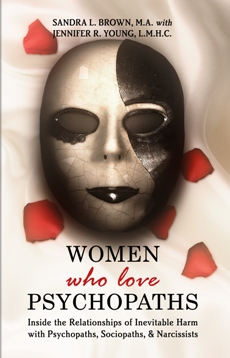
I’m Not What You Say I Am

November 8, 2011 by  
Filed under Sandra Says (Column)

Comments Off

I’m Not What You Say I Am-by Jennifer Young, M.S.


“We are so accustomed to disguise ourselves to others that in the end we become disguised to ourselves.” ~François Duc de La Rochefoucauld

Life isn’t all about appearances. Life is about movement, awareness, insight, change, compassion. Life is about interactions with others. As we move through the world we move through it together. Whether we accept it or not we impact each other. Conversely, we are impacted by others. Our impact on others is often a concern…it is a part of our conscious awareness. We wonder (and sometimes obsess) about how others regard us. Alfred Adler describes this trait of how people regard us in terms of “social interest,” our ability or potential for living “cooperatively and contributing to the good of others.” We learn to adopt this trait early on the playground. As children we were taught to be aware of others feelings and to be nice to others. We learned that words do hurt (in spite of the childhood lesson regarding sticks and stones!) We learned lessons like “make a good first impression” and “do unto others…” All of these childhood (and adult) lessons teach us that what others think is important. Now, this isn’t all bad. Considering we are social creatures and knowing that we impact each other, it is pretty important to be concerned with how other people regard us. Possessing this trait means that we have compassion and empathy…it means that we want to play well with others. But this trait, like all the others in excess, can be dangerous. It can be especially dangerous for someone who finds their way to a playground with a psychopath.

Herein lies the risk: Psychopaths lack concern for others…real, empathetic concern. They can fake it well, but deep down they move through the world not concerned about their impact, but concerned about having control and power. So, being concerned about how other people regard them is twisted. It isn’t so much about positive regard as it is negative regard…they want people to believe they are in control, powerful, smart, and likeable, etc. They want to cover up who they really are…manipulative, dangerous, callous, superficial, glib, and controlling. (Writing those words reminds me why they HAVE to develop a mask…it would be hard to spend two minutes with someone if we saw those traits). So, they move through the world, mask firmly in place…covering who they are with what they want you to believe.

For the woman in a relationship with a psychopath it’s the trait of how people regard you that keeps you stuck. You are concerned with the feelings of others, you are concerned about your impact on other people (and a psychopath will remind you all day about your impact on him!) As long as you believe you are having a negative impact…you will stay until your impact becomes positive. Sad part is…it never does. He knows you need to be seen as kind, compassionate, loyal and honest and he also knows that you don’t give up. So as long as he can make you believe your impact is negative…then give you a glimmer of hope that he can change…he’s got you. You stay because you must be seen by him and others as having a positive impact…a high concern for how others regard you. This concept works well in all other areas of your life, but with a psychopath it’s the thing that puts you at risk and the thing that keeps you there.

Herein lies the benefit: When you realize that he cannot change…you’re out. When you fully and completely come to believe that he is only motivated by power and control, you know that it is no longer about what he thinks or how he sees you…in fact, this flips. You begin to realize that he sees you as a sucker. He has used everything good about you to fill up his empty cup. He has taken what is good and right and manipulated it (and you) for his own agenda. You also realize that he is not only hurting you but he is having a negative impact on others…most likely people you care about. Knowing this becomes your strength…it becomes the fuel to the fire that burns the relationship to ruin…you will not play with others who have no regard. Think about it…would you allow an employee, client, friend, your child to manipulate your good nature this way…not a chance. You’re out. No more playing with a psychopath; time to take your toys and go home.

So, when all is said and done you have way too much concern for how other people regard you, and in the context of a pathological relationship that is really, really dangerous. So, how do you put a lid on that trait? First, be concerned about this trait only when it comes to your pathological. Chances are this trait has served you well in other areas of your life…so don’t be overwhelmed with having to “change” everything about you. This trait is appealing to psychopaths, so just put a lid on it in the context of your relationship. Next, be aware of your thoughts and actions when he persecutes you…when he calls you stupid or crazy, calls you irresponsible and uncaring, attacks your skills as a mother or tells you that you are being “mean.” When he does this he is seeking to control you through this trait. HE IS CONTROLLING YOU THROUGH YOUR TRAIT. Allow this thought to come into your awareness and then challenge it. Who is doing this??? A psychopath. Allow the truth to come into your awareness and you will be compelled to accept it. Additionally, with that knowledge you can counter any thought with a true thought. You might begin to remind yourself that what he says about you is part of his mask…part of the fantasy that he is creating to keep you in the relationship…fantasy is not reality. You know who you are…and you are not who he says you are!


The PLR Support Group is closed for open enrollment at this time and it will re-open at the end of December for the next group starting in January, 2012.


Deciding Not Stay Where You Are

November 1, 2011 by  
Filed under Sandra Says (Column)

Comments Off

The first step towards getting somewhere is to DECIDE that you are not going to stay where you are.”  (Anny Jacoby)

I just love this quote.  It reminds me of what we have been talking about now for months—since I began the Living the Gentle Life series, which has been about the recovery from PTSD and Pathological Love Relationships.

I get emails that say, “I can’t leave him because_________.”  There are lots of reasons that people, both men and women, feel trapped in pathological love relationships. It could be

* Finances

* Children

* Health

* Lack of employment or education

* Religious beliefs

* Family’s attitude

* Fear of harm

* Or your own damage from PTSD

But the first step toward an internal shift, where something else might be a possibility, is beginning with knowing you are not going to stay where you are.

The external reasons of ‘why’ you are still there are just that—external.  The paradigm shift starts with the internal, the decision you make that you are not going to stay where you are, whether emotionally, physically, financially, spiritually, or sexually. Just one shift can start all the other parts shifting as well.  Externally, things begin to happen when you simply make the decision that at some time in the near future, you are not going to stay where you are. That doesn’t just mean that you are going to move out, or get away. It means, you are going to move towards something, inside.

What happens outside of us in recovery starts with the shift internally, before it is ever manifested in our lives.  We won’t follow a path that isn’t first developed internally.  We’ll end up only seeing roadblocks of the external, which doesn’t help us.  The first thing that has to happen is the decision for internal movement.

Over the 20 years of working with pathology and hundreds and hundreds of its victims, I have heard every kind of story about pathological relationships—everything from the most deviant kind of mind control-to attempted murder-to actual murder.   I’ve heard of financial hostage taking, rape, assaults, stalking, women put into comas, people alienated from their children, people being medically harmed, reputations and career ruined, and people locked in their homes or psyches for decades.  I’ve heard it all.  The emails start with, “But, I can’t“–and then they give the reason for their inability to leave.

But don’t be discouraged–there is movement happening in you that you might not see! Why do I think that? Because you have read our magazine, our newsletters, or are emailing us; so obviously something inside is shifting!  This is the first step.  Somewhere, you are deciding you are not going to stay where you are!  Even mentally you are moving and changing.  Your “yes, but” might be a reason to you, but you are already deciding to not stay where you are. You are reaching out which undoubtedly will at least change where you are emotionally.

For some of the more common road blocks to change remember:

Yes, there are safety and housing barriers.

* Remember, every community has DV services, or DV housing most likely exists in your area.

Yes, there are emotional barriers—you have PTSD.

* Remember most communities have DV counseling services that are free; churches have support groups, and community mental health counseling for you or your children is free or very low in cost.

Yes, there are starting over barriers when you leave with only what’s in your suitcase.

* Remember, DV services and other non-profit organizations offer furniture, clothing and household item to those starting over.

Yes, there are legal barriers—you don’t have an attorney.

* Remember self-help, non- profit and women’s organizations.  DV agencies have information on legal aid and OTHER types of pro-bono services if you don’t qualify for legal aid.

Yes, there are other case-specific barriers—there are so many issues to manage at once.

* Remember women’s organizations, DV agencies and other non-profit organizations have case workers assigned to you so you don’t have to do it all yourself.

You only have to first decide, “That you are not going to stay where you are at” whether that is emotionally, physically, or spiritually.  That’s the first step to the rest of your life.  That doesn’t mean you leave tomorrow—that means you shift internally—that you open the emotional door of possibility that you will not always be where you are today.

Susan Murphy-Milano, our Expert Violence Strategist, works with women to help them design exit plans.  Please check out her information on our website.

October is DV Awareness Month, and I stop and give tribute and memory to those patients of mine who have died because they believed they couldn’t do anything about their situation, or they underestimated his pathology (or her pathology).  In honor of all those who have been harmed, alive or not, we remember you this month, and send ‘possibility’ to those living in a pathological situation that your life can and will be different.  I don’t say that flippantly—I too have experienced a lot of pain when I see patients further harmed, so I say it from my own experience.

The Institute has helped thousands of people make that paradigm shift internally so they could eventually make it externally.

(**If we could support you in your recovery process, please let us know.  The Institute is the largest provider of recover-based services for survivors of pathological love relationships.  Information about pathological love relationships is in our award-winning book, Women Who Love Psychopaths, and is also available in our retreats, 1:1s, or phone sessions.  See the website for more information.)

« Previous PageNext Page »