Last week I began talking about the issue of happiness, and how happiness is hinged on external conditions such as relationships, things, careers, stuff. … Our happiness is largely conditional based on “if things go the way we think they should go” or “if people act the way we think they should act.”
This leaves a lot of our own happiness tied to someone else’s shirt-tails and when he leaves, your happiness goes right out the door with him.
Last week I related some fun stories about my mom and her concepts of happiness. What I talked about regarding my mom was her JOY which was far different than her happiness. She wasn’t always happy. My father was murdered. That certainly did not bring happiness. Her second husband stole her life savings and was a sociopath. No happiness there. Her last “main squeeze” in her life died of prostrate cancer—a lot of sadness there. Yet, my mother was unusually “joyful.”
Joy has to do with the quality of US, not them. It’s a ME factor, not a him, or them, factor. Happiness may be external but joy is internal, and, in many ways, eternal. It emanates from within us, and can exist even when the external circumstances of our lives “suck.”
Joy can be infectious and can touch others when how we are has nothing to do with who we are with. It’s a barometer reading of how we are doing with ourselves and in our own spiritual development. It reminds us of how we are doing with managing our own outlook, optimism, and future. We may not have control over what he’s doing, who he’s doing, or how he’s doing, but we do have control over how we choose to see our circumstances. This is the essence of internal joy—managing your worldview from the inside instead of taking your emotional temperature based on how well he’s behaving. How I am, or how my joy is, can’t be taken by a thermometer from his mouth. It has to be taken from our internal and eternal well-being.
When you are finally able to shift your focus of where and how joy is created, it is a mind-blowing change because you no longer hold tight to the reins of external control—“I’ll be happy when someone else does _________.” You are able to refocus on finding joy in your life, just the way it is, with yourself and all your warts. In fact, over the past couple years I wrote about this regarding Viktor Frankel, a Jewish psychiatrist, who went through the Holocaust and developed what is now called Existential Psychology which is finding meaning in pain AND taking control of how you see what you have lived through.
If all pain is bad, then there is no gift in it. If there is no gift, there is no learning. If there is no learning, there is no opportunity to transform it. If you can’t transform it, you are its victim.
Joy comes from the right perspective when we tweak how we see ourselves, our lives, and the lessons of our lives. When life is a spiritual walk, not just a relationship destination, we are able to see the lessons as part of the journey and the OPTION of having joy even in the midst of an unplanned disaster like a pathological relationship. Joy is like a new eyeglass prescription—it clears up and crisps up how we see who we are on this journey and path of life even while in pain.
Your pain does not have to define you. That’s your choice. You are more than your pain. And so is your life!


 Pathological Love Relationships: Systemic Impact and Its Relevancy for Professionals
 The Institute for Relational Harm Reduction and Public Pathology Education has been an early pioneer in the research and treatment approaches for Pathological Love Relationships (referred to as PLRs). For close to 25 years we have been involved in developing model- of- care approaches for survivor treatment. Additionally, we have been promoting public pathology education for prevention and intervention for survivors, awareness for the general public, and as advanced education for victim service providers.
 Interested In This Topic?
 Next Newsletter
 Next Institute Event
 Relational Harm Reduction Radio
 Reading Suggestions
  Pathocentric Tools
 Assessments
  Survivor Centered Help Aides
 The Institute’s Resources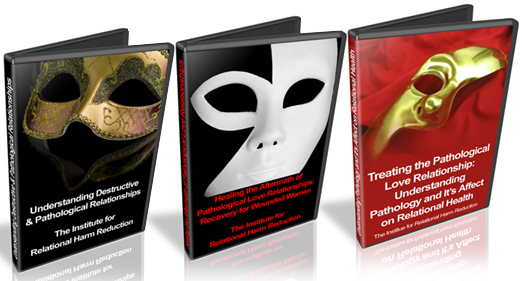
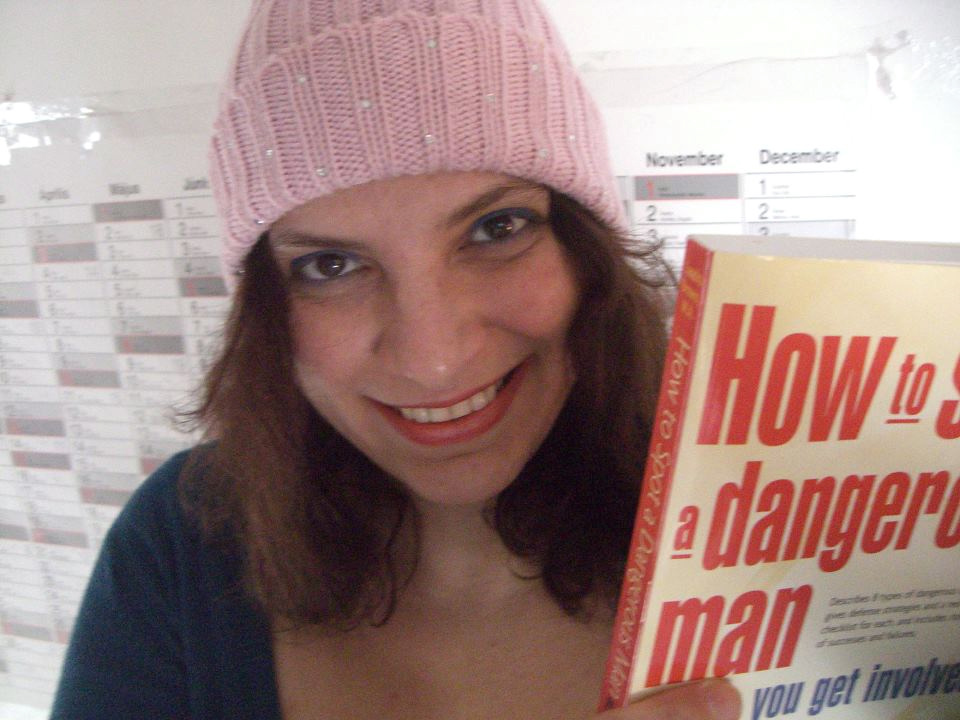 How to Spot a Dangerous Man Workbook
 Counseling Victims of Violence