Page Branding Mask

Political Ponerology 101: The Dangers of Pit Bulls and Climate Control

July 28, 2011 by  
Filed under Petty Tyrants (Column)

Comments Off

Political Ponerology 101: The Dangers of Pit Bulls and Climate Control
by Harrison Koehli

So, I think you all are getting the point of this series so far: psychopaths are a big problem in our world! But it’s not that simple. Take an analogy. Timmy is sick. He caught a bug at school the other week and is down for the count. Thankfully for his parents, they’re somewhat eccentrically obsessed with health and cleanliness and had immediately placed Timmy in a microbiologically sterile bubble in their guest bedroom, before proceeding to decontaminate the entire house and its occupants. The pathogen that threatens the health of those he might come in contact with is successfully locked in. (Unfortunately for Timmy, so is he!) However, Timmy’s parents didn’t factor Sunshine, the family’s pet pit-bull, into their anti-infection equation.

So, one afternoon, while Timmy is reminiscing about his former life outside the bubble, along comes Sunshine who pokes a hole in the bubble’s protective layer with his favorite stick. The highly contagious, airborne infection is now free to surf the air waves of 21st century climate control, and through a series of highly improbable events, Timmy’s sister, parents, dog and goldfish all come down with the nasty bug. The infection then spreads throughout the neighborhood, city, and eventually, the world, as local businessmen who don’t mind an aggressive pat down from the TSA and exposing their genitals to puerile airport security personnel via Peeping-Tom-Technology travel to very serious and important business meetings. So, what’s the point of this? Simply put, psychopaths need a number of things to have their effect in lieu of the direct interaction of personal relationships. Among a psychopath’s best tools to spread his malevolence are fanatic bulldogs and the cold theories of human nature that determine the intellectual climate of a society. It’s through these intermediaries that our bodies and minds are systematically infected – ponerized.

In this article I’ll focus on the latter of these tools. For now, all that needs to be said of the fanatics is that the tenacity of true believers (whether paranoid or just lacking important functionality of the prefrontal lobes) is what keeps pathological social systems in action. Just think of Internet trolls with religion and guns, seeing a Communist or terrorist behind every even slightly ‘liberal’ blogger, and you’ll get the picture. As for the second type of psycho-puppet, they’re a bit trickier to spot. Often intelligent, and highly influential in society, the pervasiveness of their theories in modern Western culture offers them some degree of camouflage. But when those theories are put to the test, they don’t fare too well. Unfortunately for us, very few actually question them, and they’re the cause of many of the world’s biggest problems.

In his book, Born to be Good: The Science of a Meaningful Life (New York: Norton, 2009), professor of psychology at the University of California, Dacher Keltner lists some depressing figures. In the last fifteen years, levels of trust among Americans have dropped 15%; feelings of social anomie, loneliness, and unhappy marriages are on the rise; people have fewer close friends, babies have less physical contact with their parents, and American children’s well-being ranks twentieth in a list of 21 nations. Keltner traces this overall decline in social well-being to what he calls the Homo economicus ideology of human nature. He writes:
This ideology has influential advocates from Sigmund Freud to evolutionary theorists. The strongest proponents of this view are found in the halls of economics departments. Their characterization of human nature [is] known widely as rational choice theory … First and foremost, Homo economicus is selfish. Every action of Homo economicus is designed to maximize self-interest, in the form of experienced pleasure, advances in material wealth, or, in evolutionist thought, the propagation of genes. … Competition is a natural and normative state of affairs. … Cooperation and kindness are, by implication, cultural conventions or deceptive acts masking deeper self-interest. … The conclusion: These generous acts are evolutionary “misfires” or “strategic errors” … (pp. 8 – 9)
Keltner mentions just a few such theorizers: the already-mentioned Freud, Ayn Rand, Machiavelli (“in general [mankind] are fickle, hypocritical, and greedy of gain”), and George C. Williams (Natural selection “can honestly be described as a process for maximizing short-sighted selfishness”). To this list we may add Karl Marx (for whom material conditions shape consciousness) and Thomas Hobbes (1588 – 1679), who thought that so long as there were no strong authority to keep them in line, humans were naturally “in that condition which is called war; and such a war as is of every man against every man” (quoted in Steven Pinker’s The Blank Slate: The Modern Denial of Human Nature (New York: Penguin, 2002), p. 7). In other words, human nature is so wretched (i.e. self-serving, distrustful, malicious) that a strong authority (i.e. church or state) is needed to keep society from descending into social chaos. Of course, nothing could be further from the truth. As Keltner describes it, such a view of human nature offers only part of the picture. Without the very real qualities of equality, compassion, cooperation, gratitude, love, laughter and nurture, our families and societies would fall apart. These emotions and values are what bring, and keep, people together, and coincidentally (or not), they are the very qualities lacking in psychopaths.

In fact, some big clues to this can be found in Adam Curtis’ 2007 documentary The Trap: What Happened to Our Dream of Freedom . In it, Curtis shows the influence of “simplistic model[s] of human beings as self-seeking, almost robotic, creatures” on modern economics and politics (are we seeing a pattern here?). One such model is the “Game Theory” of mathematician and Nobel Prize winner in Economics John Nash, whose life was whitewashed in the Hollywood film A Beautiful Mind. Importantly, Nash was diagnosed with paranoid schizophrenia, although in my opinion “schizoidal psychopathy” is a better fit. His arrogant, cold-hearted, and disturbed mind is dealt with at length in Sylvia Nasar’s biography of the same name. Nash’s view of human nature influenced the development of his “game” scenarios, which in turn greatly influenced official Cold War policies.

According to Nash, human beings are selfish and distrustful by nature, and the only way to create social stability is through the cultivation of suspicion and self-interest. In one of his games, players must choose to trust or betray their gaming partner in order to either lose or gain benefits. Trust only works if both sides choose to do so. If your opponent “screws you”, however, you lose more than you would if you screwed him as well. The choice with the greatest payoff is thus to betray your partner, who in turn betrays you. According to Nash, as well as other economic theorists like Friedrich von Hayek and James M. Buchanan, this is how humans actually operate: motivated entirely by self-interest and constantly calculating and anticipating the malicious intentions of all others. Homo economicus. Life is one big game of screwing others over, and coming out on top.

That’s great in theory, I suppose. However, in practice, the only individuals who consistently played the games in such a manner were psychopaths and economists (!). When the games were played by the experimenters’ secretaries, they always chose the mutually beneficial trust scenario, that is, the normal, human response. And while these theories of economic and political “freedom” were embraced by politicians such as Margaret Thatcher and continue to determine economic and government policies in Western societies, as Curtis concludes, when they are put into practice they actually lead to “corruption, rigidity, inequality.” See how far Timmy’s bug can spread?

As can be seen by the names mentioned above (Machiavelli, Hobbes, Marx, etc.), the view of humanity as nothing but selfish imps has long held sway. Religious traditions have taught their believers to view themselves as “special” and set apart from the rest of humanity, which is seen as wretched, brutish, amoral, and Godless. (In other words, Homo economicus-lite; only the others are evil.) It is so universal that it seems to be a rule among religious sects, whether in the Talmudic view of goyim, the Christian view of the “un-saved”, or the Muslim view of the kafir. So, too, in political theories. As the game theory tests showed in The Trap, normal people tend trust one another. It is “intra-species predators” such as psychopaths who are themselves distrustful by nature, and who then inspire distrust in others; who are selfish, and inspire selfishness in others; and who wish to be the ones controlling the rabble of humanity.

And when we take a hard look at the laws and cultural norms that these pseudo-people promote (and which we take for granted), we see that they’re most often based on this imaginary, invented, simplified view of human nature. it’s everywhere we look. In his book Lie Detectors: A Social History, Kerry Segrave documents some of the absurd methods of lie detection used in our history. For example, from ancient India and Iran to Europe of the Middle Ages, methods such as the “red-hot iron ordeal”, where the accused is found guilty if he suffers burns from a red-hot piece of metal, have been used as methods for lie detection. Obviously both the guilty and innocent will be burned, but authorities defended their techniques with any number of cockamamie explanations. In the present day, torture techniques whose true nature is softened by euphemisms such as “advanced interrogation techniques” are used to break down the accused to the point where they will confess to anything, as was the case with alleged 9/11 “mastermind” Khalid Sheikh Mohammed, who was waterboarded 183 times in a single month. Mohammed confessed to a litany of crimes, which included targeting a bank founded four years after his arrest. The applications aren’t always so extreme, however. In court, jurors easily doubt the testimony of a seemingly ‘mentally-imbalanced’ (i.e. emotional) person, especially when it is his or her word against a cool-headed, well-respected psychopath who lies with ease and absolute certitude. The injustice of the situation, and the unbelievable chutzpah displayed by the psychopath, is enough to drive an innocent party into an emotional fit, ruining their so-called credibility.

We’ve largely inherited our legal system from the Romans. While the Greeks were more concerned with literature, mythology, and strictly philosophical philosophizing (among other more questionable activities), the Romans took a more utilitarian approach. With large populations to control and a deficit in understanding of human nature (what is it with half-wits ruling vast portions of the globe, anyways?!), the administrative and political practicalities of empire outweighed the Greek ideals of sober reflection and discovery. Their legal system became a ‘one-size-fits-all’ enterprise conceived for the “statistically average” (and equally non-existent) human. Not even the Jesus peoples’ notion of the “kingdom of God” – which caused quite a stir among the plebes in the first century after Jesus, basing itself on natural human relationships of respect, love, and understanding – managed to temper the Roman mentality when Christianity was assimilated into the empire’s political machine in the fourth century. In short, we inherited this Roman tendency to submit human nature to The Law and not vice versa.

For millennia these culturally ingrained blind spots have hindered our ability to comprehend human and social reality in all its complexity, making us individually and collectively vulnerable to psychopathic influences. The reason for this is that the roots of human evil are found within the very human variety and complexity that is denied by commonly promoted beliefs about humanity. By our ignorance of their existence, they remain hidden in plain sight. In fact, humans are not all the same. Psychopaths have very little in common with the rest of humanity, and it is them who exploit the gap between our unrealistic beliefs and the actual truth of the matter, as in the legal cases mentioned above.

The funny thing about these theories is that they end up revealing more about the nature of those making the theories than about humanity in general. ?obaczewski provides the key to this puzzle. According to him, schizoid individuals (think Robert DeNiro’s character Travis Bickle in Taxi Driver, or Rorschach in Watchmen) as a rule have such a misanthropic view of human nature. Because of their own shallow emotions and unstable personalities, they have trouble ascribing to others qualities that they themselves lack, like true empathy, altruism, and cooperation. Instead, they tend to create baroque and icy theories with no basis in reality. They project their own limitations into self-evident, ‘universal’ values, and when their books are mass-produced, and their ideas spread throughout the public, academia, economics, and politics, that means trouble.

For example, in addition to the unfortunate influence of Freud on psychiatry, the behaviorists have largely dominated the field of psychology. Taking empiricism to its limits, they concluded that because mental processes could not be directly studied in the laboratory, the mind could not be said to exist at all – all there is is behavior! As anyone with a mind knows, this is patently absurd. Visualization, imagination, and higher emotions are just a few of the essential human qualities denied by behaviorism. Rather, the behaviorists attempted to extrapolate human qualities from the observation of animals – their reflexes, formed habits, and learning processes. While much was learned in the process, it led to a vicious circle within psychology. By denying truly human qualities and abilities, their ended up with grossly lobotomized theories of human nature. As John B. Watson infamously said:
Give me a dozen healthy infants, well-formed, and my own specified world to bring them up in and I’ll guarantee to take any one at random and train him to become any type of specialist I might select – doctor, lawyer, artist, merchant-chief, and yes, even beggar-man and thief, regardless of his talents, penchants, tendencies, abilities, vocations, and race of his ancestors. (quoted in Pinker, p. 19)
As was the case with Nash and Hobbes, these theories tell us more about the minds of the theorists themselves than about humanity as a whole. Taken as a group, behaviorists can actually tell us something about the true variety within human nature. Because psychology is the only discipline where both the subject and object of study are the same, it’s easy for subjective errors and faulty core assumptions to slip their way into the reasoning process. Studying the core assumptions about human nature present within the writings of influential scientific, economic, and religious thinkers is a powerful aid in beefing up our sense of smell. We might just catch a whiff of a truly pathological mindset. But such a keen sense can be a dangerous thing. Psychology, after all, is the first science to be outlawed and Stalinized in pathocracy, because of its potential to identify the true nature, causes, processes, and weaknesses of the system.

Psychopaths rely on the tacit acceptance of such theories by the masses of humanity. Think about it. In our daily lives, such ideas are mere “Sunday beliefs” – we may accept them in economics class, or the psychology lab, but when we get home to our families, social instinct is what drives us. We still hug and kiss our children before bed, worry about their futures, make sacrifices for their well-being. We want them to be happy, and we do what we can to make it a reality.

What does it matter that some strange, little economists hold such absurd beliefs? Oh, yeah… Inequality, social anomie, depression, poverty, economic shock treatment, computerized warfare, poisonous pharmaceuticals, non-food, pollution, corporate enslavement, and on and on and on. The fact is, even if we may tend to live our lives with some modicum of humanity, societal beliefs affect us all. Schizoidal misanthropy affects us all. But besides these very tangible effects, besides the fact that their ideals are spread and implemented by our leaders, belief systems limit the range of concepts with which our minds can ‘play’. They’re like blinders on a carriage-horse. When we leave out what is human, and forbid anything ponerological, we’ll be lucky if the carriage doesn’t smash to pieces when it is run off the cliff of time and history.

So, no, I’m not recommending we all start living in bubbles (analogies, mine at least, can only go so far). But just as our health depends on the functioning of our immune system, our psychological and societal well-being depends on the degree of our knowledge about ponerology. If the “trap” set by the theories mentioned above is the fact that they are speculative and divorced of any relation to human and social reality, the obvious solution is to come to a solid understanding of human nature – the human individual in all its scope and variety. So take off your blinders, give someone you love a hug, and let’s get down to exposing the individuals who have flushed our world down the drainpipe.
Living the Gentle Life Part 2

July 26, 2011 by  
Filed under Sandra Says (Column)

Comments Off

In the previous newsletter, I began talking about the normal ‘aftermath’ of pathological love relationships—Post Traumatic Stress Disorder.  (Previous newsletter is on the magazine under Sandra Says.)

PTSD is an anxiety disorder that is often reactivated by ‘triggers.’  These can include people, places, things, or sensory feelings that reconnect you with the trauma of the relationship.  In the last newsletter, I talked about the gentle life and how an over-taxed and anxious body/mind needs a soothing life.  I cannot stress this enough: people MUST remember that their PTSD symptoms CAN BE reactivated if they aren’t taking care of themselves and living a gentle life.

What IS a gentle life?  A gentle life is a life lived remembering the sensitivities of your PTSD.  It isn’t ignored, or wished away—it is considered and compensated for.  Since PTSD affects one physically, emotionally, sexually, and spiritually—all of those elements need to be considered in a gentle life.  Just as if you had diabetes you would consider what to eat or what medication you need to take, so it is with PTSD.

Interestingly, although PTSD is listed in the psychiatric manual as an emotional disorder, PTSD has some very real physical effects as well.  In fact, it has been discussed having PTSD listed in physician’s manuals as well, because the untreated, ongoing effects of acute stress are well known in the medical community.  Since PTSD has both components of emotional and physical symptoms, someone recovering from PTSD must take those aspects into account.

Physically, PTSD often becomes a chronic condition by the time you get help.  That means you have been living with it for a while and it has been wreaking havoc on your physical body during that time.  Unbridled anxiety/stress/fear pumps enormous amounts of adrenaline and cortisol into your body.  This over stimulates your body and mind and causes insomnia, paranoia, hyperactivity, a racing mind/intrusive thoughts and the inability to ‘let down’ and ‘rest’.

A body that has been living on adrenaline needs the adrenal glands to ‘chill!’  People often complain of chronic insomnia, which also leads to depression.  Depression can lead to lethargy, overeating, weight gain and hopelessness.  It is possible to have both anxiety and depression occurring at the same time.  Unmanaged stress, anxiety, and adrenaline can lead to long-term medical problems often associated with stress—lower GI problems, migraines, teeth grinding, aggravated periods, chest pain, panic attacks, and most auto-immune disorders like fibromyalgia, lupus, chronic fatigue syndrome, arthritis and MS.

So, CLEARLY, PTSD is something that SHOULD be treated.  Physically that means going to someone who can diagnose you—a therapist or psychiatrist.  In the early parts of treatment, it is normal to take anti-anxiety medication, anti-depressants or sleep aides in order to rectify your depleted brain chemistry and to allow the adrenal glands to ‘rest’ and stop pumping out adrenaline.  Your doctor is in the best position to tell you what will help to relieve your physical symptoms.  Some use alternative medicine to deal with those symptoms. What is effective for each person varies.

Additionally, you need to help your body and brain produce the ‘good stuff’ in your brain chemistry.  This means exercising, eating well, and learning relaxation techniques.  Too much adrenaline has been pumping through your body with no way to get utilized.  Excessive adrenaline makes you feel jumpy and restless.  Exercise (even moderate walking) helps to produce endorphins in your brain, which produce those feelings of ‘well-being’ and helps to burn off the adrenaline and any extra weight you might have gathered.

Although during depression you often don’t FEEL like exercising, you will always feel bad if you don’t get your body moving.  Stress is even stored at the cellular level of our bodies.  You must, must, must, get moving in order to feel better.

Eating well means not trying to medicate your depression and low energy with carbs.  When you are depressed your body craves carbs as a source of quick energy, but the spikes in blood sugar add to the sense of mood highs and lows.  You’ve already had enough ‘junk’ in the relationship—think of it as nurturing your body with good food to replace all the ‘junk’ that it has been through.  You can greatly help mood swings by eating well.

It’s also necessary to deal with the negative habits you have acquired as ‘coping mechanisms.’ Many people with PTSD try to medicate their anxiety and depression.  This could be through smoking, relationship hopping, sex, eating/binging/purging, drugs (legal and illegal), and the increased use of alcohol.  In fact, one of the devastating side effects of PTSD is how many people develop alcoholism as a result. Any habits you are prone to right now tend to increase when you have PTSD, because the particular habit becomes more and more a way to manage your PTSD symptoms.  Finding positive coping skills instead of negative habits is a great step in your recovery.

Physical recovery also means paying attention to not reactivating your symptoms. Your physical environment in which you live, play and work must be conducive to low stimulation.  That means low light, low noise, and low aggravation.  Sometimes that means making big changes in the PEOPLE you hang out with—getting rid of the loud, noisy, overactive, aggressive and pathological.  And sometimes it means making big changes in a job where the environment does nothing but trigger you.

Lastly, learning relaxation techniques is not ‘optional’ for people with PTSD.  PTSD is a chronic state of hyper-vigilance, agitation, and restlessness.  Your body has been over-ridden with adrenaline for a long time and has ‘forgotten’ its equilibrium in relaxation.  It must be re-taught.  Re-teaching means doing it daily.  Taking 5 –10 minutes a day to use a relaxation breathing technique and allowing your mind to unwind.  Giving positive messages to your body to relax will help you tap into this natural relaxation, even during times you are not actively trying to relax.  The more you use this technique, the quicker your body can relax—even at work or when you are doing something else because it has ‘remembered’ how to.

There are a lot of tapes, CDs and videos you can buy on relaxation that walk you thru the process of relaxation (we also have one created for PTSD on the magazine site.)

Taking yoga will also teach you how to use correct breathing techniques that help correct the ‘shallow/panting’ breathing that is associated with PTSD and anxiety.  Shallow breathing or panting can actually trigger panic attacks.  Learning to breathe well again is a metaphor for ‘exhaling’ all the junk you’ve been thru and releasing it.  If you don’t have a relaxation tape, you are welcome to get our mp3 audio on relaxation techniques on our website.  Most importantly is to just become acutely aware that PTSD is physical (and often medical) as it is emotional.

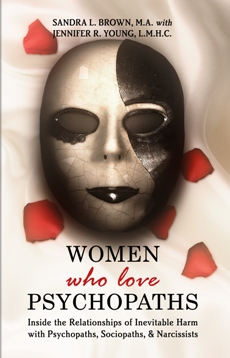
(**If we can support you in your recovery process, please let us know.  The Institute is the largest provider of recovery-based services for survivors of pathological love relationships.  Information about pathological love relationships is in our award-winning book, Women Who Love Psychopaths, and is also available in our retreats, 1:1s, or phone sessions.  See the website for more information).

Living Holistically as a Means to Healing—The Journey to Wholeness

July 25, 2011 by  
Filed under A Journey Into Wellness (column)

Comments Off

It’s a long road, dealing with or healing from pathology.  Some may be finding themselves on the road to healing, and some may still be in the process of breaking away from the relationship, while others may just be realizing what is happening in their life.  Your body, soul, and spirit are spent.  Sometimes just getting through the moment seems like it is an enormous task.  Possibly you feel as though you have been, or still are, on an emotional roller coaster.  Anxiety is your taskmaster. You may wonder how you came to this place that seems a like barren desert where demons prey.

The person you once were is little more than a passing memory. When you look in the mirror, you see only a shell of the person you remember. You may look drawn, tired or older.  Maybe you’ve lost or gained unhealthy amounts of weight, or have possibly let yourself go.  On the other hand, maybe you have overcompensated in your dire situation by becoming excessively preoccupied with your looks—perfection in presentation, expensive clothing and accessories, or cosmetic surgeries—your mask, to mirror his mask.  However you may look, or feel at this moment, know that healing and wholeness is just a decision away.

Making this decision is sometimes difficult, but it’s always necessary.  After living with, and working in pathological circumstances, my body gave out and succumbed to autoimmune illnesses.  I didn’t realize at the time how much stress had accumulated in my body over the years. Possibly I was genetically predisposed to these types of illnesses.  But, had my life circumstances been different, and better choices made, there is a good possibility that I would have remained free of disease.

However, stress does take its toll, whether physically, emotionally or spiritually.  Being in pathological circumstances or with pathological individuals is hard—period.  There is no way around it, and it never gets easier.  Eventually, this hard way of living breaks a person down.  It tears at your core, and in most cases people don’t even realize what is happening to them.  It becomes a way of life and it begins to feel normal.

I came to a point in my life where ‘normal’ was not feeling normal anymore. Mind you, this journey began long before I realized what effects pathology had in my own life.  All I knew is that I was sick and tired of being sick and tired. The first decision made was to “clean out my closet,” as a dear friend of mine says, of negative people who were not adding anything to my life.  I told several people of the changes I was making.  Some were on board with me, and some walked away—and that was okay.  This helped emotionally to a point, but I was still physically sick and my quality of life was not very good.

One winter evening I met a woman who knew a friend of mine from college.  During the evening, she gave me the email address of this mutual friend.  She told me how this woman was into holistic healing after having cancer and how she might be able to help me heal.  That next week I contacted this friend, and we began exchanging phone calls.  She told me the importance of internal cleansing, supplements, nutrition, and balance for healing my life.  I was apprehensive, but excited to get started.  Well, it took another two months of pondering before I made a firm decision to get started on this part of the journey.

That spring, I experienced my first internal cleanse.  At this same time, I was introduced to the practice of Yoga Nidra (which will be discussed in a later article), a practice that is used for various types of healing. The results of combining the two practices were amazing. Within a few weeks I was performing tasks that I had been unable to do for almost a decade.  My whole being started to feel balanced.  It was unbelievable to feel relief, and to be doing things that I thought I’d never do again.

As time went on, I incorporated better nutrition, vitamins and supplements into my daily routine.  Yogic practices, including breathing techniques and meditation, are a large part of my discipline, along with walking, and working with weights.

Holistic health approaches take into account the whole individual—body, soul, and spirit.  In the aftermath of psychopathology, and the havoc it brings to the whole person, healing needs to take place internally as well as externally. Internally we need to heal our body, soul, and spirit, and externally we must bring order and balance to our circumstances.  It is amazing that when we bring balance in one area of our life, other areas seems to follow, and life becomes more manageable and pleasant.

During the following months, I will discuss various holistic aspects that may assist in healing from pathological experiences in order to regain balance and wellness in life.  I am grateful for all of the teachers in my life whose wisdom and care has assisted, and continues to assist, me in my journey to wholeness.

(Before starting any health care program, please consult your physician, or a certified or licensed professional in a particular given discipline.)

Male Survivors

July 23, 2011 by  
Filed under Male Survivors

Comments Off

Coming Soon

A Journey Into Wellness

July 23, 2011 by  
Filed under A Journey Into Wellness (column)

Comments Off

Coming Soon!!!

Living the Gentle Life Part 1

July 19, 2011 by  
Filed under Sandra Says (Column)

Comments Off

“Be gentle with yourself.  The rest of your life deserves it.” (Sandra L. Brown, MA)

As discussed in previous newsletters, Post Traumatic Stress Disorder (PTSD) is a trauma-related anxiety disorder and is often seen as an aftermath constellation of symptoms from pathological love relationships.  Exposure to other people’s pathology (and the corresponding emotional, physical/sexual abuse) can, and often does, give other people stress disorders, including PTSD.  Our psychological and emotional systems are simply not wired for long-term exposure to someone else’s abnormal psychology.  Often the result is a conglomeration of ‘aftermath’ symptoms that include PTSD, which is described as ‘a normal reaction to an abnormal life event.’

The profound and long-term effects of PTSD create what I refer to as a ‘cracked vessel.’  The fragmentation caused by the trauma creates a crack in the emotional defense system of the person.  While treatment can ‘glue the crack back together’, and the vessel can once again function as a vessel, if pressure is applied to the crack, the vase will split apart again.  This means, that the crack is a stress fracture in the vessel—it’s the part of the vessel that is damaged and weakened in that area.

There are numerous types of therapies that can help PTSD.  If you have it, or someone you care about has it, you/they should seek treatment. PTSD does not go away by itself, and if left untreated, can worsen. People often have missed the opportunity of treating PTSD when it was still relatively ‘treatable’ and responsive to therapy.  The sooner it’s treated, the better the outcome.  But any treatment, at any time, can still help PTSD.

However, what is often not recognized is the ‘continual’ life that must be lived when living with the aftermath of PTSD.  Because the cracked vessel can crack again, a gentle and balanced life will relieve a lot of the PTSD symptoms that can linger.  I have often seen people who have put a lot of effort into their recovery and NOT put a lot of effort into the quality of a gentle life following treatment.  This is a mistake, because going back into a busy and crazy life, or picking another pathological, could reactivate PTSD.  As much as people want to ‘get back out there’, and think they can return to the life they use to live, often that’s not true. ‘Wanting’ to live or do what you did before does not mean that you will be able to.  I know, I know…. it ticks you off that the damage is interfering with the person who you use to be…. Before Pathology Exposure (BPE).  But wanting it to be different doesn’t make it different.  If you have PTSD, you need to know what to realistically expect in your prognosis.

Consequently, many people’s anxiety symptoms return if their life is not gentle enough.  Much like a 12 Step Program, ‘one day at a time’ is necessary, and understanding your proclivity must be foremost in your mind.

Living the gentle life means reducing your exposure to triggers that can reactivate your PTSD.  Only you know what these are. If you don’t know then that’s the first order of therapy—to find your triggers.  You can’t avoid (or even treat) what you don’t know exists.

Triggers are exposure to emotional, physical, sexual, visual, auditory, or kinesthetic reminders that set off anxiety symptoms.  These triggers could be people, places, objects, sounds, phrases (songs!) tastes, or smells which reconnect you to your trauma.  Once you are reconnected to your trauma, your physical body reacts by pumping out the adrenaline and you become hyper-aroused, which is known as ‘hyper-vigilance.’  This increases paranoia, insomnia, startle reflex and a lot of other over-stimulated and anxiety-oriented behaviors.

Other triggers that are not trauma-specific, but you should be on the alert for, are violent movies, TV, or music, and high-level noises.  Also, be on alert for lifestyle/jobs/people that are too fast-paced, ‘busy’ environments, risky or scary jobs, bosses or co-workers who have personality disorders and are abrasive, or any other situations that kick-starts your anxiety.  Women are often surprised that other people’s pathology now sets them off.  Once they have been exposed to pathology and have acquired PTSD from this exposure, other pathology can trigger PTSD symptoms.  Living ‘pathology free’ is nearly mandatory—to the degree that you can ‘un-expose’ yourself to other known pathologies

The opposite of chronic exposure to craziness and pathology would be the gentle life.  Think ‘Zen Retreat Center’—a subdued environment where your senses can rest…. where a body that has been pumped up with adrenaline can let down…. and a mind that races can relax. Where the video flashbacks can go on pause, and fast-paced chest panting can turn into slow, diaphragmatic breathing. Where darting eyes can close, soft scents soothe, and gentle music lulls.  Where high heels come off and flip-flops go on.  Where long quiet walks give way to tension release…. quieting of the mind chases off the demons of hyperactive thinking…. so when you whisper, you can hear yourself.

Only, this isn’t a retreat center for a yearly visit…. this is your life, where your recovery and your need for all-things-gentle are center in your life.  It doesn’t mean you need to quit your job or move to a mountain, but it does mean that you attend to your over-stimulated physical body.  Those things in your life you can control, such as the tranquility of your environment, need to be adjusted.  Lifestyle adjustments ARE required for those who want to avoid reactivated anxiety.  This includes psychological/emotional, physical, sexual, and spiritual self-care techniques.

The one thing you can count on about PTSD, is when your AREN’T taking care of yourself, your body will SCREAM IT!  Your life cannot be the crazy-filled life you may watch others live.  Your need for exercise, quiet, healthy food, spirituality, tension release, and joy are as necessary as oxygen for someone with PTSD.  Walking the gentle path is your best guard against more anxiety, and your best advocate for peace.

Because of this overwhelming need, The Institute offers retreats several times a year that focus on your recovery. If we can help you live a gentle life and heal, please let us know.

(**If we can support you in your recovery process, please let us know.  The Institute is the largest provider of recovery-based services for survivors of pathological love relationships.  Information about pathological love relationships is in our award-winning book, Women Who Love Psychopaths, and is also available in our retreats, 1:1s, or phone sessions.  See the website for more information.)

Coming Soon!

July 14, 2011 by  
Filed under A Journey Into Wellness (column)

Comments Off

A Journey Into Wellness coming soon

The Cracked Vessel

July 12, 2011 by  
Filed under Sandra Says (Column)

Comments Off

Over the years, I have talked about the frequent ‘aftermath’ of pathological love relationships, which is often Post Traumatic Stress Disorder (PTSD).  Many women emerge from these relationships either diagnosed, or not yet diagnosed, with PTSD—an anxiety disorder so extreme that the core concept of self is often fragmented.

To demonstrate PTSD, I use the analogy of a cracked vessel.  PTSD causes a fracture to the core concept of self which produces a crack in the soul. However, the soul, mind and body must continue to try to function as it did prior to the damage. The vase can be glued again to function, but push on the crack, and the vessel will break again.

PTSD is a mood disorder, specifically an anxiety disorder.  The common symptoms of PTSD (whether in you or someone you care about who has been in a pathological relationship) includes:

•    Intrusive thoughts about him/relationship/events of the relationship
•    Nightmares
•    Flashbacks or sensing effects reoccurring in the present moment
•    Extreme reactions upon exposure to things that symbolize or resemble parts of the relationship
•    Trying to avoid thinking about him or the relationship
•    Trying to avoid situations that remind you of him or the relationship
•    Blocked recall of all the events that occurred
•    Decreased interest in daily activities
•    Feeling numb, detached, unable to feel loving feelings
•    Difficulty concentrating
•    Hyper-vigilance (startle reflex)
•    Hyper-arousal (feeling keyed up or too alert)
•    Insomnia
•    Anger/Irritability

Some of the biggest concerns for women are the symptoms associated with PTSD because it is interfering with the quality of their lives, their level of functioning, and often their ability to parent effectively.  Many don’t realize they have PTSD so they don’t seek treatment.  They just feel like ‘they’re going crazy’ or ‘I should be over it by now–why am I still having these experiences?’  People are often relieved to find out a name and a reason for their experiences.

Unfortunately, others around them may also not realize what is wrong and may tell them to ‘move on’, ‘get over it’, ‘just meet someone else’, and yet months, and even years later, women can still be having PTSD symptoms.  That’s because PTSD does not just ‘go away’ without treatment.  In fact, it worsens over time when neglected.

PTSD is considered a ‘trauma disorder’ because you have lived through an abnormal and traumatic life event.  Trauma disorders require specific types of treatment in order to recover.  Untreateded PTSD can lead to chronic anxiety and depression, substance abuse to help cope with the anxiety, other compulsive behaviors like eating, smoking, and sexual acting out, addiction to sleep aids, and chronic stress related medical conditions.  It’s not a disorder to be taken ‘lightly.’

Those who have already been diagnosed with PTSD may not realize that PTSD is often a life-long condition.  You won’t always feel as anxiety-ridden as you do now, but depending on the severity of the PTSD, it can leave the vessel cracked.  Future damage can cause the stress crack to re-fracture.

Survivors either highly identify with the analogy of the cracked vessel, or hate the analogy.  Some have written me and said, “I don’t like what you said about being a cracked vessel—anyone can change.”  I didn’t create the symptoms and effects of PTSD.  I have only learned to live with them….

People with PTSD need to live quiet, gentle lives.  Their households, jobs, environments, and relationships need to reflect the tranquility that an overtaxed body needs.  These are not people who need to have fast-paced, dramatic, traumatic and chaotic jobs, lifestyles or relationships.  These are people whose bodies, minds, and spirits need to exist in a healing environment.

In our upcoming six-part series on ‘Living a Gentle Life,’ we will go into much more detail about recovery from PTSD.

(**Information on pathology and your recovery is in the award-winning book, Women Who Love Psychopaths, also taught during retreats in the months of February and August, in 1:1 sessions during January, March, May and September or in phone sessions.)

Rocking the Relationship Boat

Comments Off

With a month left to go before she graduated from the police academy in Florida, Kelly Rothwell, 35 was moving forward to a new chapter in her life.  Her plans included ending a volatile relationship with her dangerous boyfriend of over 3 years. The boyfriend controlled and monitored her cell phone and computer activity.  When she was out of his radar, the boyfriend stalked her.  Kelly’s training at the police academy would turn her fears and anxieties into strength.

On March 12, 2011, Kelly picked up her keys to her new residence then met with a friend for lunch before heading over to the boyfriends and announcing in person, the relationship was over.  Kelly Rothwell was never seen or heard from again.  Now she joins the thousands of other women who attempted to end the relationship without a solid plan of action.  Law enforcement has since named the boyfriend as a suspect in this case.  It is no surprise he was the last person to see Kelly.

Time and time again we read about women who were planning or have already ended their marriage or relationship, reported missing or discovered dead.  The abuser has a plan and so should you!  Prior to ending the relationship or rocking the boat in a court of law, follow the instructions provided in the book “Time’s Up A Guide on How to Leave and Survive Abusive and Stalking Relationships,” available here at the Institute or  at Amazon.com.   And if you do nothing else, before you announce the ending of your relationship be sure to prepare the Evidentiary Abuse Affidavit and video located in the book.


http://murphymilanojournal.blogspot.com/2011/03/intimate-partner-violence-ends-with-no_28.html

Your Medical Conditions–Is the Root Your Relationships?

July 5, 2011 by  
Filed under Sandra Says (Column)

Comments Off

Many women don’t know that ongoing stress (whether it is recognized or not) leads to very predictable medical conditions. Our mental state is our physical state so women with the worst health issues are often women with the worst emotional stressors.

Women who were raised in addicted, mentally ill, abusive, or pathological families often have the most severe and lingering of medical symptoms and diseases. One reason is that they have an accumulative effect of stress-related disorders because of the length of time they have been ‘stressed.’ Since many women who were in disordered families go on to pick disordered men, their stress simply rolls over into the next relationship. Or if she is able to avoid the disordered intimate relationship, her previous exposure to the disordered family or resulting stress may go untreated. In those cases, the stress is still stored in the body.

We now know that stress has to go somewhere. It goes into your body as deep as the cellular level as well into your muscles and tissues. This type of stress storage can result in diseases that effect the muscles and tissues like MS, Lupus, Fibromyialga.

Stress attacks the immune system and renders it ineffective. This can result in diseases like Chronic Fatigue, Epstein Bar, and other auto-immune disorders like Lupus and Fibro that end up moving from the immune system to the muscles and tissues. (Ever say ‘He’s wearing me out?’ He literally is!)

Stress negatively affects blood pressure–high blood pressure can lead to strokes, heart disease, and other long term diseases. (Ever say, ‘He’s killing me?’)

Stress floods the body with cortisol that produces too much adrenaline in the body causing irritability, sleep disruptions, and fight/flight symptoms. Cortisol effects metabolism which produces weight loss or weight gain especially in the stomach area and blood sugar instability which can lead to hypo glycemia or diabetes. (Ever say “I just feel like I want to jump out of my skin”?)

Stress negatively affects hormones causing chronic menstruation problems, endometriosis, early menopause, PMS, and other female related disorders.

Stress causes inflammation in the body which we now know is the beginning of most disease processes. This can lead to arthritis and other inflammation-based diseases.

Stress causes tension which can be held almost anywhere in the body. This affects the skeletal system resulting in back or neck pain requiring chiropractic adjustments. Sometimes it’s stored in the face that produces TMJ or migranes.(Ever say, ‘He’s such a pain!’?)

Stress causes the release of gastric juices which inflame the throat,stomach and colon resulting in digestive disorders like Irritable Bowel Syndrome. (Ever say he was a pain in your butt?)

Stress negatively affects certain vitamins in your body which get depleted during ongoing stress which can result in fatigue, hair loss, allergies, and skin problems. (Ever say ‘he really gets under my skin?’)

Stress screams to be managed which is why so many women end up with addictions trying to ‘manage’ the chronic stress condition–addictions with anxiety medication, pain meds, street drugs, alcohol, food, sex, religion, and overachieving. (Ever say ‘He is going to drive me to drink?’)

Over the past 20 years of treating women, I’ve seen everyone of these disease processes at work in women. PATHOLOGICAL RELATIONSHIPS ARE A LEADING NEGATIVE CAUSE IN WOMEN’S HEALTH ISSUES ON EVERY LEVEL! If we want to improve women’s health in this country, we need to address these pathological relationships that are killing her!

Stress hides because we are adaptive in some ways and become ‘use to’  the level of stress we are currently under OR have ALWAYS been under since childhood. But that doesn’t mean we aren’t highly damaging our bodies with it. Some women only become aware of their stress if it jumps markedly. By then, you are in the severe category of stress disorders which by that point, you probably have several of the conditions listed above.

By far, the condition of the 21st century for most people is stress. Women with histories of abuse or current pathological relationships have even higher stress levels than people without these contributing factors.  Stress demands to be treated and then managed…either do it now or it will demand it in medical issues.

Many women say they don’t even know where to begin in managing the stress that is contributing to their medical conditions because they have had it so long. On our shopping cart is an mp3 download for Relaxation Techniques for Stress Disorders–that’s a good start. Consider physical exercise, yoga, pilates, some way of metabolizing all those stress hormones. Learn deep breathing, relaxation techniques, or quiet meditation. Find a counselor or a group in order to verbally express the underlying issues of your stress. (We offer phone sessions, tele-support group, retreats and 1:1s with Sandra). Manage addictions of sex, relationship-hopping, drugs even prescriptions, and alcohol.

When assessing your overall health, do consider the underlying possible reasons for your health issues–your emotional stressors and HIM!

(**Information about pathological love relationships is in our award winning book Women Who Love Psychopaths and is also available in our retreats, 1:1s, or phone sessions)