When Your Symptoms Look Like Something Else
September 30, 2010 by dl
Filed under Sandra Says (Column)
Comments Off
Women tell me other therapists have diagnosed them with a variety of diagnosis which has made the women not only confused, but often MAD! They have been diagnosed, for instance with disorders like Bipolar, Borderline Personality Disorder, Paranoia, and other not-so-fun labels.
We recognize that this happens a lot which is why we have instituted a therapist training program so that the therapists can understand what they are seeing in context to what you have experienced. (Therapist trainings are Nov 2010 in LA and January 2011 in FL).
To come to bat for the under-trained therapists, the reason you are being diagnosed with various disorders is because your symptoms are similar to various disorders–they are mimicking true mental health symptoms.
For instance, when your moods are swinging all over the place and you are depressed and anxious, you look Bipolar. When you are cranky, highly reactive and want vengeance you look Borderline. When you are scared about what he will do next, fear you’re being followed, or afraid he is sneaking around to see you do something so he can accuse you, you look paranoid. When you think things are happening that you can’t prove to other people, you look delusional.
The issue is, these are ALL normal reactions to what is called Coercion, Stockholm Syndrome, and your basic prisoners of war, or in other words Aftermath of Pathological Love Relationship. In THAT context, your symptoms make perfect sense! You were coerced, your mind was played with, and you felt stuck and held in a pathological relationship against your own spiritual will. You did fear that your emotional and/or physical existence was in jeopardy. And the pathological DOES do things he never gets caught for and that you can’t prove.
In pathological relationships, women emerge with signs of PTSD, Stockholm Syndrome, and Coercion. Unfortunately, not all therapists understand the overlap between PTSD, Stockholm and Coercion–which is why you are often diagnosed ‘other things.’
The symptoms of Stockholm are:
- Perceived threat to one’s physical or psychological survival and the belief that the captor would carry out the threat.
- Perceived small kindnesses from the captor to the captive.
- Isolation from perspectives other than those of the captor.
- Perceived inability to escape.
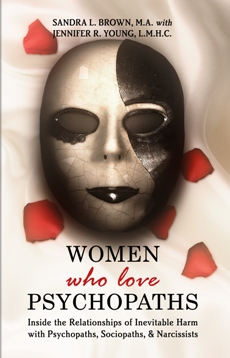
(My note: A lot of this was also discussed in the book ‘Women Who Love Psychopaths’ in which I talked about the Pathological World View and how you acquired HIS view of the world and how that entrapped you in the relationship).
In Coercion, these symptoms are:
- Isolation: Deprives individual of social support, effectively rendering her unable to resist.
- Makes individual dependent upon interrogator/captor.
- Victim then develops an intense concern with self.
(My note: This too is discussed in the ‘Women Who Love Psychopaths’ book during the Honeymoon and Luring Stages of the relationship).
Monopolization of Perception: The captor fixes their attention upon immediate predicament; fosters introspection in the victim; eliminates outside competing stimuli with the captor so the victim can only focus on him, he frustrates all actions not consistent with her compliance to him.
(My note: In the mid-relationship dynamics in the book, this is talked about. Your Super Traits are very high in what we call relationship investment and cooperation which means you are highly cooperative because you get so much enjoyment out of your relationships that you will ‘bend over backwards’ to make things work. The book discusses when the mid-relationships ‘shift’ and what happens to the woman’s perspective).
Induced Debility and Exhaustion: People subjected to this type of abuse become worn out by tension, fear and continual rushing about in an effort to meet his standards. They must often avoid displays of fear, sorrow or rage, since these may result in ridicule or punishment. Rigid demands and requirements make the exhaustion and ability to resist even worse.
(My note: All the women who show up at the retreats show up in bodily exhaustion. This too is discussed in the book).
Occasional Indulgences: This provides motivation to her for compliance.
(My note: The TCI test we gave the women show that you test very high in compliance).
Devaluing the Individual: Creates in her a fear of freedom and dependence upon him; creates feelings of helplessness; develops lack of faith in her individual capabilities.
(My note: In the book, women who are doctors can’t remember how to care for themselves, women who are attorneys can’t remember how to file their own restraining order, women who are therapists can’t remember why this is sick behavior….)
When you look at it through the eyes of a mixture of PTSD, Stockholm and Coercion your symptoms make perfect sense…at least to me! While that doesn’t mean you ‘can’t’ also have Bipolar or other disorders—it’s too early to know. Very often much of the symptoms of other disorders fall by the wayside when effective and appropriate treatment is begun. Many of the women do, however, meet the criteria for PTSD. PTSD is most associated with war vets (and yes, you too lived through a war!) and trauma victims (yes, you were traumatized)! To that end, you probably do have a disorder but it is related to PTSD or other Acute Stress Disorders.
Our hope is that as we train more therapists we will help you most by making available effective and knowledgeable help for what you have lived through and stop the erroneous diagnosing so often associated with you and your symptoms.
For now though, if you cannot locate a therapist, we do offer phone sessions, telesupport groups, Retreats, and one last 1:1 Intensive Sessions with Sandra.
Be hopeful that what you live with today in symptoms may not always be as problematic as it is in your current life. There is hope and healing available!
DSM 5 Personality and Personality Disorders Sneak Peek
September 29, 2010 by dl
Filed under Experts (Articles)
Comments Off
The American Psychiatric Association has released a “sneak peek” of changes to the personality and personality disorder information.
You can view the info at this webpage:
http://www.dsm5.org/ProposedRevisions/Pages/PersonalityandPersonalityDisorders.aspx
When a Divorce is Unexpected
September 28, 2010 by dl
Filed under Strategies for High Conflict Divorce and Custody Cases
Comments Off
You are now in a position where all your decisions will most assuredly impact your future. You must think logically and strategically while going through this period. If you feel you don’t know which way to turn and need advice, you may want to consult a relationship strategist or divorce planning expert before you take the first steps and consult an attorney. Be sure that the professional is someone who has your best interests at the forefront and represents you well. They should be able to advise you on a number of things, especially how to choose the right attorney and how to prepare yourself for your first consultation.
Follow these steps to keep on track:
- Consult a lawyer immediately (consultation for the first half hour or so is usually free).
- Bring with you to the lawyer a list of prepared questions to ask.
- Try not to spend that free time crying or talking about your marriage. A lawyer is not there to be your therapist. Stick to only the facts as it pertains to children, finances and property. You are there to interview and possibly hire them.
- Copy or scan all documents including wills, car titles, etc., and anything you find on the computer.
- If you have an iPod, video camera or camera, take two pictures of everything including appliances, cars, artwork, antiques, jewelry, furniture etc.
- Whatever you do, do not pack up and move out until the divorce is final (consult a lawyer first).
- If you have never had a credit card in your own name, start applying now to establish a credit history of your own.
- Try to remain as calm as possible when you tell the children. Do not speak negatively of or badmouth the other parent.
- Do not use your children as a confidant. Do not involve your children in divorce preparation.
- Try to keep the kid’s regularly scheduled activities and routines as normal as possible.
Consulting with a legal professional before you are served with divorce papers will better prepare you in the days and months that follow. A good attorney will be able to provide you with a clear understanding of your legal rights.
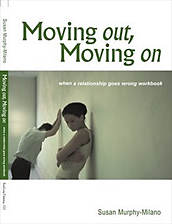
For more information refer to “Moving Out, Moving On.” You can order the e-book version here. You can also book a session with me to strategize your exit and future here.
Important Note: If you have been in an abusive marriage you should inquire as to the lawyer’s expertise as it relates to domestic violence, orders of protection, stalking, and whether or not he has represented women who have been abused.
Verbal Bulimia and the Art of Over-Disclosure
September 27, 2010 by dl
Filed under Sandra Says (Column)
Comments Off
I wrote about Verbal Bulimia in my Dangerous Man book, discussed in Women Who Love Psychopaths, and frequently remind everyone in the newsletters and yet I still see this embarrassing behavior among women that not only sounds inappropriate to anyone else listening but also puts her at tremendous risk amongst pathologicals.
Years ago when I had a few psychopaths in group I asked them how they picked out their ‘targets’ and from the mouth of babes they said,”I just listen. If you get them talking, they rapidly over-disclose. Women tell WAY too much! You pick up everything they just said–what they like, their values. Feed it back to them. Become what they are looking for. And ~ VOILA~ you’re in!”
On my flight back from our Dangerous Man Workshop Cruise to Cozumel a couple of years ago, I had one of those over-disclosing women sitting in front of me. Ladies, this is the kind of person that makes you want to switch genders so not to be associated with the behavior! She was purposefully loud so that others would hear her. In fact, she was so loud, the rows around her couldn’t even have their own private conversations because she was holding ‘court’ in the middle of the plane where it was mostly men.
LOUDLY she announces to a girlfriend (who must have been deaf either before the conversation started which is why she YELLED or afterward from yelling in her ear) that she was going to THE CLIFFS where she OWNED a CONDO so she COULD GOLF on TIGER WOODS’ golf course (am enunciating the way she did with her volume on the important parts of her braggadocios story). And that she FLEW back and forth to her OTHER HOME to THE CLIFFS to enjoy THE COUNTRY CLUB and GOLFING. (Just imagine if you were a psychopath sitting within ear range of this conversation….)
Oh, and THANKSGIVING, she was going to have 35 people over AND HER LARGE DINING ROOM could easily accommodate them. She was going to HAVE A COOK COME IN and help her prepare the meal. And ANYONE WHO NEEDED A PLACE TO BE on Thanksgiving was welcome to come (as she offered with a gesture of her hand to those sitting around her). (The psychopath is totaling up how much her silver and Plasma TVs are worth about now….)
Then it was on to her OTHER VACATION travels she has recently done….while everyone else around her were rolling their eyes and sticking their fingers in their ears (except for the psychopaths on board who were checking to make sure they had packed their sun tan lotion–planning on a trip WITH her).
Glory to God, the plane landed and it seemed like I could get away from her. She stood up, adjusted her breasts, fluffed her hair, and sucked her stomach in as she noticed the guy in my row had a 3 piece suit on (gag!) a gold chain and to her I guess ‘potential’ This highly accomplished multi-home owner who had been loudly touting her own virtues, all of a sudden couldn’t manage to get her bag out of the overhead, turning into Scarlett O’Hara. “Could some big strong man help little ol’ me here?”
She was staring straight at the gold-chain guy, so he felt obliged. Then she inserted something that had nothing to do with her bag being stuck. She stuck her hip out and leaned into his face “You know what I HATE?” “What?” he asks. “There are 3 lanes on a highway–one for 70 miles per hour, one for 80, and the last one for me–which is getting out of my way! The thing that drives me the CRAZIEST in the whole world ….” (I’m wondering Poverty? Abuse? World Hunger? Obviously not psychopaths—what?)…are people who drive too slowly so that I can’t roar my BMW Z4 at 95-100 miles per hour.”
She glances around to see who MIGHT have heard her. I have my therapy gaze on her now–like “Girl, GET a therapist!!” The guy winces at that statement and stares at his shoes. However, several other guys in line shift their position to move closer to her. Instead of heading out of the front of the plane they are turning around and heading DOWN the plane not out! What psychopath doesn’t want to con her out of a BMW Z4?? Or her Country Club membership? Or the dining room table that seats 35? Or those boobs she just pushed up?
Ok, ok….not ALL women who over-disclose do it so garishly and obnoxiously as this woman. But they DO, DO IT! There isn’t a pathological that isn’t wired to ‘hear’ the hints and hone in on it. They don’t have to remember to ‘listen’ — it’s a natural as breathing to them.
Maybe your disclosure is more subtle like at church: “Pray for me, I’m going through a divorce.”
Or in personal ads: “Recently divorced attractive woman looking for her soul mate.”
Or on a chat forum “Yeah, I was really hurt when he ran around on me. I’m just looking for a nice guy to settle down with–someone who likes children and animals, a churchgoer—someone who shares my love of art and hiking.”
TMI! TMI! Too Much Information!!
It’s hard to remember that all the ears and eyes that are exposed to you are not ‘normal’ ones. That pathologicals are listening for the ‘signs’ which are a green light to them to move on you. That includes, any hint of what you’re looking for (Fine, I can be that! he says) or loneliness (I’ll solve that!) or pain (Oh, baby, you’ve gotta let me redeem the male species! We aren’t ALL like that!).
Some are listening for your financial info (many are parasitic so are looking for ways of living with others so they can conveniently lose their jobs while with you) or to just bilk you out of your money quickly and be gone.
Others are listening for your need of a partner, companion, ‘just friends’ status, a step father for your children, a spiritual mentor, a shoulder to cry on…..
Others are listening to your unrealized dreams that they can ‘support’ you in your journey to being….a writer, a painter, a therapist, going back to college, starting your own business….
Still others are listening for your needs: Sexually hungry? Emotionally needy? Bored? Not listened to? Abused? Abandoned? Lonely? Tired? Angry?
Remember the church song when you were little “Be careful little eyes what you see….Be careful little ears what you hear…Be careful little mouth what you say…” Remember that? It reminded us that our eyes, ears, and MOUTH needed to be careful. The song went on, “For the Father up above is looking down with love so be careful little mouth what you speak.” If we ONLY had the Father to worry about, this wouldn’t be an issue.
1 in 25 people have no conscience thus are pathological. There are ears and eyes watching and listening to you to make you their target.
So, you’re probably wondering what I did about the obnoxious, verbally bulimic woman on the plane? I flipped my business card at her with my finger and as ‘coincidence’ would have it, it landed in her cleavage and I kept on walking…..Imagine her thoughts as she read my card “The Institute for Relational Harm Reduction & Public Pathology Education Psychotherapist & Author of How to Spot a Dangerous Man and Women Who Love Psychopaths.”
Too bad the plane was too crowded to turn around and watch!!
Times Up! A Guide on How to Leave and Survive Abusive & Stalking Relationships – e-book
September 24, 2010 by dl
Filed under e-Books, Susan's Products
Comments Off

by Susan Murphy-Milano
How you can escape a violent relationship and get out with your life.
You can actually live free from a life of abuse and violence using creative approaches developed by Susan Murphy Milano in her new book, “Time’s Up!”
You can’t Google the strategies and escape plans utilized by Susan who has devised a way that works and has been tested by time for over 20 years. Just like DNA, your road map will be uniquely your own because each safety plan is individual.
More than just a “to do” list, this book is a “must do” list if you are caught in a life threatening situation.
- How to properly hire a lawyer
- How to find an apartment
- How to keep your personal records safe
- How to deal with stalking
- How to set up visitation and child support
- How to stay 10 steps ahead of the abuser
Previous books, “Defending Our Lives” and “Moving Out, Moving On” are benchmarks dealing with issues of domestic violence safety plans and are used throughout the country as examples of what to do should you be caught in a violent relationship. “Time’s Up!” uses the foundations and helps you to build your own, unique safety plan allowing you to escape safely and rebuild your life.
| Quantity: | 1 |
| Format: | e-book |
| Price: | $18.75 |
![]() |
|
Moving Out, Moving On: When a Relationship Goes Wrong – e-book
September 24, 2010 by dl
Filed under e-Books, Products, Susan's Products
Comments Off
Moving Out, Moving On: When a Relationship Goes Wrong–A Step-By-Step Approach For Organizing Your Leave Ahead of Time

by Susan Murphy-Milano Moving out, Moving on is today’s most comprehensive, step-by-step, practical guide to bringing the painful process of a relationship break-up and divorce to an equitable conclusion. This book offers a complete and detailed plan for dealing with all the aspects and pitfalls that one faces during this emotional and life altering experience. Through clear examination, simple forms and worksheets, Moving out, Moving on , logically takes the reader through all the necessary preparation and information gathering to effectively seek legal redress, protect one’s assets and credit, address considerations regarding children, define alternate living arrangements, and deal with the myriad of financial problems and concerns surrounding a divorce or break-up. Moving out, Moving on, also addresses in detail abusive relationships, domestic violence and stalking and how to safely confront these situations. Moving out, Moving on , is more then a simple workbook, but a true plan to take control of one’s life and face the future head on. This is not just another “divorce book” written by a so called “expert.” Moving out, Moving on , is authored by a person who truly knows…Susan Murphy-Milano.
| Quantity: | 1 |
| Format: | e-book |
| Price: | $18.75 |
![]() |
|
A Light at the End of the Tunnel – Neurotransmitters and PTSD
September 12, 2010 by dl
Filed under PTSD: Mind/Body Connection (Column)
Comments Off
Many aspects of PTSD are evident in invisible but serious physical disruptions due to the traumatic event(s). These disruptions contribute to serious problems such as depression, insomnia, and OCD; but recent advances have made it possible not only to identify these changes but to treat them in safe and effective ways. Ongoing stress, as well as a poor diet, genetics and environmental influences, can disrupt the inherent balance of the two main types of neurotransmitters (NTs). Excitatory neurotransmitters are the gas pedal that moves things along throughout our entire body. Inhibitory neurotransmitters calm us down, and function like brakes when it is normally time for the excitatory NTs to wind down.
Frequently, among people with PTSD, the levels of these NTs are out of balance. This can lead to:
|
Excitatory Neurotransmitters
|
|
| High Levels | Low Levels |
| * restlessness | * fatigue |
| * insomnia | * irritability |
| * poor concentration | * clouded thinking |
| * emotional lability | * poor focus |
| * racing thoughts | |
| * anxiety, OCD or panic attacks | |
|
Inhibiting or Calming Neurotransmitters
|
|
| High Levels | Low Levels |
| * insomnia | * headaches |
| * anxiety | * headaches |
| * hyperactivity | * carbohydrate cravings |
| * depression | |
| * headaches | |
| * insomnia | |
| * carbohydrate cravings | |
| * anxiety | |
| * irritability | |
Notice the overlap of symptoms, as many imbalanced patterns reinforce and compound one another.
It is not surprising that many people with PTSD are diagnosed with bipolar disorder, anxiety disorders, and/or clinical depression. Psychiatric medications are usually prescribed. However many people are looking for effective and safe alternatives.
There are alternatives-exercise, meditation, yoga, and other behavioral “stress busters.” The only problem is getting motivated to do these things, no easy task when you are riddled with anxiety or paralyzed by depression.
One viable alternative is amino acid therapy. Usually, a urine sample is sent to a lab and based on the results an individualized program of amino acids is suggested. NeuroScience is one company providing this service to health care providers:
https://www.neurorelief.com/index.php?option=com_content&task=section&id=9&Itemid=51
Most insurance companies pay for these tests but not for supplements. A three-month supply typically costs $150-250. Results begin within a week to three weeks. Most people with PTSD take these supplements for at least 6 months.
Because PTSD is associated with many other physical problems, such as hypothyroid conditions, hypertension, headaches, I encourage these clients to
- have a thorough physical exam if they haven’t done so recently, and
- have their cortisol levels checked.
Cortisol (AKA adrenaline) and other chemical messengers are produced by the adrenal glands in response to stress. The symptoms of cortisol imbalances, as well as treatment options, will be discussed next month.
In my experience, clients who are struggling with PTSD find the combination of amino acid supplementation, adrenal support for cortisol imbalances, and neurofeedback training, http://www.youtube.com/watch?v=JZ-wX7kLBr4 to provide resolution of symptoms such as insomnia, anxiety, depression and irritability.
Providing naturally occurring supplements for NT and cortisol imbalances corrects these imbalances at a fundamental level. This creates an opportunity to return to better health. Supplement use is generally time limited unlike their chemical counterparts, which are often taken for years.
The decrease and resolution of PTSD related symptoms such as panic attacks, flashbacks, depression, OCD, cognitive deficiencies, behavioral problems, etc., makes it easier to do the hard work of psychotherapy. Effective therapy helps recovery and healing, and should, whenever possible, help the client change the situation that created the PTSD in the first place. Identifying and treating the physiological effects of PTSD is a fundamental first step in this process.
N.L.P.: An Empowering Map to a New Life
September 12, 2010 by dl
Filed under EMDR and NLP (Column)
Comments Off
Once upon a time, the Road Runner* was being chased through the desert by Wile E. Coyote.* Wile E. was shooting arrows at the Road Runner. Road Runner, being a creative and resourceful bird, found a u-shaped water gutter and held it up. The arrows went into the gutter, made a u-turn and went right back at the coyote.
‘What,’ you may ask, ‘does this story have to do with my recovery?’ My answer: Everything! The Road Runner used what was used against it to keep safe. What was used against you? The answer is mind control induced by hypnosis. Even though it is not likely your abuser studied hypnosis, by the mere fact of having been in a pathological relationship, the components of hypnosis were present and kept you in that relationship.
You may be thinking that you were never hypnotized or that you can’t be hypnotized. Consider this: Have you ever driven on the highway and wondered how you passed seven exits on that highway without even noticing them? You were daydreaming. Daydreaming is a form of hypnotic trance. In fact, all hypnosis is self-hypnosis. It is simply hyper-focusing on one thing while blocking out other things. This can account for your ‘Super Trait’ of high tolerance to emotional pain. The ability to block out painful things while focusing on the pleasure of the relationship is not only part of hypnosis, its part of the ‘Super Trait’ of tolerance.
Combine this with the high intensity that your abuser brought to the relationship, the hyper-focus created by traumatic events, the verbal abuse that was received as hypnotic suggestions during these vulnerable times, and repeat this over time with varying levels of severity and you have the components of mind control. This is how one becomes programmed with the abusers’ beliefs and values, which replace one’s own beliefs and values. (Read Chapter 10 of “Women Who Love Psychopaths” 2nd Edition)
This level of mind control and programming can be helped and lessened with a form of hypnotherapy called Neuro-Linguistic Programming. In fact, we can take what was used against you in the form of mind control and turn it around using N.L.P.! Many people get apprehensive about hypnosis and fear they will be unconscious and under the control of the hypnotherapist. Or worse yet, open themselves to demonic, evil, or inappropriate suggestions or influence. This is not true.
Hypnotherapy is simply a state of deep relaxation and mental alertness. Clients can hear and respond to everything and are active participants in the session. They have complete control over what they will or will not do. Hypnotherapy is merely a way to access your subconscious mind to achieve the goals that you want to achieve. That’s because anything you have learned can be unlearned and replaced by new learning. In fact, in situations of mind control, it SHOULD be unlearned and replaced.
What Is N.L.P. and How Does It Work?
N.L.P. is a type of internal and emotional experience. Each N.L.P. experience takes about 10-20 minutes. N.L.P. focuses on how thoughts, actions and feelings work together to produce our experience. Our thoughts and memories have a pattern to them. When we change that pattern or structure, our experience will automatically change. With it, you can change your thoughts, feelings and behavior and add new ones that can become just as systematic as the old ones (and a lot more enjoyable). N.L.P. exercises are like thought experiments and the laboratory is your mind providing you with a chance to try out something new in your thinking patterns. We can neutralize painful memories and enrich memories that serve us. This changes the present which can create a better, brighter future.
A few ways N.L.P. may help your aftermath:
- create a compelling future and a personal map to it
- clear up past negative experiences that might have held you back
- interrupt traumatic replay in which you keep picking the same traumatic situations/people types over and over again
- increase your self appreciation
- create a solid positive mental attitude
- change thoughts, feelings and behaviors
- solidify your recovery
Common Resistance to N.L.P./Hypnotherapy
You may think that you can’t visualize and are wondering if you can even use or benefit from N.L.P. Yes you can! N.L.P. simply uses all your five senses. It uses your inner voice, sensations, feelings and images as the basic building blocks of your mental and physical resources. Since you already have these building blocks, you will always have them. That means anyone can use N.L.P.
You can choose to use a resource the way you want at the times when you want it. In any situation you can learn to choose how you want to feel and how you want to respond. Motivation, persuasion, confidence, self love, decision making and creativity are all resources you can learn.
In the movie “The Edge”, Anthony Hopkins and Alec Baldwin were being stalked by a bear in the forests of Alaska. An N.L.P. basic principle was stated in the movie, “What one man (or woman) can do, another man (or woman) can do.” Hopkins got Baldwin to repeat and believe this truth when Baldwin started to panic. It saved their lives.
Try this similar N.L.P. activity (from the landmark book “N.L.P. The New Technology of Achievement” by Steve Andreas and Charles Falkner, which can be ordered from N.L.P. Comprehensive):
- Make what you want to do and think about into a positive statement. (It can’t be anything that hurts you or someone else.)
- Increase the mental vividness of what you want to do in order to increase its attractiveness to you.
- Associate into these successful behaviors and mentally rehearse them so they feel natural.
- Google N.L.P. psychotherapists in your area, make an appointment and get assistance from a licensed professional to create the life that you want.
* Wile E. Coyote and the Road Runner were created by Chuck Jones and belong to the Warner Brothers Corporation.
Fantasy Re-runs or ‘Obsession Interruptus’
September 11, 2010 by dl
Filed under Sandra Says (Column)
Comments Off
Everyone knows what ‘coitus interruptus’ is–but what you really need to know is what ‘emotional obsession interruptus’ is!
In the past, I have talked about the inherent traps, pitfalls, and perils of how people get roped back in to the pathological relationships during ‘weak moments’ of family or relationship fantasizing about normal relationships. There are no Normal Rockwells, oh, I meant ‘Norman’ Rockwells with narcissists and psychopaths. As much as you want to paint the picture of a happy family, that’s not what you got. What you do have is a pathological dynamic.
Discussion about family fantasizing stirs up many people who want to remain in the fantasy.
Loneliness is subjective. You’re with them but you are STILL lonely because pathology doesn’t pay attention to anything other than itself.
One of my brilliant proteges, Carol, has SOOOO understood the issue about pathology, personality disorders and the lies you tend to tell yourself —wrote me this brilliant analogy of people who don’t want to ‘get it.’ She is speaking for the people who get offended when you discuss ending the relationship or when the newsletter hits them hard on some aspect of their denial. (read this with some sarcasm….)
“I am offended that someone shed the light on psychopathy in the newsletter. I am offended that I might be set free from my psychopath. I am happy and joyous to be in the secret and dark world of my psychopath. I am happy to unsubscribe from the very thing that might set me free from my soul destroying psychopath. I am happy to continue on the path through hell with my charming psychopath. I enjoy my time more when I spend it with a pathological.”
This ‘emotional obsession interruptus’ as I like to call it, is a re-framing technique that works incredibly well when said out loud. Repeat Carol’s often…but say it OUT LOUD and not merely just read silently.
Fantasizing normal family life is nothing new. The truth is people want healthy families. They want what they see others have– enjoyable and meaningful relationships. Then they try to reproduce that with their own families who may not have the same capacity for normality. Pathological people have challenges that interrupt their ability to sustain the consistent positive change you want them to make. ‘Wanting’ to have JUST ONE occasion in which everyone gets along, there is no fighting, no one gets drunk or hits someone, or no one overtly insults others doesn’t mean that the pathologicals in your life have the ABILITY to give that to you.
Repetition compulsion is often re-enacted within relationships. This is repeating the same event over and over trying to get a different and satisfying outcome. This is sadly what we often see in Adult Children of Pathological Parents. At 43 they are STILL trying to have that ONE Christmas with a narcissistic mother or a borderline father so that a healing can take place in them.
Each year they start with the same hope that this year the parent, sibling or partner will do something kind and sweet or will ‘behave.’ They desperately feel like they need one restorative experience to heal their dysfunctional family memories. Repetition compulsion can leave adults trapped in this never ending desire for just one good experience but now, they have pulled their own children into the same cycle creating an inter-generational experience of exposure to pathology. (Ever see the movie ‘Stuart Saves His Family?’)
While it is painful to face the reality that pathology is related to the inability to change, grow, or have insight about their own behavior, it is less painful than putting yourself and your children through another cycle of hope and despair. Pathological parents, siblings, or partners can challenge you in ways that are kinder to yourself to just avoid.
The Attraction Cocktail
September 6, 2010 by dl
Filed under Trait Examination (Column)
Comments Off
“People can be induced to swallow anything, provided it is sufficiently seasoned with praise” – Molière
You might be asking yourself “Why me?” Why did you get to be the one to end up in this crazy relationship? What did you do wrong to land THIS guy? The answer begins with what could be called the “Attraction Cocktail”. There is this powerful potion that has brought the two of you together. This potion consists of the first three SuperTraits identified in Sandra’s research: Excitement Seeking-Extraversion-Dominance. These are a few of the rare traits that you both posses in high amounts. In your cup and in his cup these traits are spilling over. Remember you both posses these at the high end of the trait cut off at 85-95%. Most average people would not test that high in these traits. So, what we have are two high excitement seekers who are both extraverts, looking for a win…sounds like a recipe for inevitable harm to me.
But not immediate harm. First and almost within minutes there is fire and passion, understanding and power, lust and energy. There is electricity…maybe in a way that you have never felt before. While some people might see in him as “fake” and “overkill” you see him as passionate and understanding. In the very early stages of a relationship these traits lead you from one “fun” experience to another…for him its about building your trust and testing your boundaries.
Let’s look at each trait on its own because each ingredient offers its own unique characteristics that contribute to the potion. I am guessing that some of you may be saying, “I’m not an Excitement-Seeker. I do not like to jump out of planes!” But being an excitement seeker is a little more (or less) than that. It can mean that you like to take risks…personal risks, financial risks, professional risks. It can be that thing that creates in you the desire to go out on a limb…maybe go to the nightclub on your own or sign up on a dating sight or go on a blind date. These are not the things that someone who desires boredom would do. It is the excitement you seek in your hobbies..maybe cycling, hiking or traveling. It is the excitement that you get from going to a great job every day-a career that drives you to go for it! You’re the person who says “Yes!” to new experiences and “Sure!” to risky (yet really cool and innovative) opportunities. It’s that little something inside of you…think about it…that thing that says “I’ll give it a try, why not?”
So, let’s mix the cocktail. Here you are…with all this desire to “seek excitement” and here he comes…looking for some excitement too! Pow! It’s on! He loves to go…get out there…take risks with no regard for others. His risks are more about feeding his energy…this energy is part of his pathology. You know that feeling you get when you meet someone who just overwhelms you…they chat you up…with frenetic energy that just doesn’t stop-that’s the energy of a psychopathy that must be fed with exciting things. He’s game for anything…in fact you may have noticed that if you mention a hobby it probably is his hobby too! (Later, you find out that he never really like to do that-it was just part of his hook). He probably loves to travel, if you do; he loves to bike, if you do; he loves to go out with friends, if you do; he loves art, if you do; he loves to go camping, if you do; he loves to go boating, if you do. Whatever he can do that you do-he’ll do it. Isn’t that exciting? And herein lies the risk: When two excitement-seekers meet it is a chance to join. For you it is a chance to build trust; for him a chance to take trust. For you it is a chance to create a bond; for him a chance to build an attachment. For you a chance to feel a connection-someone finally understands you; for him a chance to make you think that he is just like you and that he understands. Your need for excitement means that you take risky chances…sometimes those risks do not pay off. You (and everyone else in the world) is also more likely to go along with others when you are in a heightened state of excitement. And herein lies the benefit: Because you are an excitement seeker you will be able to see quickly that he is not “all that and a bag of chips”. Because inevitably, once the relationship progresses it will become clear that his excitement-seeking fades and the façade he built to trap you will fall to pieces. He bores easily and not because you are boring but because he cannot sustain the emotional energy that it takes to remain in the relationship. He bores because he cannot do the emotional work to remain committed and he does not have the depth to go where you can go. You can turn your wonderful, exciting experiences into real emotional energy-building bonds and forging strength and character for yourself. He has used the opportunity to manipulate you into being under his control. When he is done with that task…he must find someone else to fuel his need for excitement.
What about the ingredient of Extraversion? You might see in yourself a person who openly engages in conversation, someone who is curious about others and often is impulsive in social situations. You might be the person who leads in a group or offers to help out more often than others. You are willing to tell your story, share your thoughts, and contribute. Your extraversion wrapped up with excitement-seeking makes for a pretty great package…life of the party even. So, mixing it up in the room is another extravert…he has no problem going up to complete strangers (how exciting) and introducing himself and then telling you his life story (or whatever story he thinks you want to hear). He is “owning” the room with so much confidence and bravado it’s almost sexy. He displays expertise in to the point he is grandiose…a lot grandiose. His extraversion is the mask…the mask that makes you think it’s safe. It’s the mask that convinces you he is what you want him to be. And they are really good at this part-creating that mask of normality.
Extraversion is a great trait to have but herein lies the risk: your extraversion lets him know that you might play his game. Your extraversion means you will do the exciting things he likes to do. It also means that you are curious and probably would not turn down an offer for fun or the offer to try something new…and he might be just that, in the beginning. You are someone who likes to get out and meet people and the guy who is “owning” the room is just the guy for you. But there is one thing about extraversion that makes you different from him-your ability to truly bond with others. And herein lies the benefit: you must become truly bonded with someone to maintain a relationship. Extraversion may bring you two together but you need mutual understanding, respect and unconditional love…this is not what he provides in the long run. It will become clear at some point that his extraversion was a rue to hook you…because his mask will fall and you will see that he is really a lonely, empty person who transforms to meet the needs of those around him. You will begin to use your extraversion as a way to break free of him. When the dynamics of the relationship become clear you will seek out help…you will find people around you who can support you. Your curiosity will lead you to answers and help. You will not fear talking to others…even if they don’t really understand. You will keep trying until you find what you need.
The final main component of the “Attraction Cocktail” is dominance. Now, this is another one that at first thought you might say, “What, who me? I am surely not dominant!” But with a closer look you will see that your dominance looks like leadership…it looks like a woman in charge. It’s not the kind of dominance that over powers…it is the kind that takes charge. Your dominance does put you in control without being controlling. It tells others that you know what you want and will do what you need to do to get it….even if it means you want a relationship with a certain exciting man. So, there he is…the guy with the magnetic personality who appears as if he “owns” the room…you decide to go for it. He says, “Bring it on!” His dominance means that you are a challenge…two “powerful” people means there is energy. This energy is ultimately moving in different directions but nonetheless energy. His dominance means he wants to have power over you. His power is the kind that is controlling but when you first get together it may look like “a man who knows what he wants”…and knows how to get it. He will use his dominance to appear as if he is your equal…he will move in your circles and appear to be everything you need…and he will do it with swagger. But soon his dominance and need to control will become “power over”. And herein lies the risk: Your dominance is not the same as his and when that difference becomes undeniably different you may already be hooked…You may spend the middle to late part of the relationship fighting for your own power and realize that you are completely powerless to his control of you. You may have seen his dominance as “sameness” and felt comforted (thinking that you are always in control and it is finally nice to have someone match you) but that feeling soon fades. By the time it does, you can’t break free. And herein lies the benefit: your dominance will be the power that in the end does free you. You will learn how he controls you, you will learn his patterns and with that information you will gain control and dominance…the kind of control and dominance that will set you free.
So if this cocktail isn’t strong enough to convince you of the power of his pathology, your risk to it and the benefit it offers you…I want to add one splash of competiveness. It is one of the final traits that you both have in common and that you both have in high amounts…so it makes sense that it adds to the power of the initial attraction. Let’s get real…you probably like a good fight. Not one with someone who doesn’t know what they are talking about or with someone who is not equally matched to your intelligence but a fight that helps you gain an edge…a smarter outlook…a challenge to build your depth of knowledge. You would not back down if someone came at you with inaccurate information…you have a need to make things right, to get the facts and share facts. Additionally, you will not tolerate being accused of untruths or called inappropriate names. If you think you are not competitive…ask yourself how you would react if someone called you a name or lied about you…I bet you would not back down to that. Well, guess what-he does not like to back down either. He likes a challenge so he is looking for someone who will tangle with him. This type of emotional tangle is just what he loves. He loves to engage in emotional wrangling-it feeds his need for power. When he can control you emotionally he knows that you are invested in the relationship. And herein lies the risk: this relationship is going to feel like a challenge to both of you in the beginning. To you a less passive man probably seems boring. Furthermore, you are not afraid to battle it out and you surely do not want him to “get one over” on you. So this is a great reason to stay and fight. You also might find it a challenge to stay in the relationship and “bust” him doing something…staying until you find the evidence or staying until you find out he’s NOT doing what you think he is. Your competiveness means that you are willing and able to battle it out in court. You will go head to head with him…and that is just what he wants. And herein lies the benefit-once you know who he is you will fight like hell to get out. You will realize that you have won because he no longer has the power that comes from your lack of awareness. More importantly, being competitive helped you build a great life. You fought for things that were important to you-an education, a great career. It helped you to challenge others and yourself to always be the best and find the best in others. It helped you make good decisions and take a pro-active approach to almost everything. The best thing about being competitive is that you are often successful. The reason you are successful is because part of competition is knowing when you have been beat-knowing when to cut your losses and move on to a challenge you can win. It is not about being so headstrong that you stay and fight just to be able to say “I win”. Your competitiveness, combined with all the other traits you possess lead to more than a need to win…they lead to success.
Because he is sicker than you are smart you will never “win” with him. So all of your book smarts and street smarts and relationship smarts will not out smart his ability to psychologically damage you. Prolonged exposure leads to inevitable harm. Once you know this the battle is over.
By the end of the relationship you may not even feel competitive anymore…he has taken it from you. The energy, fire and gusto that you once had may seem gone. But spend some time away…talk with your girlfriends or family about it…your fire will return. Your brain will tell you to put down the sword and walk away from the emotional vampire; walk away from the battle that you cannot win.
Ultimately and in the end this is where the similarity stops and the pathology begins. Someone who is pathological does not want someone like themselves…ultimately they know that they lack certain things that other people have and they are on a never ending search to get those things…and because they will never get those things or be those things they will use your emotions to control you…so they can fill their empty cup.
So when you ask yourself “Why me?” the answer is clear-because you have what he wants. And when you ask yourself “Why did I stay?” the answer is because you posses traits that meet his needs and he used them to control you. And when you ask yourself “How do I begin to heal?” the answer is by using all of your traits as powerful healing tools, tools that have helped you create a big, full life in every other area of your life.
When it comes to the traits contained in the Attraction Cocktail you may be asking “How do I make sure I never get caught up by another psychopath again?” My suggestion is to use these traits and take the Joyce Brown approach to life. Once you begin to accept that you are an extraverted, excitement-seeking, dominant, competitive woman…once you own that and claim (or re-claim) the benefits…you will find new ways to feed that part of you. Remember, these are NOT deficits, they are overflowing traits you posses so you must use them. You must do it carefully and cautiously, but your must use them. You can do a couple of things:
- Find a hobby-learn to do something you’ve always wanted to learn.
- Take up a political cause or join a social action group.
- Work with a non-profit agency on an issue close to your heart.
- Start a club or group focused on a topic, issue, or hobby you enjoy.
- Learn to ride a motorcycle or take up waterskiing (go big or go home, right?)
Think outside of the box…these are just a few suggestions that will feed your need to be extraverted, do exciting things, be a leader and engage with others. Most importantly you are using your traits in a way that YOU can control. If you are carefully and thoughtfully aware of who you are and what you need…no one can come along and take that away from you.
Peace to you,
Jennifer
Am I Responsible for How He Acts? Do I Drive His Behavior?
September 4, 2010 by dl
Filed under Sandra Says (Column)
Comments Off
One of the most frequently asked questions in pathological relationship coaching is “Did I make the person behave like this?” The clients often believe they bring out ‘the worst in him’ or so the pathological wants them to believe. The pathological likes to label his own acting out or cheating or other inappropriate behavior as someone else’s fault. This is called projecting. One of the characteristics of a number of permanent personality disorders is the trait that they don’t take responsibility for their own behavior. They have a victim mentality and blame others and the world for their short comings and ultimately, their bad behavior. Normal people ‘own’ their own behavior; pathological people project it onto others.
By the time the client comes to coaching from the aftermath of effects from the relationship, they believe the relationship, its problems and its demise were all her fault. She believes the pathological’s propaganda and has a lot of remorse, guilt, and self depreciating thoughts about herself that ‘if she only acted differently then so would he’ and the relationship would be on better footing.
Let me ask you this….”If he had a brain tumor would you feel responsible that his body produced a brain tumor? Would that be your responsibility?” I doubt it. People do feel bad that someone else got a brain tumor but they don’t feel ‘responsible’ or ‘to blame’ because someone got a brain tumor.
The often shocking aspects of Cluster B personality disorders are that what is driving their behavior is not a brain tumor but it is a brain disorder—in many, many forms. We expect that a brain disorder would be ‘noticeable’ to others. It is–in time. By the time the relationship ends, you DO know that there are behavior problems you just don’t know how, why or where they are generated. Cluster B personality disorders carry with them an astounding array of problems stemming from the brain and their own neurology that are driving their impulsive, out of control behavior and distorted thinking processes.
Even a decade ago, we didn’t have the information we have today about the wide reaching neuro problems associated with pathology and personality disorders. While for many years we may have ‘suspected’ a very physical reason for the behavior–the pathological lying, spending, cheating, violence, addiction, and other behavioral problems, we didn’t have the concrete knowledge that is now generated from neuroscience, neurobiology, brain imaging, and other brain studies.
Here is a tiny snippet of the kinds of information being generated about brain dysfunction in personality disorders. This in no way covers all of it–but it gives us some place to begin looking at it as being as much a medical brain syndrome as it is a psychological syndrome.
Genomics–molecular building blocks of DNA affected by pathology.
Proteomics–location, interactions, structure, and proteins affected by pathology.
Neurotransmitters affected.
Hippocampus–part of the brain that is related to impulsivity affected by pathology.
Amygdala–part of the brain that is related to impulsivity affected by pathology.
Neuroinformatics -A library data base about thousands of different brains and what is unusual about them including pathological brains.
Cellular signaling show involvement of genetics in pathology.
Low levels of brain enzymes are related to violence.
Genes on certain chromosomes create schizophrenia, bipolar, etc. New research wants to find out if it contributes to pathology.
Genetic vulnerability causes significant differences in neurological development in children with psychopathic tendencies.
The number of copies of different genes has already been linked with a variety of medical conditions and the expectation is that these copy number variants will be very significant in personality disorder research.
A complex array of varying genes underlies the many different outward manifestations of personality disorders which can be seen in early childhood despite a loving and stress free environment.
Stressful/abusive environments can push a milder case of personality disorders into a full blown active personality disorder.
Phenotype images the size and shapes of brain organs related to personality disorders.
Serotonin reception 5-HT plays a role in controlling offensive aggression (or not!)
The lack of transporter molecules predisposes people towards impulsivity, emotional instability, etc.
Polygeny (a single trait that can affect many genes) seems to underlie personality disorders.
Those who metabolize dopamine faster are at higher risks for anti social behavior.
An enzyme that helps break down dopamine and serotonin are linked to impulsive and aggressive behavior, substance abuse, criminal behavior.
MAO-A gene is linked to Cluster B personality disorders.
Neural circuitry problems are related to trouble with reinforcement learning so they are not likely to learn from punishment, also related to impulse violence.
TPH brain enzyme is related to behavioral problems associated with anti social behavior.
MRI imaging shows that areas of the brain related to excitability respond differently in psychopaths.
Certain words cause psychopaths to respond differently than normal people (blood, sewer, hell, rape, etc.)
Some parts of the brain show higher activity in psychopaths, some areas lower activity in psychopaths.
Weak limbic regions of the brain in psychopaths cause them to grapple with emotional language.
Corpus callosum is different in psychopaths so they process information between brain hemispheres differently which effects interpersonal skills and low reactions to stress, high reactions to aggression and unregulated behavior.
The amygdala in psychopaths have less reaction to fight-flight responses, causes them to feel restless, spurring them on to raising hell just for the excitement value.
Slower neural reactions are related to their lack of fear which is also genetically based.
Lack of fear throttles the development of the conscience.
Orbito-frontal portion of the brain causes psychopaths to have trouble organizing their behavior, reduces their ability to control their impulses and the ability to learn from punishment.
Difficulty with abstract meanings like the word ‘justice’ generated from right brain quadrant, also problems with nonverbal cues related to emotions.
Dorso-lateral Prefrontal Cortex affects some personality disorders ability to think logically and rationally.
The anterior cingulate cortex affects some personality disorders ability to focus on something they don’t wish to hear thus being able to block what they want to hear, it also produces (or doesn’t) the feelings of empathy.
The limbic system which is affected in some personality disorders negatively influences their ability to regulate their emotions through emotional reasoning.
The hippocampus is affected in some personality disorders which negatively impacts the emotional response system.
Hyperactive amygdalae cause intense and slowly subsiding emotions when they suffer even just a minor irritation. This can cause an overreaction to a minor constructive criticism.
Lowered serotonin levels in the brain affects increased impulsivity.
Smaller size of right parietal lobe in some personality disorders.
Yeah, I know–that’s a lot of science to wade through but maybe you get the point…you didn’t break him and you can’t fix him. This fascinating decade of science has answered so many questions for so many—people who can let go of the guilt and fantasy that what’s wrong with him is merely ‘willful behavior’ or ‘a bad attitude’ or ‘needs more counseling.’ Personality disordered brains are different in their genetic make up, in their chemistry, their circuitry, regional brain development, their neurobiology and the list goes on. In fact, we are realizing so much of the brain is affected—in borderline personality disorder, in anti-social, in psychopathy–so much of Cluster B is traced now to significant brain impairment. (For more information read the book ‘Evil Genes’ available on our magazine).
For many years I have been teaching the Three Inabilities related to pathology: The inability to grow to any great emotional depth, the inability to consistently sustain positive change, and the inability to develop insight about how their behavior affects others. I developed these inabilities from 20 years in the field of providing services to the personality disordered. Although I suspected there was hard-wiring and hard science behind it, it wasn’t until recently that I was finally able to find out why the Three Inabilities are actually correct and why they don’t sustain positive change. It’s not because they want to screw with your head….it’s because of their head.
You didn’t produce anything–you’re not that influential to set up his genetic patterns. Sorry–you’re not strong enough to ‘will’ his amygdala to change. Bad news here–you are not gonna ‘love’ his limbic region into correct functioning. ‘And hate to break the news that all the ‘Law of Attraction’ books aren’t gonna get his brain chemistry to be normal.
And you might as well cancel the relationship counseling because being tolerant it isn’t gonna change the size and function of various brain regions. If you stopped nagging or tried the relationship ‘just one more time’ it isn’t going to alter his brain enzymes and neurotransmitters. Even Batterer Intervention groups aren’t gonna change his corpus callosum and make it less aggressive.
He doesn’t have a brain tumor that you are responsible for ‘giving him.’ He does have a brain disorder and you aren’t responsible for that either–how his brain did and did not form. In the medical world, we seem to accept some of the disorders much more easily like Cystic Fibrosis or Mental Retardation–of course, you can often tell by looking at the person that something is wrong. But even in pathology, that too becomes evident…in time but not through external medical conditions but through relationships. And while it is odd, where we DO find the symptoms of psycho-pathology related to brain dysfunction is right in the middle of your relationship.