Hire Sandra
July 28, 2009 by Editor
Filed under Hire Sandra
Comments Off
The leading expert about Pathological Love Relationships provides:
- Key note speeches for your Event
- Pathological Love Relationship Workshops
- Agency & Staff Training
- Program development to add our component to your existing program
- Treatment Center consults
- Retreat Leader
- Radio & TV Expert
- Columnist, Blogger & Book Writer on Pathology
Additionally, The Institute’s Colleagues also provide:
- Community Lectures, Training and Workshops on Pathology
- Retreats
Sandra’s Fees
| Key Note Speech | $1,200 + Travel Expenses |
| Workshops – 3.5 hours | $1,500 + Travel Expenses |
| Agency & Staff Training | $1,800 and up + Travel Expenses |
| Program Development | Priced individually |
| Retreat Leading | $2,000 + Travel Expenses |
Living the Gentle Life
July 21, 2009 by dl
Filed under Sandra Says
Comments Off
“Be gentle with yourself. The rest of your life deserves it.” (Sandra L. Brown, MA)
Post Traumatic Stress Disorder (PTSD) is a trauma-related anxiety disorder. PTSD is often seen as an aftermath symptom of Pathological Love Relationships. Exposure to other people’s pathology can and often does, give other people stress disorders, including PTSD. Our systems are simply not wired for long term exposure to someone else’s abnormal psychology. Often the result is a series of aftermath symptoms that include PTSD which is described as ‘a normal reaction to an abnormal life event.’ Being with a narcissist, socio or psychopath is definitely an ‘abnormal life event.’
PTSD’s profound and long term effects create what I refer to as a ‘cracked vessel.’ The fragmentation caused by the trauma creates a crack in the emotional defense system of the person. While treatment can ‘glue the crack back together’ and the vessel can once again function as a vessel, if pressure is applied to the crack, the vase will split apart again. This means, that the crack is a stress fracture in the vessel—it’s the part of the vessel that is damaged and weakened in that area.
There are numerous types of therapies that can help PTSD. If you have it, or someone you care about has it, you/they should seek treatment because it does not go away by itself and many people don’t realize that if left untreated, it can worsen. People often have missed the opportunity of treating PTSD when it was still relatively ‘treatable’ and responsive to therapy. The sooner PTSD is treated, the better the outcome. But any treatment can still help PTSD.
However, what is often not recognized is the ‘continual’ life that must be lived when living with the after effects of PTSD. Because the cracked vessel can re-crack again, a gentle and balanced life will relieve a lot of the PTSD symptoms that can linger. I have often seen people who have put a lot of effort into their recovery NOT put a lot of effort into the quality of a gentle life following treatment. This is a mistake because going back into a busy and crazy life can re-fragment the PTSD. As much as people want to ‘get back out there’ and think they can return to the life they use to live, often that’s not true. ‘Wanting’ to be able to live or do what you did before does not mean that you will be able to.
Consequently, many people’s anxiety symptoms returned. Much like a 12 Step program, ‘one day at a time’ is necessary and understanding your proclivity for re-activated PTSD must stay foremost in your mind.
Living the gentle life means reducing your exposure to triggers that can re-activate your PTSD. Only you know what these are…if you don’t know, then that’s the first order of therapy–to find your triggers. You can’t avoid (or even treat) what you don’t know exists.
Triggers are exposure to emotional, physical, sexual, visual, auditory, or kinesthetic reminders that set off anxiety symptoms. This could be people, places, objects, sounds, tastes, or smells that reconnect you to your trauma. Once you are reconnected to your trauma, your physical body reacts by pumping out the adrenaline and you become hyper-aroused known as hyper vigilant. This increases paranoia, insomnia, startle reflex and lots of other over-stimulated and anxiety oriented behaviors.
Other triggers that are not trauma-specific but you should be on the alert for are violent movies, TV, or music, high noise levels, life style/jobs/people who are too fast-paced, ‘busy’ environments, risky or scary jobs, bosses or co-workers who have personality disorders and are abrasive, or any other situation that kick-starts your anxiety.
Women are often surprised that other people’s pathology now sets them off. Once they have been exposed to pathology and gotten PTSD from this exposure, other pathology can trigger PTSD symptoms. Living ‘pathology free’ is nearly mandatory–to the degree that you can ‘un-expose’ yourself to other known pathologies.
The opposite of chronic exposure to craziness and pathology would be the gentle life. Think ‘Zen Retreat Center’ — a subdued environment where your senses can rest…where a body that has been too pumped up with adrenaline can let down…a mind that races can relax, the video flash-backs can go on pause, fast-paced chest panting can turn
into long/slow/deep diaphragmatic breathing, where darting eyes can close, where soft scents soothe, and gentle music lulls, where high heels come off and flip flops go on…where long quiet walks give way to tension release…where quieting of the mind chases off the demons of hyperactive thinking….where when you whisper you can hear yourself.
Only, this isn’t a retreat center for once a year…this is your life where your recovery and your need for all things-gentle, are center in your life. It doesn’t mean you need to quit your job or move to a mountain, but it does mean that you attend to your over-stimulated physical body. Those things in your life you can control such as the tranquility of your own environment need to be. Lifestyle adjustments ARE required for those who want to avoid reactivated anxiety. This includes psychological/emotional, physical, sexual, and spiritual self care techniques.
The one thing you can count on about PTSD is when you AREN’T taking care of your self your body will SCREAM IT! Your life can not be the crazy-filled life you may watch others live. Your need for exercise, quiet, healthy food, spirituality, tension release, and joy are as necessary as oxygen for someone with PTSD. Walking the gentle path is your best guard against more anxiety and your best advocate for peace.
The Physical Effects
Post Traumatic Stress Disorder (PTSD) is an anxiety disorder that is often re-activated by daily ‘triggers.’ These can include people, places, things, or sensory feelings that reconnect you with the trauma of the relationship. In the last newsletter I talked about the gentle life and how an over-taxed and anxious body/mind needs a soothing life. I cannot stress this enough that people MUST remember that their PTSD symptoms CAN BE re-activated if you aren’t taking care of yourself and living a gentle life.
What IS a gentle life? A gentle life is a life lived remembering the sensitivities of your PTSD. It isn’t ignored, or wished away–it is considered and compensated for. Since PTSD affects one physically, emotionally, sexually, and spiritually–all of those elements need to be considered in a gentle life. Just as if you had diabetes you would consider what you eat or what medication you need to take, so is it with PTSD.
Interestingly, although PTSD has its description listed in the psychiatric manuals, PTSD has some very real physical effects as well. In fact, they have even discussed listing it in physician’s manuals as well because the untreated on-going effects of acute stress are well known in the medical community. Since PTSD has both components of emotional and physical symptoms, someone recovering from PTSD must take those aspects into account.
Physically, PTSD is often a chronic condition by the time you take yourself for emotional help. That means you have been living with it for a while and it has been wreaking havoc on your physical body during that time. Unbridled anxiety/stress/fear pumps enormous amounts of adrenaline and cortisol into your body. This over stimulates your body and mind and causes insomnia, paranoia, hyperactivity, a racing mind/intrusive thoughts and the inability to ‘let down’ and ‘rest.’
A body that has been living on adrenaline needs the adrenal glands to ‘chill!’ People often complain of chronic insomnia which also leads to depression. Depression can lead to lethargy, over eating, weight gain and hopelessness. It is possible to have both anxiety and depression occurring at the same time. Un-managed stress, anxiety, and adrenaline can lead to longer term medical problems often associated with stress–lower GI problems, migraines, teeth grinding, aggravated periods, chest pain, panic attacks, chronic fatigue and most auto-immune disorders like fibromyalgia, lupus, chronic fatigue, arthritis, and MS.
So, CLEARLY PTSD is something that SHOULD be treated. Physically that means to go to someone who can diagnose you–a therapist or psychiatrist. In the early parts of treatment, it is normal to take anti-anxiety medication, anti-depressants or sleep aides in order to rectify your depleted brain chemistry and to allow the adrenal glands to
‘rest’ and stop pumping out the adrenaline. Your doctor is in the best position to tell you what will help you relieve your physical symptoms.
Additionally, you need to help your body and brain produce the ‘good stuff’ in your brain chemistry which means exercising, eating well, and learning relaxation techniques. Too much adrenaline has been pumping through your body with no way to get utilized. Excessive adrenaline makes your feel jumpy and restless. Exercise (even moderate walking) helps to produce endorphins in your brain that produce those feelings of ‘well-being’ and helps to burn off the adrenaline and any extra weight you might have gathered.
Although during depression you often don’t FEEL like exercising, you will always feel bad if you don’t get your body moving. Stress is even stored at the cellular level of our bodies. You must, must, must get moving in order to feel better.
Eating well means not trying to medicate your depression and low energy with carbs. When you are depressed your body craves carbs as a source of quick energy but the spikes in blood sugar add to the sense of mood highs and lows. You’ve already had enough ‘junk’ in the relationship–think of it as nurturing to give your body good food to replace all the ‘junk’ that it has been through. You can greatly help mood swings by eating well.
Dealing with the negative habits you have picked up as a ‘coping mechanism’ is also necessary. Lots of people with PTSD try to medicate their anxiety and depression. This could be through smoking, relationship hopping, sex, eating/binging/purging, drugs (legal and illegal) and the increased use of alcohol. In fact, one of the devastating side effects of PTSD is how many alcoholics it produces. Anything you are prone to right now tends to increase when you have PTSD because you begin to do that habit more and more to manage your PTSD symptoms. Finding positive coping skills instead of negative habits is a great step in your recovery.
Physical recovery also means paying attention to not reactivating your symptoms. Your physical environment in which you live, play and work must be conducive to low stimulation. That means low lights, low noise, and low aggravation. Sometimes that means making big changes in how your house is run so that it is not loud, noisy and over active. Sometimes that means making big changes in the PEOPLE you hang out with — getting rid of the loud, noisy, over active, aggressive and pathological. And sometimes it means making big changes in a job where the environment does nothing but trigger you.
Lastly, learning relaxation techniques is not ‘optional’ for people with PTSD. PTSD is a chronic state of hyper-vigilance, agitation, and restlessness. Your body has been over-ridden with adrenaline for a long time and has ‘forgotten’ how to find it’s equilibrium in relaxation. It must be retaught. Re-teaching means doing it daily. Taking 5 – 10 minutes a day to use relaxation breathing and allowing your mind to unwind and giving positive messages to your body to relax will help your tap into this natural relaxation even during times you are not actively trying to relax. The more you use the technique, the quicker your body can relax–even at work or when you are doing something else because it has ‘remembered’ how to.
There are lots of tapes, CDs or videos you can buy on relaxation that walk you thru how to do it (we also have one created for PTSD on the magazine under Shopping/CDs, Audios.
Or take Yoga where they teach you these deep breathing techniques that help correct the ‘shallow/panting’ breathing that is associated with PTSD and anxiety. This type of breathing can actually trigger panic attacks. Learning to breathe well again is a metaphor for ‘exhaling’ all the junk you’ve been thru and releasing it. If you don’t have a relaxation tape, you are welcome to get our mp3 audio on relaxation techniques on our website. Most importantly is to just become acutely aware that PTSD is physical (and often medical) as it is emotional.
The Emotional Effects
The toll it takes on people often leaves them with chronic stress symptoms and for extremely bad relationships, often Post Traumatic Stress Disorder (PTSD)–a diagnosable anxiety disorder. The long term stress from the pathological love relationship (with narcissists, abusive partners, socio/psychopaths) effect people emotionally, physically, sexually and spiritually.
I have been talking about what the body ‘does’ when it is under chronic stress and the results of this unrelenting stress. (The previous newsletters about this are on the magazine under Sandra’s Current Article) The last newsletter discussed how to deal with the physical ramifications of stress and I even created a unique relaxation audio for people with chronic stress or PTSD (which is available on the magazine under Shopping/CDs,Audios). I also talked about changing your physical environment to embrace the needs of a stress disorder.
Today, we are going to discuss the emotional effects and how to create the Gentle Life for your emotional needs as well.
PTSD is as an emotional disorder that falls in the category of an anxiety disorder therefore, someone with chronic stress of any kind needs to learn the types of techniques that help reduce emotional anxiety. The problem is, by the time people ‘ask for help’ with chronic stress or PTSD, they have often lived with it for a long time and the symptoms are now extreme.
The emotional effects of untreated PTSD can include tension, panic attacks, depression, anxiety, sleep disturbances, intrusive thoughts, nightmares, flash backs or hyper-startle reflex. All of these are distressing and over time a combination of these symptoms are normal to have all at the same time.
The relaxation technique is a way of managing the physical symptoms of PTSD. Relaxation techniques are not ‘optional’ in the recovery of chronic stress/PTSD. That’s because these techniques have a dual purpose. These same relaxation techniques also help manage the emotional symptoms as well as the physical. Learning correct breathing to ward off anxiety and panic attacks can be done thru the relaxation techniques.
Likewise, these same techniques can help with sleep disruptions, and tension. Chronic stress and PTSD are disorders that should be treated by a professional therapist. Especially with PTSD, the symptoms tend to increase over time if not treated. People make the mistake of waiting until it is totally unbearable and then it takes time to back down the symptoms. People are often ‘hopeful’ it will just go away when the pathological relationship has ended or contact is ended. These aren’t the worst relationships in the world for nothing! They are labeled that because they produce horrible side effects!
Unfortunately, PTSD is a chronic disorder which means you are likely to have symptoms off and on for years, maybe a lifetime. This is all the more reason to learn how to manage the symptoms when you may need to. Intrusive thoughts are one of the most complained about symptoms.
This is when unwanted thoughts of the pathological person/relationship keep popping in your head. No matter how many times you try to ‘not’ think about it, it keeps coming back. The problem with the imagery in your mind is that each time it pops in there it has the ability to trigger you. Your body responses to that trigger with adrenaline which just starts your whole stress cycle over again. So managing the intrusive thoughts and flashbacks is imperative to emotionally regulating yourself and living the gentle life
Living the gentle life means removing yourself from personalities that are similar to the pathological relationship. We often tend to migrate BACK to the same kinds of people and relationships we just left. These kinds of abusive people can cause an emotional avalanche. It is important that you understand the kinds of traits in people you should avoid if you have PTSD or stress. This could be people who remind you of the pathological person, loud or aggressive people, people who violate your boundaries or bother you in other ways. Stress and PTSD do mandate that you develop self protective skills such as boundaries—learning to say no or leave environments that increase your symptoms. Learn to migrate instead to people who are serene or leave you feeling relaxed and happy.
Creating your gentle physical environment will also help you emotionally. An environment that is soothing, calm, quiet, soft, and comfortable has the best chance of allowing an over-stimulated body to relax. Changing your physical environment for your emotional benefits and adding the relaxation technique can greatly impact the amount of emotional symptoms you experience. Learning ‘emotional regulation skills’ for stress/PTSD is a must.
‘Ah….just get a life!’
People ever tell you that? Sometimes from the chronic stress and upheaval the pathological relationship causes, people can get very one-dimensional and hyper-focused on him/the relationship/or the problems. They stop doing the kinds of things in their life that could help them be LESS obsessed, depressed, or anxious. That’s because women really tend to ‘lose themselves’ in the pathological relationship. It’s a testimony to the strength of pathology.
The crazier it gets, the more they feel like they need to ‘try to understand it’ or ‘try to make him understand what he’s doing’ or ‘do something that will help the relationship feel less pathological.’ This idea can be a 24/7 thing…it can take up your whole life trying to balance the relationship, which, as you have figured out, is un-balanceable.
Getting lost in a very dark tunnel can draw people away from the actions, behaviors, thoughts, people, and resources that previously allowed them to live a happier and more balanced life. The dangerous and pathological relationship is ALL consuming and soon any level of your own self care is abandoned for the insane focus on how to fix him/the relationship.
It isn’t long before others around you notice the myopic/single focused person you have become that can’t think about or talk about anything except the dangerous relationship. This myopic view of your relationship has now blacked out any other part of your life…people are bailing out of your life, emotional resources are dwindling, your life has become the size and shape of him.
Women in the most dire of all situations (especially in domestic violence for instance) are those who have lost physical and emotional resources and can find no way to get out. The less support a woman feels from others the more likely she is to stay because it takes SUPPORT to get out/to break up/or to not go back. So, by the act of myopia, her life and resources just dwindle away.
One day someone says to her ‘man, you need to get a life bigger than THIS!’ and something really hits her about that statement. Like coming out of a big deep freeze…the light bulb goes on—she notices her lack of life and says “What happened to me? Where is my LIFE?????”
The last few weeks in the newsletter I have been talking about ‘Living the Gentle Life’–especially if you are someone who has lived in a pathological relationship or has a chronic stress disorder or PTSD from the relationship.
A gentle life is a FULL life–one that includes the finds of things that nurture you, that bring peace to you, are simultaneously IN and PART of our lives.
The gentle life is healing because to feel JOY is to send the right kinds of brain chemistry to your brain that fights depression and anxiety and gives the sensation of ‘well-being.’ We need to be Joy Hunters!
Women go back (or pick poorly again) because they fail to build a life for themselves. They know how to ‘invest, invest, invest’ in him and THEIR relationship with him but have NO idea how to ‘invest’ and build their own life WITHOUT HIM like the one listed above. Women who have out side healthy lives ARE the women most likely to get out and stay out.
Loneliness is one of the KEY risk factors in why women go back. There are so many ways to get your needs met for friendship, fun, support, beauty, or whatever you love in life. Building a ‘life’ is the best prevention for relapse a woman can do.
But sadly, many will NOT do it. After 20 years, I can pretty much pick out who will and won’t invest in themselves and build a life. Those that don’t are in the same boat 10 years down the road…either with this pathological person or another one just like him. Those that do build a life are less likely to feel pressured to date or get so lonely they pick up the phone and call him.
The Gentle Life isn’t even possible unless you have a life that is ready for transformation. Living with a pathological man or picking another one is about as OPPOSITE of a gentle life as there is. Will you be one that rebuilds a fabulous life? Or be stuck in your dependency on dangerous and pathological relationships?
So many women say “But I don’t know where to start in the rebuilding…my life has been like this SO long I don’t know where to begin.” This is such an important issue so to solidify this discussion, I have created a companion mp3 called “Stop Focusing on Him: Get a Great Life.” We ran it recently, but I’m gonna put the link in again because it’s such a great reminder!
Soul Tearing—The Spiritual and World View Effects
The last few weeks I have been talking about the necessity of living a gentle life if you are recovering from a dangerous and/or pathological relationship. The damage it does to a person is profound and many are often diagnosed with a chronic stress disorder OR Post Traumatic Stress Disorder (PTSD) because of it. These disorders respond best to a ‘gentle life’ that allows the body, mind, and spirit to rest from the overload of adrenaline and stress it has experienced in the dangerous relationship. (Read our previous newsletters about this topic listed on the magazine)
I have talked about physically how to ‘adjust’ your environment if you have a stress disorder and we also talked about the emotional effects—anxiety, depression, and other after-effects associated with PTSD. Today, we are going to talk about the spiritual effects.
Dangerous and pathological relationships violate at a deep soul level. That’s because it touches on the core building blocks of our concepts about relationships–Trust, Love, and Hope. Deception is evil and sick and when you realize ‘who/what’ you have been with, there is a violation that cuts to the deepest part of a person: their spirit.
Often these kinds of pathological relationships have already ‘played into’ your soul connection…leading you down the path of believing that your ‘connection’ was spiritual in nature. There were probably lots of promises of the ‘life together’ and all the ‘reasons God brought you two together.’ In the end, they were lies but before you knew they were lies, they were HOPES.
~ “Hope is the thing with wings, that perches in the soul.” ~ (Emily Dickinson)
So many pathological relationships have “an intense attachment” that feels like ‘connection’ or ‘soul mate status’ when in reality it is just the intense game of the ‘pathological’ sucking you in and hoping you will confuse intensity with something healthy.
But Hope, Love, and Trust are all core spiritual values and when you have invested those core values and beliefs in someone and then the heinous deception is revealed that the ‘goal’ of the relationship was to manipulate you all along, something ‘rips’ inside of you. This ‘soul tearing’ brings a spiritual skepticism, a distrust that permeates everything you EVER believed…sometimes even about God.
It’s a disastrous wound to your ‘world view’ and how you see yourself, others, God, and the world at large.
These mortal wounds to your world view can last a long time because, in effect, they are the ways you have come to ‘believe’ about yourself (I can’t trust my intuition), others (everyone is evil), the world (it’s a sick place) and God (He didn’t protect me). This profound shift in your world view can increase the symptoms of PTSD–depression, anxiety, alienation, loneliness, isolation, and a fear or dread of the future.
So often the spiritual effects of the pathological relationship are overlooked both by the victim and by the therapist. This ‘world view’ earthquake has shaken the foundation of your belief system. Without repair to the foundation from which you build your self concept, healing is limited to only symptom management. Spiritual healing of your world view is paramount to your overall recovery.
I have created a 15 minute audio (mp3) “Spiritual Effects’ that goes into more detail about healing your world view and the spiritual effects of dangerous relationships. I think the audio will greatly help your understanding of WHY this part of yourself MUST be healed as well and how the unhealed aspects can impact depression, anxiety, reaching out to others, and your future relationships. You can pick it up on the magazine under Shopping/CDs, Audios.
Also, if you are in counseling, please allow your counselor to listen to the mp3 too. This will help them address these issues with you in counseling. This is an area so often ‘under treated’ by other counselors. I teach on this aspect a lot at professional conferences and therapists are eager to understand this aspect of spiritual side effects and its impact on chronic stress disorders.
Healing Your Own World View
“Be gentle with yourself. The rest of your life deserves it.” (Sandra L. Brown, MA)
Over the past month or more I have been talking about healing from a dangerous and/or pathological relationship. The chronic stress disorder and often Post Traumatic Stress Disorder (PTSD) that occurs from the damage done in the relationship requires a serious change in lifestyle in order to heal.
We have been talking about those changes–what needs to change physically, emotionally, and spiritually. In the last segment, we discussed the negative ‘world view’ effects resulting from pathological exposure. The negative world view impacts how you now see your post-pathological relationship world. This includes how you NOW see yourself, others, the world, your future, and God. (You can read past issues about this subject on our blog–the link is listed below).
One of the seriously ‘under treated’ effects of pathological relationship exposure is the healing of the personal world view (you can listen to the audio segment I created about this topic on the magazine under CDs/Audios. The untreated aspects ‘mimic’ PTSD symptoms with increases in depression, anxiety, fear, isolation, dread of the future and other similarly related PTSD side-effects. Healing your world view is critical to a healthy future.
Another often ‘untreated’ effect of pathological relationship exposure is the ‘unconscious adopting of the pathological’s world view.’ Not only was your world view altered from the damage done to you IN the relationship, but your world view was also altered from the damage done to you THRU the pathological. One of the unrelenting side effects is the ‘learned experience’ of seeing the world through ‘his’ eyes.
One of the things that makes pathologicals, pathological is the effect of their pathology on how they see themselves in relation to the world and others. Pathologicals are noted for their over/under sense of themselves, over/under opinion of others, and their unusual view of what the world ‘should’ do for them.
While you may not have adopted these exact views like the pathological, chances are that your views have been tainted with the pathological’s viewpoint. This can include normalizing abnormal behaviors or dissociating pieces of reality AWAY from yourself. Normalizing can make womanizing, over/under employment, drug dealing, alcohol/drug abuse, domestic violence, lying, cheating, stealing, or other overtly wrong behavior ‘marginal’ when you have taken on his view of life and right/wrong. Pathologicals don’t operate by the rules. They create them for their unique situations and break them for fun.
When your grip on societal boundaries begins to slip, you have been affected by his view of the world. When his behaviors become ‘just a little different’ than other people’s or ‘all people are like this’ — your world view has been infiltrated. When you begin to think of other people like he does, or define others by his warped definitions, when you believe his ‘take’ on things or tell yourself only partials truths so you don’t have to really see his ‘real’ self–your world view has been penetrated. When you become numb and lethargic to the things he has done, your world view has been violated.
This is just one more aspect of your wounded world view that needs healing if you are going to recover. A wounded world view does not allow for living the gentle life. And the gentle life is probably not even possible until the way you see yourself, others, and the world becomes ‘gentle.’
Pathologicals are harsh. They leave people feelings irritated, rubbed raw, and chapped. Your interior does not feel ‘gentle’ –it feels the opposite of it. Pathologicals are notoriously ‘negative’ so you may have found your mood, thinking, and reactions to have taken on his negativity. It’s hard to heal when everything looks like he told you it looked–bad (and it’s all your fault!) It’s hard to live the gentle life for yourself when your emotions are anything BUT gentle.
This is the point about the necessity of healing the world view–it’s a critical part of your recovery. Because having been warped by a pathological, ‘HOW you see determines WHAT you see.’
Healing Sexually
Over the past couple of months I have been talking about healing from pathological relationships and what is involved. It requires that you face the damage that has been done and recognize any stress disorders or PTSD that you might have now from the relationship. Then it requires that you change your life in order to heal–change your environment physically and learn how to develop a life style that helps you heal emotionally, psychologically, spiritually and sexually. Today, I am going to talk about the sexual effects of pathological and dangerous relationships.
The last few weeks I have talked about the spiritual effects of a pathological relationship. Ironically, the sexual effects are also often spiritual effects. That’s because a lot of the spiritual effects have to do with attaching and bonding on many levels–including spiritually. In a spiritual sense, we have been designed to bond during sexual experiences. Especially women. (WARNING–THIS IS GONNA GET GRAPHIC!!)….recent hormonal and sexual studies have indicated that orgasms achieved during sex, release the same brain chemicals that are released during BONDING with your baby! This phenomenal aspect gives great insight into WHY it’s so hard to leave a relationship even if it IS dangerous and pathological.
Many of the pathological man types are hyper-sexual–so there is ALOT of sex. A lot of sex = a lot of opportunities for sexual bonding through orgasm/hormone stimulation. Women are by nature, NOT abandoners. Those they ‘attach’ to or ‘bond’ to–they stay with. So the more bonded you feel to him, the less likely you are to leave. The more sexually attached (when often feels like spiritually attached) you are, the more confusing it is to detach.
Additionally, many pathologicals who are hyper-sexual bring to the relationship a lot of deviancy. For the first time in you life, you may have been exposed to sexual behaviors or aspects that you have never experienced. Since pathologicals are great at manipulation, guilt, and rewarding your loyalty, you may have been coerced into sexual behaviors that violated your own morality or normal sexual boundaries. Perhaps pornography, sexual acts you were uncomfortable with, group sexual experiences, relationship rape, or other sexual violations. Additionally, most pathologicals in their hyper-sexuality are NOT monogamous so maybe you have acquired an STD from him.
These deep soul wounds harm more than just your emotions–it harms you spiritually and infiltrates your sexual identity. Women often feel so ‘perverted’ in what they have experienced they feel like they have to stay with him because no ‘normal’ or ‘healthy’ man would want her after what she has ‘done’ in the sexual relationship with him. In some relationships, true sexual addiction may have occurred. You may feel like you are addicted to him, the sex with him, or sex with anyone. What you have experienced IS sexual abuse within the relationship. However, pathologicals have the wonderful way of making you feel like a willing participant or that it’s YOUR deviancy he is responding to sexually. Remember–they twist and pervert every aspect of truth.
The sexual side effects of the relationship can contribute to your overall stress disorder or PTSD. It is an aspect that should be treated in order to re-claim your sexual identity. Untreated, your skewed sexual identity can cause you to continue to sexually act out; continue to cooperate in his sexual deviancy; use drugs/alcohol to numb out your painful feelings; cause increased PTSD/anxiety/depression symptoms or leave you despondent to stay in pathological relationships out of a sense of feeling ‘dirty’ or ‘unworthy’ of healthier relationships. It can also impact your spirituality–driving you away from the solace and help you find in your own connection to God.
From this standpoint, the ONLY way to live a gentle life is to heal your sexual side and to see the damage done to sexuality as part of the overall picture of the after-effects of a dangerous and pathological relationship. Please talk to your counselor about the sexual effects of your relationship.
Agency and Program Development
July 21, 2009 by dl
Filed under Agency and Program Development
Comments Off
The Institute, the leading experts in Pathological Love Relationship Support Services is helping agencies, programs, and treatment centers design their own programs to reach the survivor population of Cluster B/Axis II relationships.
60 million persons have been negatively affected by someone else’s pathology. No other population of that size exists without national support programs and national education campaigns–but pathology does!
- We currently have less than a dozen well trained therapists in Pathological Love Relationships to refer others to.
- There are no national campaigns to teach others about the dangers of relationships with those with permanent and lasting pathological disorders.
- Youth are not taught about how to spot and avoid dangerous pathological relationships.
- Legal and Judicial education is still not provided on why Pathological Parents permanently harm children’s emotional and mental development and how to spot them in court cases.
- Psychology graduate school programs are teaching less than 10 hours of training about the Axis II disorders and the impact on relational harm despite that 1 in 5 persons has a personality disorder.
- Domestic Violence providers are almost never taught about the lethality risks in pathological disorders. All abusers are not created equal.
- Pathological disorders are not screened out of Batterer Intervention Programs thus providing better education to batterers and false security to their partners.
- Under diagnosed psychopathy in children is one of the leading reasons for youth delinquency and adult recidivism.
- 1 in 25 persons has no conscience. Therapists are often charmed by those with no conscience.
- Marriage and Family Therapists regularly attempt to provide counseling to couples where one of the partners is pathological and unrecognized by the therapist.
The national crisis we face is that pathology is growing but what is not growing is society’s ability to recognize the disorders MOST LIKELY to:
- Rape, kill, assault, stalk, emotionally harm, abandon, abduct, expose others to their risky behavior, and cost our governmental systems millions of dollars.
The Institute provides:
- Non-profit agency training on Psychopathology, Pathological Love Relationships, Cluster B relationships, Axis II and it’s effect on relational harm
- Private Practice education for therapists wanting to incorporate therapy for survivors of Cluster B relationships.
- Hospital Program Development and Consultations for developing Women’s Pathological Love Relationship units.
- Intensive Outpatient Program Development for those wanting to reach the survivors of Axis II relationships.
- Domestic Violence & Women’s Program adaptive incorporation of The Institute’s Model of Care Approach for Supportive Care for survivors of narcissists, socio/psychopaths.
Services:
We offer inter-agency training, written consultation and proposals, treatment program start ups, and a various array of training materials — books, DVDs, CDs, workbooks, handouts, and manuals. We will custom design a training program that fits your needs and the needs of your company. For program start ups, Sandra comes to the site, prepares the treatment program, trains the staff, and runs the program for the first few weeks.
Let us know how to get your agency operational with the latest information, treatment practices, and programs for Pathological Love Relationships. Become part of the national crisis solution!
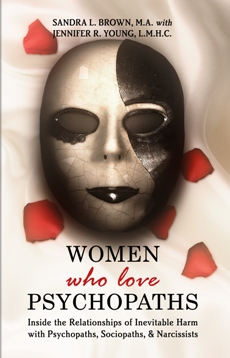
Women Who Love Psychopaths – 2nd. Ed. – e-book


Women Who Love Psychopaths – 2nd Edition – e-Book
Now Available!
The first book EVER written about the women who have loved psychopathic men! What are your temperament traits that have contributed to being attracted to, and tolerant of, the most dangerous of people?
Sandra has done it again! She has rewritten the Women Who Love Psychopaths Book (an already Award Winning Book) to include some of the newest and most compelling evidence on Neuro-science and what brain differences actually exist in borderlines, narcissists, anti-social, sociopaths, and psychopaths. From brain region mal-formations to brain circuitry and brain chemical differences, these new sections of the book will blow away any theories about this being merely ‘willful behavior’ on his part!
Additionally, lots of new information about recovery and treatment that came right from The Institute’s own Model of Care Approach we designed that is being implemented in psychiatric hospitals. From the last few years of treating survivors, we now have a clear and compelling approach to recovery.
And learn even MORE fascinating aspects of why Sandra believes these relationships are highly connected to trance, hypnotic inductions and your own high suggestibility! Find out what you need to do to protect yourself from entrancem.
Women Who Love Psychopaths – 2nd. Ed. – Print
July 20, 2009 by Editor
Filed under Print Books
Comments Off
![]() |
|
![]() |
Women Who Love Psychopaths – 2nd Edition
The first book EVER written about the women who have loved psychopathic men! What are your temperament traits that have contributed to being attracted to, and tolerant of, the most dangerous of people?
Sandra has done it again! She has rewritten the Women Who Love Psychopaths Book (an already Award Winning Book) to include some of the newest and most compelling evidence on Neuro-science and what brain differences actually exist in borderlines, narcissists, anti-social, sociopaths, and psychopaths. From brain region mal-formations to brain circuitry and brain chemical differences, these new sections of the book will blow away any theories about this being merely ‘willful behavior’ on his part!
Additionally, lots of new information about recovery and treatment that came right from The Institute’s own Model of Care Approach we designed that is being implemented in psychiatric hospitals. From the last few years of treating survivors, we now have a clear and compelling approach to recovery.
And learn even MORE fascinating aspects of why Sandra believes these relationships are highly connected to trance, hypnotic inductions and your own high suggestibility! Find out what you need to do to protect yourself from entrancem.
Price: $15.97
Phantom Limb Pain
July 8, 2009 by dl
Filed under Sandra Says
Comments Off
In a session someone says “I really miss what we had. I could get over this if it hadn’t been the most wonderful relationship of my life. I just feel like something has been cut out of me–like I’m missing a big part of myself now.”
Pathology is marked by the issue of illusion. It’s why our logo is a mask because it best represents
the mirage of normalcy that pathologicals can often project…at least for a while. Cleckley, one of the writers about pathology from the 1940′s called it ‘The Mask of Sanity’ which gives all the surface signals of deep connection, the most fun ever, someone really into you—while behind the curtain, you are being used as a distraction, a pay check, grotesquely as a ‘vaginal doormat’ or some other form of ‘feeding’ of the pathological pyrannia. What you are experiencing you are internally labeling as ‘normal’ or ‘wonderful’ or ‘love’ and yet it really isn’t any of those things–it’s just a label of experience you have tagged him with. If someone else was watching your relationship as a movie and had watched the other scenes in which the pathological is exposed for what he is, your scene would be tagged and labeled by the watcher very differently because their experience would be different and they would see all those behaviors and words of his that you experienced in a different context and see them as manipulation. Your labeling of your experience isn’t always accurate. As I often say “Your thinking is what got you into this pathological relationship. Don’t always believe what you think.”
Being invested in being correct is part of the human condition and actually part of the way our brains work. The more important the question “Does he love me? Is this THE one?” — the greater the pleasure will seem from labeling the experience as positive. The more positive the relationship, the more invested you will be to label the experiences and his behavior as positive and to get the reward of your label “him, marriage, the relationship.” Of course none of this is problematic except if you have misread the illusion, believed the mask, and have labeled an experience with a narcissist, anti-social, or socio/psychpath as ‘positive.’
The illusion is that he was normal, he was in love with you, he was what he said he was, and he did what he said he did. In pathology, that’s never the case. Their attachments are surface (which isn’t love), they are mentally disordered (which is not normal), they never present themselves as ‘disordered, sexually promiscious, and incapable of love (so he wasn’t what he said he was) and they harbor hidden lives filled with other sex partners, hook ups, criminality, or illegal/moral behavior (so they don’t disclose what he’s really up to). What you had (that you can’t possibly miss) is a pathological relationship. What you miss, is the ability to wrap yourself up like a blanket in the illusion–to go back to the time before you knew this was all illusion.
Women often say they have the feeling that something is cut out of them–that they are missing a part of themselves. This sensation is similar to what is called phantom limb pain that is a medical mystery of sorts. When a person has an arm that is accidentally amputated, the portion of the brain that use to receive sensory messages about the existing arm goes through a series of changes that causes it to mis-read the brain message and creates the ‘ghostly’ illusion that the arm is still there and in pain. Even though the patient can see that the arm is gone and what they are experiencing is an illusion, they can’t stop the distressing phantom limb sensations of wanting to believe the arm is still there, the arm is in pain, the arm is anything but gone. The amputee must learn to cope differently by beginning with relabeling the experience they are having which is the presense of the arm is a perceptual illusion.
So it is with those leaving the illusional pathological love relationship. The emotional pain experienced is based on the illusion the pathological presented, a perceptual illusion that was mis-labeled, experienced as positive and invested in so keeping that positive illusion is important to her. Learning to adjust the cognitive dissonance (the ping ponging between he was good/he was bad, the relationship was good/the relationship was bad) is the challenge in overcoming the ghostly emotional baggage of phantom relationship pain.
For more information on this, we have added a book to the magazine site under Resources/ExpertsBooks/General which is called ‘On Being Certain: Believing You Are Right Even When You Are Wrong.’ The book is about “Despite how certainty feels, it is neither a conscious choice nor even a thought process. Certainty and similar states of “knowing what we know” are sensations that feel like thoughts, but arise out of involuntary brain mechanisms that function independently of reason.” By Robert Burton, neurologist and neuro-scientist.
Mask Publishing
July 8, 2009 by Editor
Filed under Mask Publishing
Comments Off
Subject Areas
Our interest in books and products are related to an educational or self help approach with the
limited focus of:
- Psychopathology
- Axis II Personality Disorders and their effects on relationships
- Narcissism and Anti Social Personality Disorder and their effects on others, including children
- Sociopathy & Psychopathy and their effects on others
- Leading research related to pathology
- Neuroscience and it’s effect on relationships, sexuality
- The effects of pathological parenting on children and adult survivors of pathological parents
- Relational dynamics of pathological love relationships
- Personality Disorders in Court/Law/Legal Field/Divorce/Custody
- Public awareness of Pathology and its’ national effects on systems
We do not publish memoirs (My Life With a Psychopath, for instance.)
We do not publish fiction.
We do not publish poetry.
We ONLY publish educational and self help books related to the field of pathology.
Audience
The audience is a mixture of lay readers (usually survivors) and professionals looking for more information on the subjects of Pathological Love Relationships, personality disorders and their effects on others. It is crucial that the authors of self help, educational or professional books have credentials and experience
related to the field of pathology. Endorsements and a preface or foreword from noted individuals within the field of pathology are important.
Products We Are Interested In
Print books, e-books, CDs, mp3s, DVDs self help or educationally related to pathology.
How to Prepare Your Book Proposal
A book proposal should include an overview; a chapter-by-chapter outline; an about the author(s) section; and marketing considerations.
The overview must include two or three page summary of the book idea, what will be in it content-wise, and your unique approach to the subject matter. This should include:
- The subject hook–your unique slant on the subject matter which is what creates an interest your particular book.
- Include in this title, subtitle, the book’s unique angle on the current market related to these types of books, and how long the book will be.
- Examples that illustrates your theme and why its important.
- What else will be in the book’s such as illustrations, exercises, charts, case stories or studies
- A foreword, preface, or endorsements for the book written by authorities or celebrities.
The last portion of your proposal should what markets your book would address, your experience and credibility as not only an author but specifically within the field of pathology, other info that you makes your book stand out. We need to be able to understand why your book should be written. Specify the audience your book will address (women, professionals, tradespeople). Also include marketing or promotional ideas you have for getting your book recognized, noticed, and to your specified audience.
Finally, list current books that compete with your book idea, or in other ways complement yours in which teaming up with them would produce a good combination.
Chapter-by-Chapter Outline:
The outline should be 3-6 pages including the chapter titles listing the major topics and the contents of each chapter. Illustrations, charts, graphs, and recommended reading should be listed.
About You:
List your professional or educational credentials or in another way why you are qualified to write this book about pathology. Experience can qualifiy you as well but it needs to be more than “I’m a survivor of ______.” (For instance, what have you done with your survivor-ship? How has that propelled you into the public arena about pathology? This is important because we don’t do memoir books)
Please include a resume or a bio that covers any other publishing you have done, radio or tv, other media coverage for instance in newspapers or magazines.
Marketing and Promo:
It’s important that you understand and are able to engage in the marketing of your own products. The Institute is a large organization that is involved in way more than publishing so we rely on others to promote their products within their career fields and who hold some knowledge of marketing in general.
What will you do to promote your product? (Here’s a clue book signings are almost worthless. What else will you do?) Lay out any speaking, mass media, TV, radio, or promotional campaigns you have planned and how you will promote that. Mention any lecturing, workshops, seminars, tours, you do regularly or plan on doing. What are your professional affiliations and how can those be used to market your product? (Psychological associations, educational affiliations, etc.)
We look for authors who are positive about and have access to publicity. Explain what you will do to help promote the book. Describe your speaking, mass media, TV, radio, or promotional experience and include a plan of how your work can be promoted. Do you lecture, do seminars, tour, or travel for trainings and business; do you belong to active organizations and have strong networks; do you teach classes or write a newspaper column; are you prepared to market your materials?
What Happens Next
If we are interested, we will contact you and request some samples of your work related to THIS project (i.e., a few chapters).
DO NOT SEND UNTIL / IF WE REQUEST IT.
Your can mail your book proposal to:
The Institute
133 Mountain Man Trail
Penrose, NC 28766
A committee will review it and get back with you. Make sure it has contact info: your name, phone, email, etc.
The quality of your ability to arrange a book proposal speaks a lot to your ability to WRITE a book. Poor quality in book proposals usually mean poor quality in writing in general. We can not answer questions about the book proposal lay out. Please follow what is given here or get a book about how to write a book proposal.
Life, Liberty and The Pursuit of Happiness
July 4, 2009 by dl
Filed under Sandra Says
Comments Off
Happy 4th of July! With all that flag waving and potato salad, I couldn’t help but think about ‘Independence Day’ — the day that women cut the cords of dependency and exit dangerous and pathological relationships.
Over the years I have talked about ‘Living the Gentle Life’ when you are recovering from a pathological relationship and and why that’s important for recovering from dangerous attachments to dangerous relationships. ‘The Gentle Life’ is a path choice after the too-much-drama of pathologicals.
Independence Day begins ‘The Gentle Life for a lot of women. It’s the day that you ‘come to’ and say:
- How did I get here?
- Is this REALLY my life?
- Where did the real me go?
- Look how much this has cost me to be with him
- Look what it’s done to my friends/family/children
- You know what? I’m not CRAZY!
- I don’t believe his lies any more
- I’m sick of feeling this way
- I am tired of hearing about how everything is my fault
- I am sickened by my own staying
Independence Day is the day you pick up ‘How to Spot a Dangerous Man,’ ‘Women Who Love Psychopaths’ or any other insight-oriented material that makes you snap out of the trance you have been in within the relationship. It’s the day you read a book, listen to an audio, call a counselor, or pack your bags. It’s the day you pray ‘God help me get out,’ change the locks on your door, or leave his bags at the curb. It’s the day you book a retreat, go back to church/temple, confess your pathological sick relationship to others.
Independence Day symbolizes freedom…not only in this country but in ourselves.
- The freedom to heal.
- The freedom to choose differently.
- The freedom to gain insight from someone other than a pathological individual we have been involved with.
- The freedom to end what is unhealthy.
Life, Liberty and The Pursuit of Happiness is Living The Gentle Life–aspects of a healthy life that
can’t occur within pathological and dangerous relationships. There is no life in that! It has all been sucked out of you by the pathological personality that is needy, defiant, deviant, or insatiable. There is no Liberty–he runs the show, your thoughts, your needs, your dreams. There is no Pursuit of Happiness–only his. All pathologicals have an agenda that include their own perverted entitlement. Your happiness is only an accident if it happens while he is pursuing his own.
People fight to keep us free. Shouldn’t you fight to keep yourself free? Independence isn’t the opposite of dependency. It’s the absence of self negation where you respect your own uniqueness, self, and life path and that you live first for these values. Independence isn’t selfishness. It isn’t some prescription for aloneness. It’s the foundation of boundaries, self care, emotional and relational health. Independence allows and builds inter-dependence–the structure that allows us to mutually care for one another without pathological suffocation. Independence is most assuredly, Living The Gentle Life.
To celebrate your new life and the 4th of July , I am giving you a free mp3 download this week called Creating Independence. Let me know how you like it!